


This article first appeared in City & Country, The Edge Malaysia Weekly on November 30, 2026 - December 6, 2026
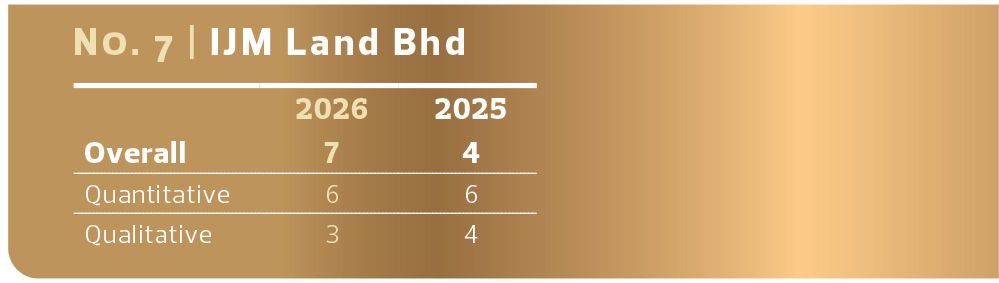
The financial year ended March 31, 2025 (FY2025) marked a period of activation for IJM Land Bhd as it built its recurring-income portfolio. In line with this strategy, it is unveiling four investment properties this year — REN Wellness Retreat in Subang Jaya, Selangor, as well as The Waterfront Shoppes, Hyatt Regency Penang and The Light Exchange Office Suites in Penang.
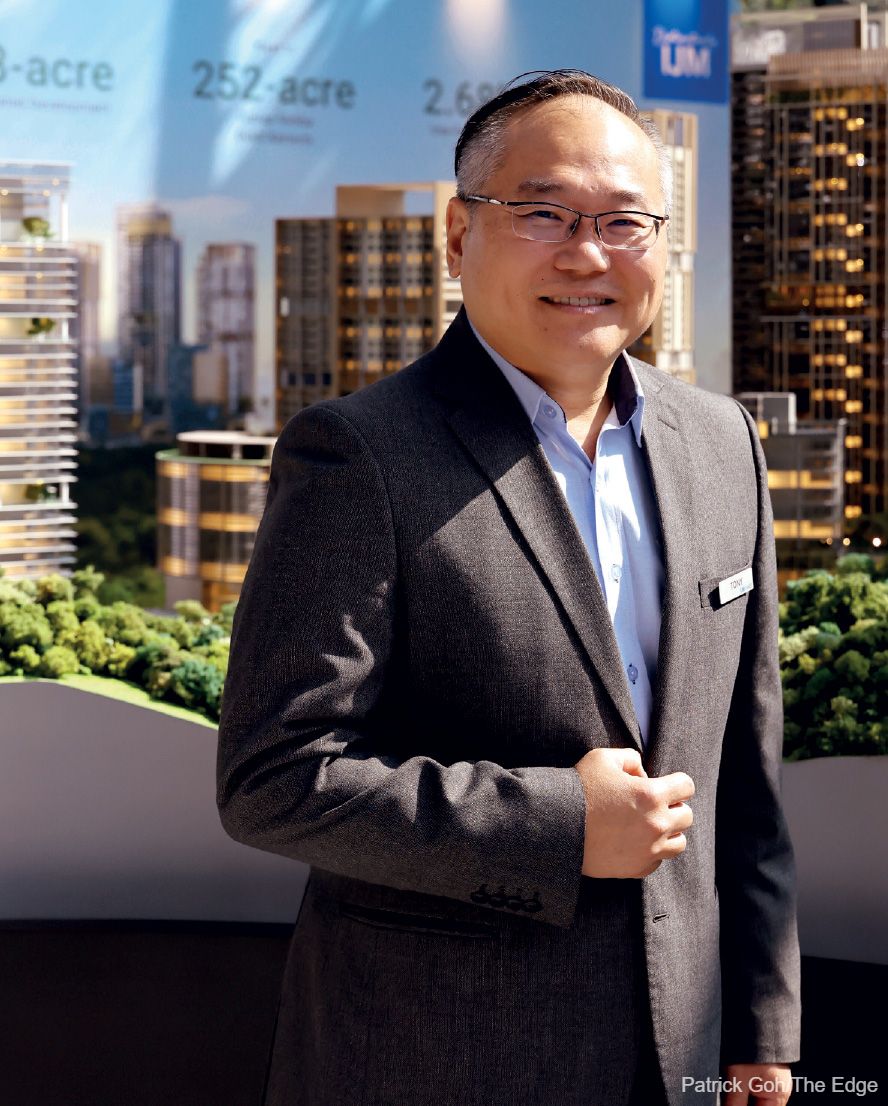
“Over the years, we have dedicated significant time to reaching our final milestone, the unveiling of the investment properties,” CEO Datuk Tony Ling says, adding that the developer is looking to expand its portfolio across commercial, hospitality and office assets.
At the same time, IJM Land is also focusing on three areas that will underpin its next phase of growth: industrial developments, transit-oriented developments (TODs) and projects with quicker turnaround times.
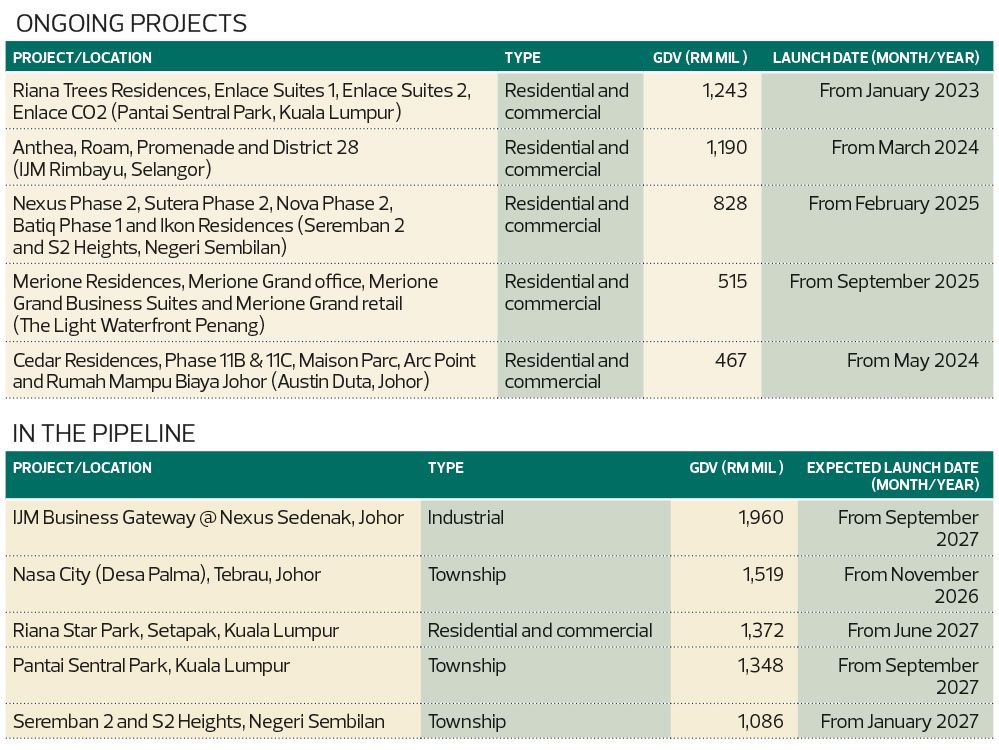
He explains that industrial development is one of the areas in which the company is looking to grow, with plans to launch an industrial park in Sedenak, Johor, next year. The project marks a renewed push into the segment, which Ling says IJM Land has not actively pursued for a long time.
The second driver is a TOD in Cochrane, Kuala Lumpur, undertaken with MRT Corp. Slated for launch next year, the project reflects the company’s intention to participate in developments through strategic partnerships.
The third is a pipeline of quick-turnaround projects in the country. Ling says the company is looking at projects with a shorter development cycle, which would allow it to bring in revenue and recover its capital sooner.
“We are not landbanking in the sense that we buy land and sit on it for 20 or 30 years. We are very much looking for projects that can have a quicker turnaround,” he adds.
This approach also informs its land acquisition strategy. Rather than buying large tracts of land and holding them for future development, IJM Land is exploring joint ventures with landowners.
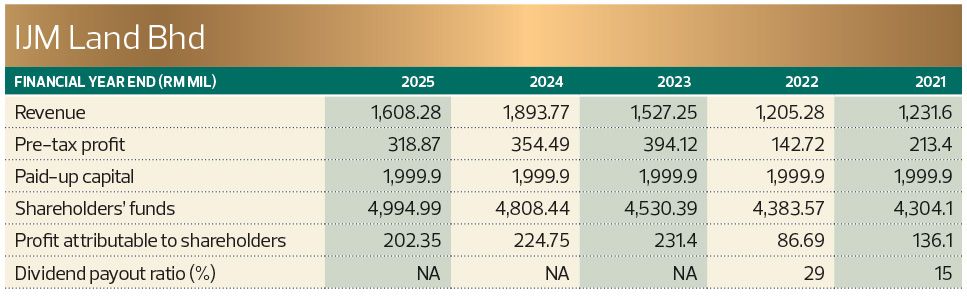
In FY2025, its revenue dipped 15% to RM1.6 billion from RM1.89 billion the previous year, while the profit dropped almost 10% to RM202.35 million, from RM224.75 million in FY2024.
In an interview with City & Country, Ling discusses how IJM Land is positioning itself for its next phase of expansion, the opportunities it is pursuing in Johor and Kuching, and its approach to partnerships and capital management.
City & Country: How is IJM Land adjusting its product mix, pricing and launch strategy amid market uncertainties and affordability concerns?
Datuk Tony Ling: There are several uncertainties, including changes in the global economy and geopolitical issues. Domestically, the [recent and] upcoming state elections may also affect sentiment. However, foreign direct investment is still going into Penang, Johor and Selangor.
As a developer, we have a range of products, from large townships and high-rise residential developments to integrated projects. This gives us flexibility. If we feel the market is not ready, we may push a launch to the following year rather than rush into it.
Market research is important not only when designing a product but also before launching it. We need to understand the surrounding supply, demand and buyer responses. If confidence is low, we do not mind holding back for six months or a year, reviewing the product and making adjustments before going to market.
Affordability also depends on location. Certain areas can support higher prices because buyers have the purchasing power, while in other locations, loan eligibility remains a challenge.
When we design a product, we are careful to get the price right while giving buyers value that they can sustain in the future. Whether it is a township, an integrated development or a high-rise project, we need to create long-term value. Connectivity is also one of the factors that gives a development sustainable value.
What are IJM Land’s key projects currently?
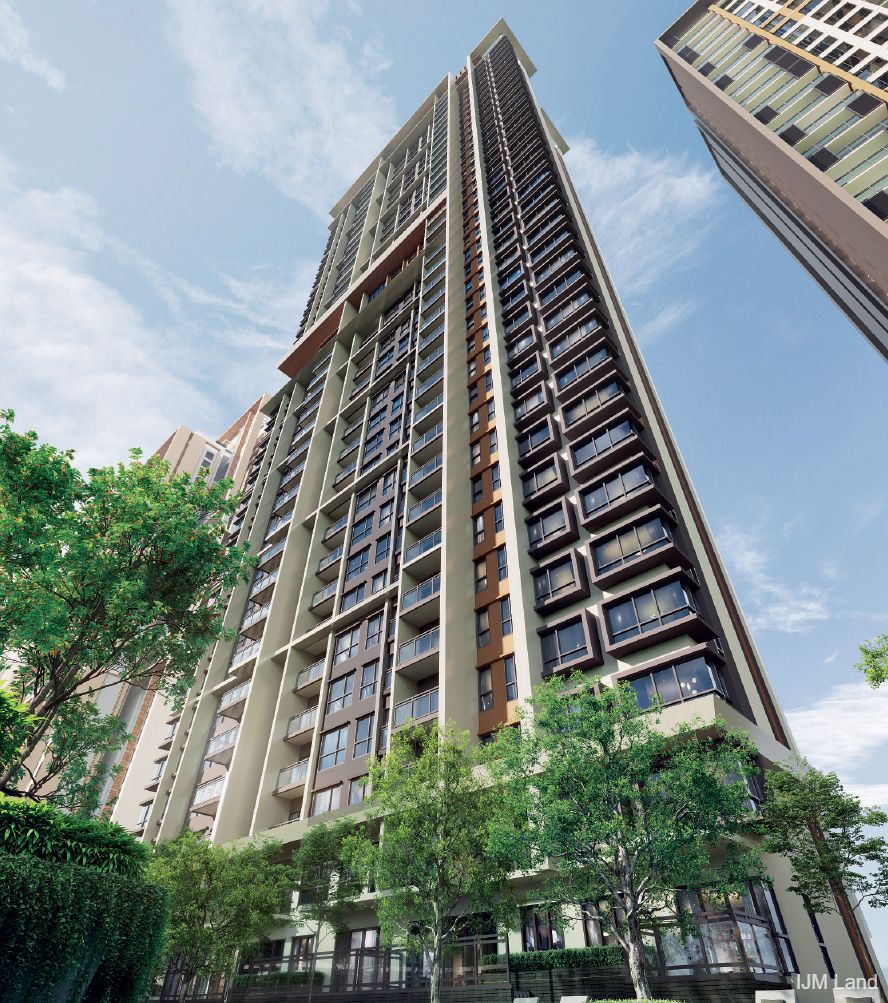
The Light City in Penang and Pantai Sentral Park in Kuala Lumpur are our two integrated development flagships. For townships, we have IJM Rimbayu in Selangor, Seremban 2 in Negeri Sembilan, and Nasa City in Johor. We also have smaller developments, but these are our main projects.
At The Light City, we have been incubating the waterfront development for several years, and the various components are now coming together. The Penang Waterfront Convention Centre, the largest exhibition and convention centre in the northern region, opened last year. It has hosted major events and has a calendar of activities lined up.
The office component (The Light Exchange Office Suites) is about 88% leased, with American company Jabil taking up four floors for its headquarters. We are targeting full occupancy by the end of the year.
We have also soft-launched The Waterfront Shoppes, which has about 700,000 sq ft of net lettable area. More than 60% has been leased, and we are targeting about 80% by early next year. Its waterfront setting and 750m promenade are among its key attractions.
Another major component is the 459-room Hyatt Regency Penang, which we are targeting to soft-open around mid-December. Together, the convention centre, office, mall and hotel will complete the investment property components of the development and contribute to recurring income.
We are continuing to build our Penang portfolio, with further launches planned through our own developments and partnerships.
How much land bank does IJM Land have, and what is the strategy for replenishing it?
Our net effective land bank is about 2,300 acres across Malaysia. This includes township land, integrated developments and industrial land. In Johor, Nasa City has several remaining phases of landed residential development, with an estimated development horizon of about five years. Sebana Cove retains around 400 acres of resort land, providing opportunities for future development and long-term value creation.
We are still looking at land opportunities, but are not interested in buying land and holding it for 20 or 30 years in the hope that its value will appreciate. We want projects that can provide a quicker turnaround.
We prefer joint ventures because they allow us to share the capital commitment and accelerate development.
We recently entered into a joint venture with MRT Corp to develop a TOD site next to the Cochrane MRT station, which is targeted for launch next year.
How does IJM Land intend to unlock value from its existing townships and integrated developments?
We have identified some non-strategic land and assets for monetisation. These are smaller parcels in locations where we no longer have a strong presence or a dedicated team. Rather than continue holding them, we can sell them and concentrate on our key developments.
For our larger townships, we look at how to bring in partners to develop selected parcels. Instead of simply selling land, we prefer to work with partners who can contribute their branding, customer base and capital.
The Light City is an example. Our partner brings experience in investment properties and other relevant areas, while we work together to develop the project. This allows us to accelerate development and recover capital more quickly.
For townships such as Seremban 2 and IJM Rimbayu, we are also looking at rejuvenation and higher-value products. This includes introducing higher-density residential and commercial components to complement the existing offerings.
Wellness is becoming part of IJM Land’s strategy. What is the thinking behind this?
We have an existing asset in Subang Jaya, formerly known as Holiday Villa, which we have held for more than 30 years. Rather than sell or operate it as another conventional hotel, we saw an opportunity to reposition it as a wellness destination, known as REN Wellness Retreat.
The global wellness industry presents a significant opportunity. We are not going into healthcare or medical services because that would require a different scale of investment and expertise. Instead, we are looking at wellness through prevention, rehabilitation and recovery.
The concept brings together traditional Chinese medicine, rehabilitation and recovery facilities, spa and sports facilities, wellness-focused food and beverage offerings, and accommodation designed around wellness programmes. There are also 60 independent facilitated living units designed to support wellness-oriented living.
Wellness is not just another asset that can generate recurring income. The second objective is to make it a new part of the DNA of our future developments. It will become a value proposition across our projects.
We also see potential for the wellness concept to develop into an operating brand. In time, we could help reposition other existing assets as wellness destinations and operate them.
How do you balance the development of large townships with integrated projects, which often require substantial capital and have longer gestation periods?
Townships require long-term investment. Seremban 2 began more than 30 years ago, while IJM Rimbayu started more than 10 years ago. Infrastructure and other upfront costs take time to recover.
For these developments, we are looking at ways to enhance their value through rejuvenation, new product offerings and partnerships. For integrated developments, the focus is on accelerating the pace of development and capital recovery.
We cannot launch every component at the same time because that could put pressure on our resources and the market. Instead, we phase the launches and introduce different products at different stages. Partners can also bring in their brands, customer bases and capital, helping us move faster while managing our investment.
What is IJM Land’s strategy for its UK property portfolio?
We are placing greater emphasis on investment-led developments and recurring income. The second phase of Royal Mint Gardens, branded as 88 Royal Mint Street, will feature a 14-storey development comprising 454 aparthotel units leased to StayCity Group under its “Wilde” brand, generating recurring income. The 79 residential units are earmarked for sale.
We are also developing The Wheat Quarter in Welwyn Garden City, a mixed-use project near a train station and shopping mall. The plan includes build-to-rent residential units and commercial components.
Another initiative is our partnership with Network Rail Property, through which we identify suitable land owned by the rail operator for development. This approach means we do not have to acquire land upfront and carry the holding costs before securing approvals. We can move into development once the site is agreed on and the necessary approvals are obtained.
The UK business also includes investment properties and a construction platform through our stake in integrated construction firm JRL Group. These activities give us opportunities to participate in development, investment and construction, while strengthening our ability to manage costs.
How does the Johor-Singapore Special Economic Zone (JS-SEZ) create opportunities for IJM Land in Johor?
We expect the JS-SEZ to support demand for our residential developments. Nasa City still has several phases to go, and we expect investment activity in Johor to create demand for housing.
We are also developing the industrial park in Sedenak with Southern Catalyst Sdn Bhd. The area is seeing interest from businesses involved in data centres, logistics, cold storage as well as electrical and electronics-related activities. We are looking at opportunities beyond data centres, including shared services and other industrial uses.
The project is about 1km from the Sedenak toll plaza and near the data centre developments in the area. We are working towards launching it next year, subject to the necessary approvals.
We will continue to explore land opportunities in Johor, particularly through joint ventures with landowners. The key is to find projects that can be developed and turned around within a reasonable period.
What are the other growth drivers for IJM Land, including its plans in Kuching?
As for Sabah and Sarawak, we see opportunities in Kuching. Sarawak has been attracting investments, and there are infrastructure and industrial developments that could support future growth.
We already have a small development team and a construction presence in the state. This gives us a platform to explore opportunities in residential, mixed-use and potentially smaller industrial developments.
We believe there is room for us to do more in Kuching. The important thing is to find the right product and the right partnership. We will continue to look at opportunities where we can bring value.
Save by subscribing to us for your print and/or digital copy.
P/S: The Edge is also available on Apple's App Store and Android's Google Play.