

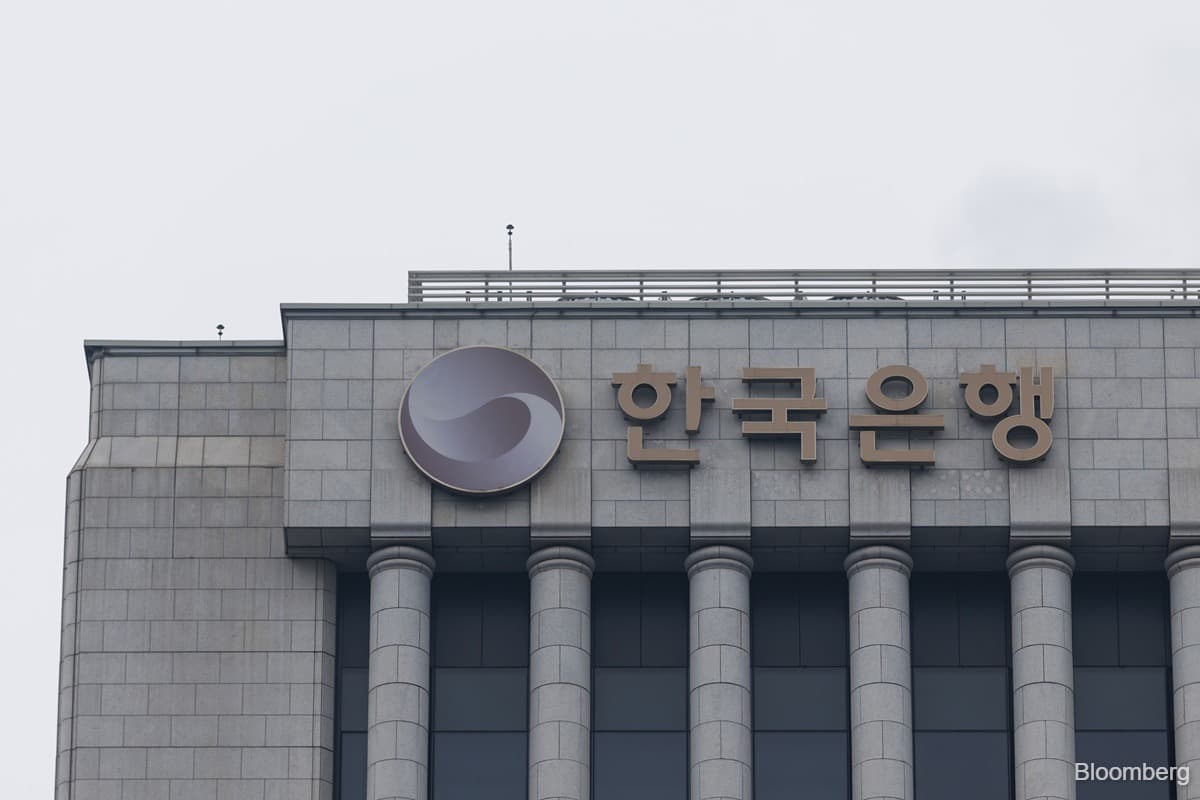
SEOUL (Nov 26): The Bank of Korea (BOK) raised its benchmark interest rate on Thursday, resuming its tightening cycle and upgrading its 2027 growth outlook to the fastest in six years amid a chip-driven export boom and persistent inflation.
The move aligns the BOK with other emerging market economies, which are grappling with persistent commodity and supply pressures linked to the war in the Middle East.
The seven-member monetary policy board voted 5-2 to raise the seven-day repurchase rate by a quarter of a percentage point to 3.25%, its highest since November 2024, a decision forecast by 32 of 34 analysts surveyed by Reuters.
The bank also raised this year's growth forecast to 3.9% from 3.3% previously and took its August outlook of 2.9% for next year to 4.1%, the fastest since 2021.
"A delicate balance was reached by dissenting votes, rather than a unanimous hike, while there also was a balance in the dot plot between 3.25% and 3.75%," said Paik Yoon-min, an analyst at Kyobo Securities.
Persistent price pressures
In quarterly projections, board members were almost evenly split on where interest rates would land in six months, pointing to 3.25%, 3.50%, or 3.75%.
Paik said changed wording in the bank's policy statement suggests the current rate-hike cycle will end after one or two more hikes, and maintained his call for another hike in the first quarter of 2027.
This month's statement said the board would determine the "timing" of further increases, having previously said the board would determine the "timing and pace".
South Korea's policy-sensitive three-year treasury bond futures KTBc1 fell 0.18 points to 103.83 as of 0335 GMT.
The bank also saw stickier inflation for 2027, at 2.4%, up from 2.3% previously.
"Inflation is expected to converge back to the target level (of 2%) only by the year after next. By taking preemptive action, however, we can reduce the overall degree of tightening," governor Shin Hyun Song said in a news conference in Seoul.
Shin explained that ongoing upstream cost pressures remain the primary driver of sticky inflation but that robust domestic demand also played a significant role.
The hike was the BOK's third this year, following back-to-back increases in July and August, and brought cumulative tightening to 75 basis points.
Analysts see the BOK delivering a final quarter-percentage point increase in the first quarter of 2027, taking the terminal rate to 3.50%, before holding steady through the rest of the year.
Asia's fourth-largest economy has expanded faster than anticipated in 2026 on surging global demand for semiconductors. Policymakers remained on a hawkish footing due to a heated housing market and headline inflation hovering well above the BOK's 2% target.
Uploaded by Liza Shireen Koshy