

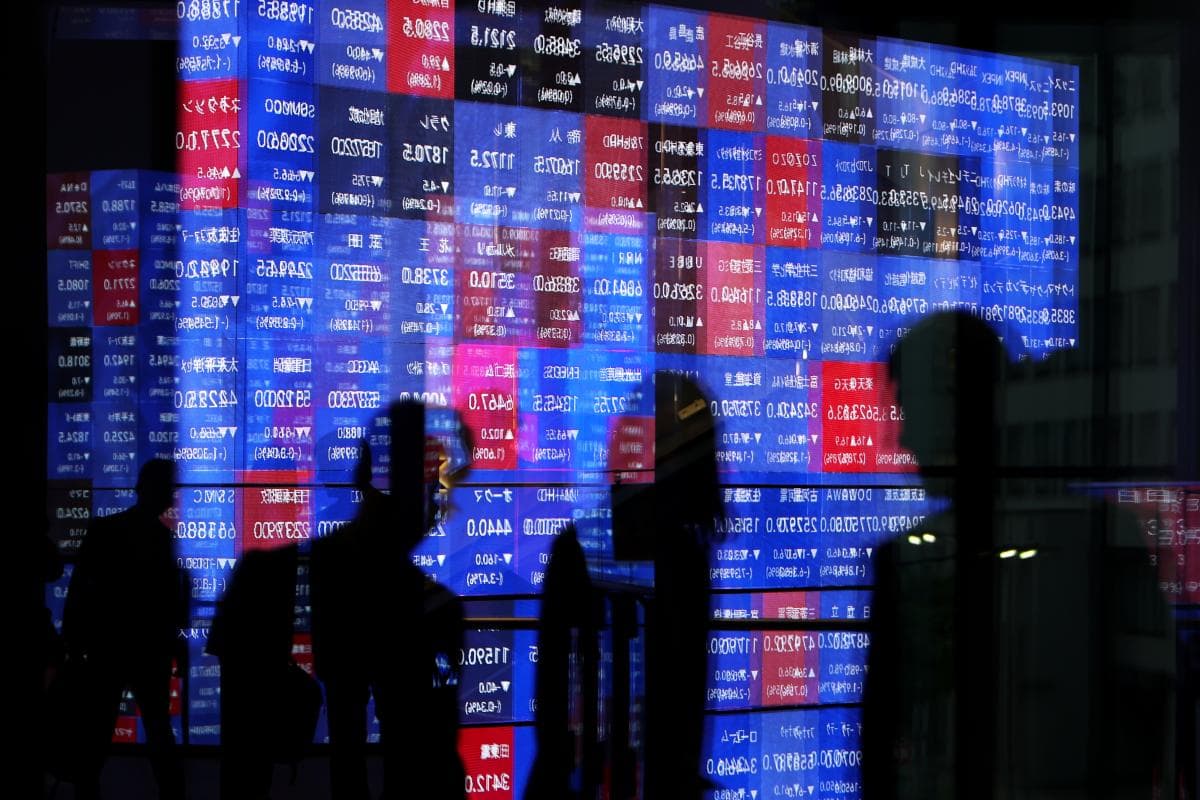
(Nov 26) : Asian stocks looked poised for modest gains after a late Wall Street recovery pulled the Nasdaq 100 from the brink of a bear market, while lingering concerns over the sustainability of the artificial intelligence trade lifted Treasuries.
Equity-index futures for Japan, South Korea and Australia pointed to gains after most companies in the S&P 500 rose even as the index closed 0.3% lower. The Nasdaq 100 briefly fell 20% below its closing peak, the definition of a bear market, before dip buyers helped trim Wednesday’s losses to 0.6%. The old-economy focused Dow Jones Industrial Average also reversed losses to gain 0.3%.
The wild swings in equities once again drove investors to the safety of US government bonds. Treasury 10-year yields fell for an eighth straight day on Wednesday, the longest slide since 2024. The dollar held its losses and gold bounced back after sliding below US$3,500 an ounce. Brent rose over 3% to settle under US$95 a barrel.
Investor doubts over the risks, costs and profit prospects of the artificial intelligence buildout have whipsawed equity markets worldwide in recent weeks. But the emergence of dip buyers on Wednesday shows there’s still belief in the technology as a growth engine, even as doubts persist. A key gauge of market turbulence spiked to 28, a level that signals growing market stress.
“There is still no end in sight for the heightened volatility as investors continue to unwind leveraged risky positions, and move into bonds and other haven assets,” said Fawad Razaqzada at Stonex Trading and Forex.com.
Beyond the AI debate, traders are also assessing US plans to impose new import taxes on goods from China, the European Union and a dozen other economies. It’s a move to rebuild President Donald Trump’s sweeping global tariff agenda that the Supreme Court found unconstitutional, and that traders fear could crimp growth and fan inflation.
Adding to the market jitters was data showing US inflation continues to run hot, which reinforced expectations for a Federal Reserve interest-rate hike next month.
Data released Wednesday showed the Fed’s preferred measure of underlying inflation, the personal consumption expenditures price index excluding food and energy, rose 0.3% in October. Overall inflation was up 3.8%, well above the central bank’s 2% target.
“Fed officials have expressed determination to solve the problem of sticky inflation,” said Jed Ellerbroek, portfolio manager at Argent Capital Management in St. Louis, adding that it “raises concerns that another rate hike may be coming in December.”
The US markets are closed on Thursday for Thanksgiving.
uploaded by Isabelle Francis