

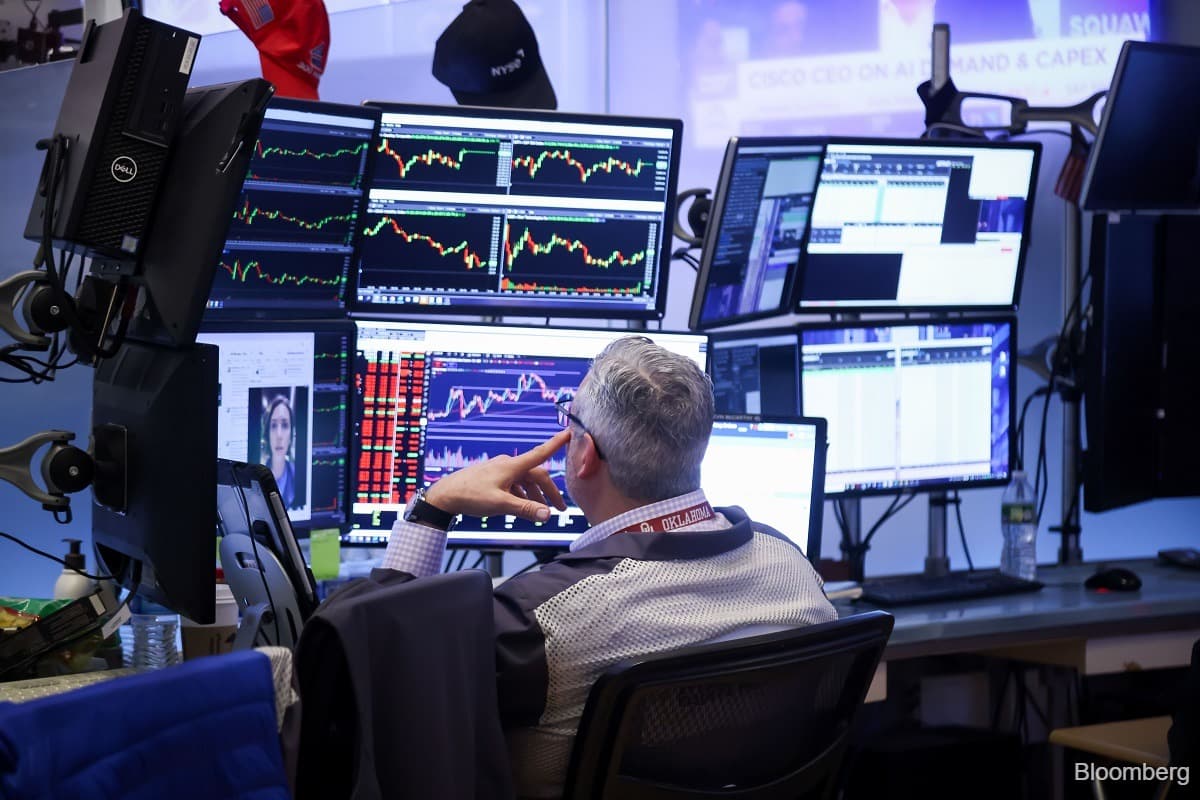
(Nov 25): The main US indices tumbled on Wednesday, with the tech-heavy Nasdaq falling 4%, as persistent selling in AI-linked stocks and fresh US tariff proposals hit sentiment amid mounting doubt over whether the debt-fuelled AI boom can generate sufficient returns.
Wall Street has been roiled this month, with fears of increased regulatory scrutiny of the AI sector following the Democratic sweep in the midterm elections adding to the pressure.
"The pace of CapEx spend and how much the data centre buildup may slow down over the course of the next 12 months has been the headwind for tech stocks and that continues again today," said Art Hogan, chief market strategist at B Riley Wealth.
Jensen Huang's return as Nvidia CEO after his removal earlier this month provided a temporary reprieve at the start of the week. Broader concerns lingered, however, and the Nasdaq and the S&P 500 remained on track for their worst November since 2008.
Chipmakers led the declines. Nvidia fell 8.6% and the broader Philadelphia Semiconductor Index plunged 5.8%.
Among other megacaps, Alphabet fell 5%, Amazon shed 4.9%, while Microsoft and Apple were down 3.2% and 1.4%, respectively.
Anthropic dropped 8.2%. The AI startup closed Tuesday at US$81.90, below its US$83 IPO price, on the heels of a blockbuster market debut last week.
The Nasdaq 100 briefly fell 20% from its record closing high, flirting with bear market territory.
Meanwhile, the US proposed new tariffs on 14 major trading partners to combat what it calls structural excess industrial capacity, reviving global trade tensions.
China will face the highest tariff rates, with the proposed 20% excess-capacity levies being in addition to the roughly 25% duties imposed during US President Donald Trump's first term.
The extra duties could cloud the outlook for investors grappling with the prospect of interest rates staying higher for longer, as inflation has accelerated amid a sustained rise in oil prices tied to the US-Iran war.
Tariff concerns were overshadowing economic data, according to Hogan. The Personal Consumption Expenditures Price Index rose 0.3% on a monthly basis and 3.8% annually in October, both in line with estimates.
The core figure, the US Federal Reserve's preferred inflation gauge, rose 3.3% last month, a tad more than the expected 3.2%.
Separately, the US economy grew 4.3% in the third quarter, higher than the expected 3.5%, a preliminary estimate showed.
The data reinforced bets the Fed will hike rates by at least 25 basis points before the end of 2026.
At 09:53am the Dow Jones Industrial Average fell 995.52 points, or 1.99%, to 49,023.18, the S&P 500 lost 205.89 points, or 2.86%, to 6,995.20, and the Nasdaq Composite shed 985.93 points, or 4.15%, to 22,747.61.
The S&P 500 technology sector led the losses with a 5.2% fall. Most other sectors on the benchmark also traded in negative territory.
In other stocks, Dell Technologies fell 5.4% even after raising its annual revenue and profit forecasts.
Rival PC maker HP gained 10% after reporting fourth-quarter revenue of US$16 billion (RM65.8 billion), beating analysts' estimates.
US markets will be closed for Thanksgiving on Thursday and operate a shortened session on Friday.
Declining issues outnumbered advancers by a 3.51-to-1 ratio on the NYSE and by a 4.54-to-1 ratio on the Nasdaq.
The S&P 500 posted four new 52-week highs and 11 new lows, while the Nasdaq Composite recorded 12 new highs and 329 new lows.
Uploaded by Magessan Varatharaja