

(Nov 25): India’s appetite for Chinese soybean oil is fading as palm oil becomes more competitive, putting the brakes on Beijing’s surprise emergence as a major exporter.
Palm oil’s widening discount to soybean oil over the past two to three months has eroded a short-lived advantage enjoyed by Chinese suppliers, traders and analysts said. India’s domestic oilseed harvest has also reduced demand, while supplies from Argentina — the world’s biggest soybean oil exporter — have proven hard to displace.
The pullback has yet to reflect fully in Chinese customs data, which show that the country shipped 85,652 tonnes of soybean oil in October, or 21% more than a year earlier. That marked a month-on-month decline, however, and buyers in India said they had cut purchases further in recent weeks.
“Our soyoil buying from China has slowed down as local crops were harvested and palm became much cheaper,” said Sandeep Bajoria, chief executive officer of Mumbai-based vegetable oil brokerage and consultancy Sunvin Group.
China emerged as a net exporter of soybean oil — an unlikely shift for a traditional importer of the commodity — after crushing a record amount of imported soybeans for animal feed last year. With more oil than its domestic market needed, China nearly tripled shipments to 862,281 tonnes in the first 10 months of 2026, with about half going to India.
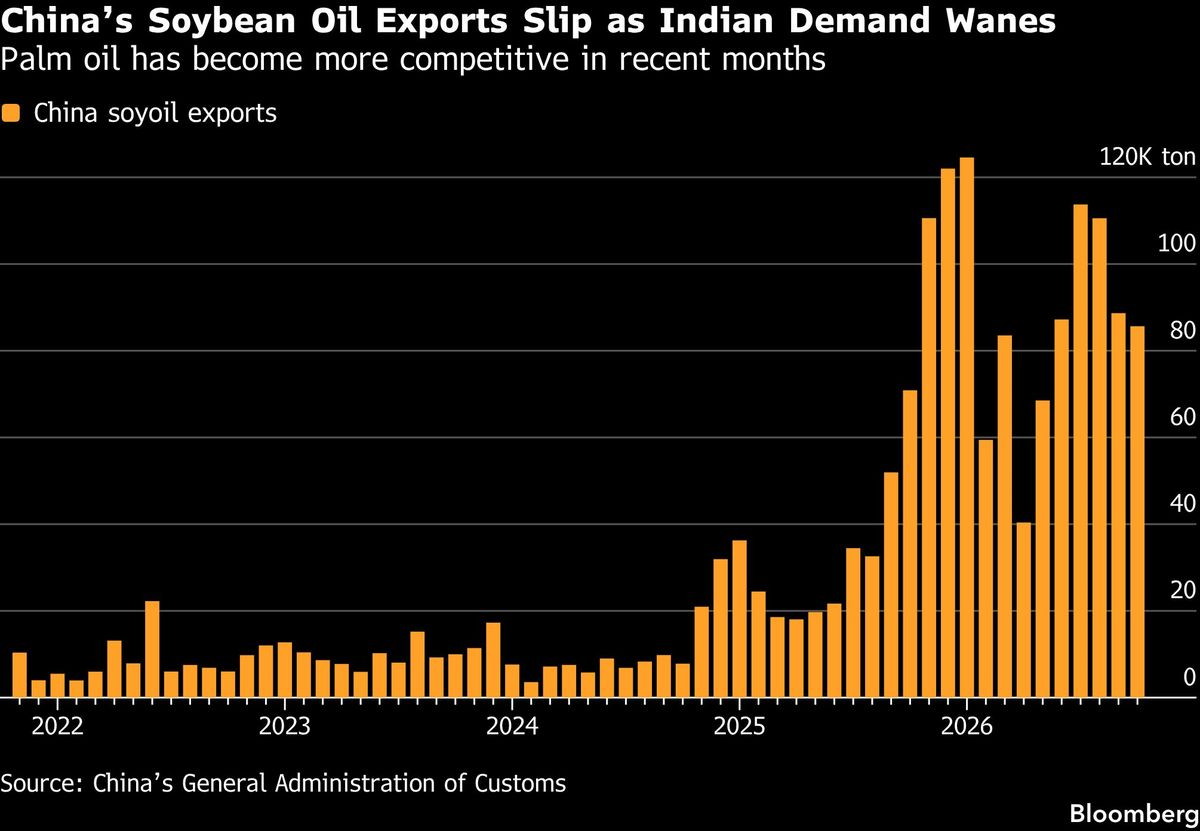
In August, palm oil was fetching a premium of about US$12 (RM49.41) a tonne over Chinese soybean oil in India, Bajoria said. In recent months, however, that has reversed: palm oil was trading at a US$75 discount in October and the gap has since widened to around US$160 a tonne.
Benchmark palm oil futures in Kuala Lumpur — which set the tone for global prices — were near RM4,194 a tonne on Wednesday, having tumbled about 17% from a peak in September as record Malaysian inventories weigh on the market.
“Palm is increasingly emerging as the clear winner in the current edible oil market,” said Tajgir Rahman, director of trading at IFFCO Group, a Dubai-based global edible oil processor and trader. “Indian buyers may not only switch fresh purchases to palm but could also wash out previously booked soyoil cargoes in favour of spot palm,” he added.
Further limiting China’s export surplus, the country’s soybean crush is expected to fall by around four million tonnes next year from this year’s 104 million tonnes — the first decline in five years — as poor hog margins weigh on meal demand, Ryan Chen, China import and export director at Cargill Investments, said at an industry conference in Bali, Indonesia, this month.
“Chinese soybean oil exports could fall in the coming months as weaker meal demand slows crushing and reduces the surplus available for overseas buyers,” said Jacquelyn Yow, regional head of plantation research at CGS International.
But a slowdown might not signal the end for China’s newfound role as exporter. According to brokerage UOB Kay Hian, shipments are expected to hit a seasonal lull from December through February, but the country could remain a swing supplier over the longer term.
Uploaded by Chng Shear Lane