

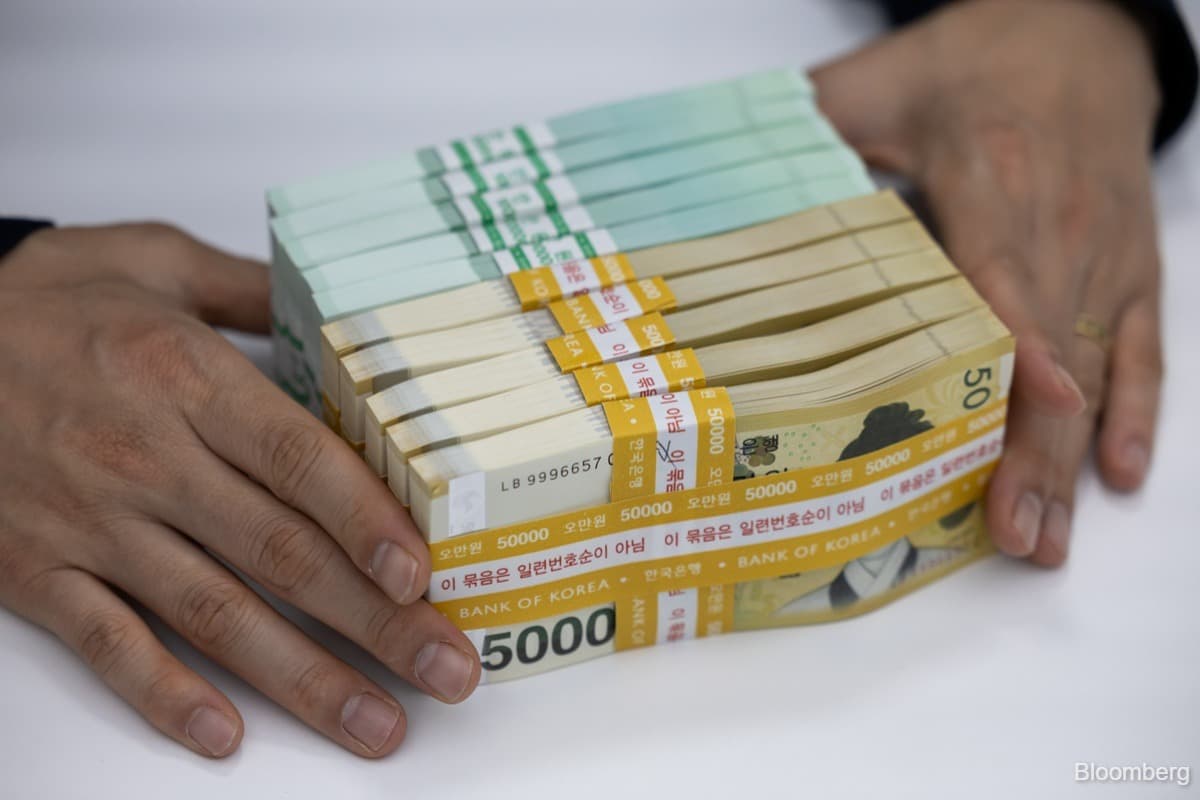
(Nov 25): South Korea’s AI chip windfall is unleashing a wave of year-end currency flows, potentially pushing the won into its next phase of gains.
SK Hynix Inc and Samsung Electronics Co are poised to convert much of their massive export earnings to pay for dividends and record employee bonuses in won. They will also need more of the local currency to cover large tax bills owed to the government from the artificial intelligence hardware surge.
Those inflows are expected to help boost the won into the 1,200-per-dollar range by the end of the first half of 2027, according to Macro Hive and Korea Investment & Securities. Citing similar catalysts, Goldman Sachs Group Inc sees the currency strengthening to 1,280 next year, a roughly 5% gain from Wednesday’s level of 1,345.80.
Compressed into the next few weeks, these payouts bode well for the won, adding momentum to a 7% gain against the dollar so far this year. While overseas investors repatriating their dividends may create some won-selling pressure in the short term, record exports and a hefty current-account surplus also keep the currency’s 2027 upward trajectory intact, market watchers say.
“The bigger story is that exporters still have substantial dollar-selling needs,” said Vivek Rajpal, Asia strategist at JB Drax Honore in Singapore. “The won’s appreciation trend has further to go despite weak sentiment towardsAI stocks.”
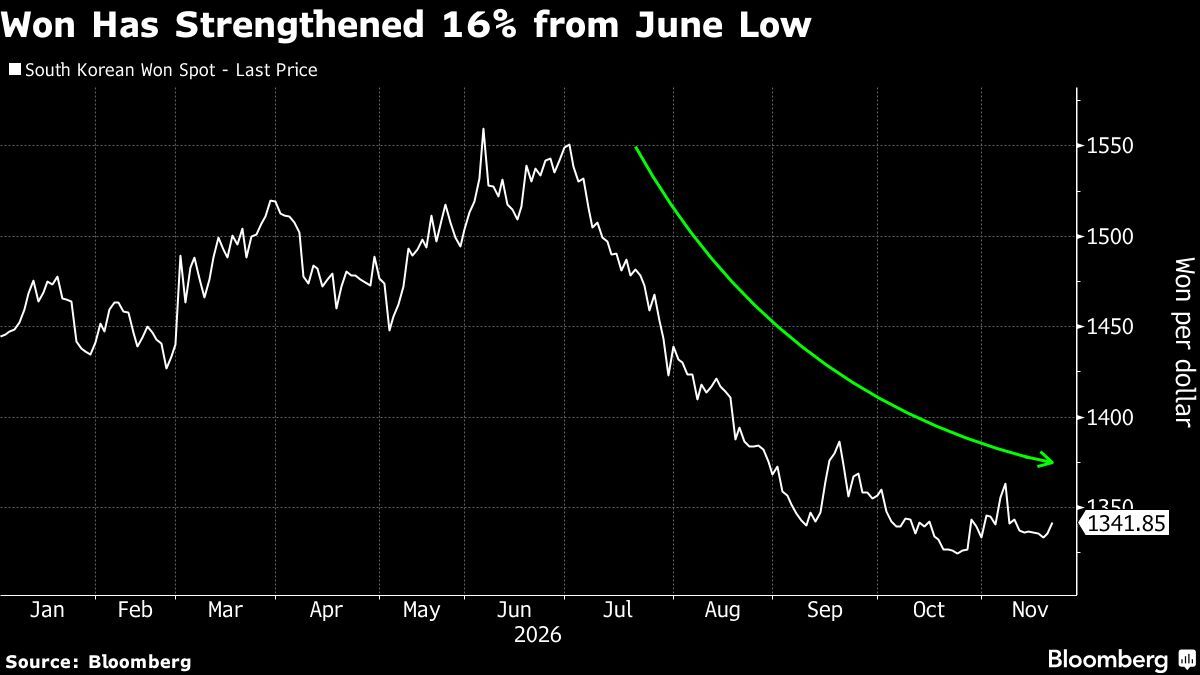
The won has rallied about 16% since hitting a 17-year low in June, as exporters led by chipmakers stepped up dollar sales to fund projects in Korea. The currency is outperforming all its Asian peers this year and heading for its biggest annual gain since 2017.
Korea’s two largest chipmakers are rolling out unprecedented dividend plans, driven by a memory-chip sales bonanza and a government push for local firms to boost shareholder returns.
Samsung is scheduled to distribute 30 trillion won (US$22.3 billion) in third-quarter cash dividends on Nov 27, which is about 12 times the average size of its quarterly payouts since the beginning of 2025, according to filings.
SK Hynix will pay its 14.1 trillion won dividend allocation for the quarter roughly by the end of the year, or more than 50 times the average size of its quarterly payouts since the beginning of 2025, company filings show.
Repatriation flows
The payouts should support the won, said Moon Dawoon, an economist at Korea Investment & Securities. Companies are likely to convert more dollars into won to fund the payouts than what will ultimately flow back out as foreign investors repatriate their proceeds, she said.
To be sure, a large share of the cash will go to overseas shareholders, who tend to swiftly convert payouts back into greenbacks.
Foreign investors are estimated to receive about 15 trillion won from Samsung, while SK Hynix’s foreign investors are also slated to receive about half of its total payouts, according to Bloomberg calculations based on share ownership data.
In total, Samsung’s foreign investors will repatriate about half of the dividends they receive, amounting to about $5 billion, as they’ve typically done in the past, estimated Lee Minhyeok, an economist at Kookmin Bank.
Those outflows could bite harder toward year-end as global funds close their books and average trading volumes thin, a backdrop compounded by a stronger dollar and a pullback in semiconductor stocks, Lee said.
“There is considerable downside pressure” on the won this week ahead of the payouts, Lee said, referring to those from Samsung due Nov 27. “Some investors may convert their proceeds into dollars more quickly than usual to lock in their returns,” he added, while still expecting the won to rally in the longer-term period.
The chip boom is also set to deliver record worker bonuses early next year, potentially prompting chipmakers to sell more dollars to fund the won payouts.
Major chip, auto and shipbuilding companies will pay 60 trillion to 70 trillion won in bonuses in 2027, roughly six times this year’s 10.9 trillion won, according to Bank of Korea’s estimates.
Samsung and SK Hynix typically pay annual incentives in the first quarter, and the central bank estimated they alone will account for about 60 trillion won in the first three months of the year.
Bonus payments are likely to generate some temporary volatility in won trading, said Mingze Wu, a currency trader at StoneX Financial. “But overall the prevalent trend of the day will likely stay,” Wu added. Bonuses and special payments are “likely to be spaced out.”
Taxman cometh
Companies with December fiscal years must pay corporate taxes by the end of March, forcing exporters to raise won ahead of the deadline.
Thanks to a semiconductor-driven windfall, the Korean government projects record corporate tax revenue of 478.6 trillion won for 2026, up 28% from last year. Tax payments will contribute about $102 billion in net won demand and help lift the currency to 1,200 per dollar by mid-2027, Macro Hive estimates.
The chipmakers’ taxes and bonuses will be “a big deal,” JB Drax’s Rajpal said.
Uploaded by Liza Shireen Koshy