

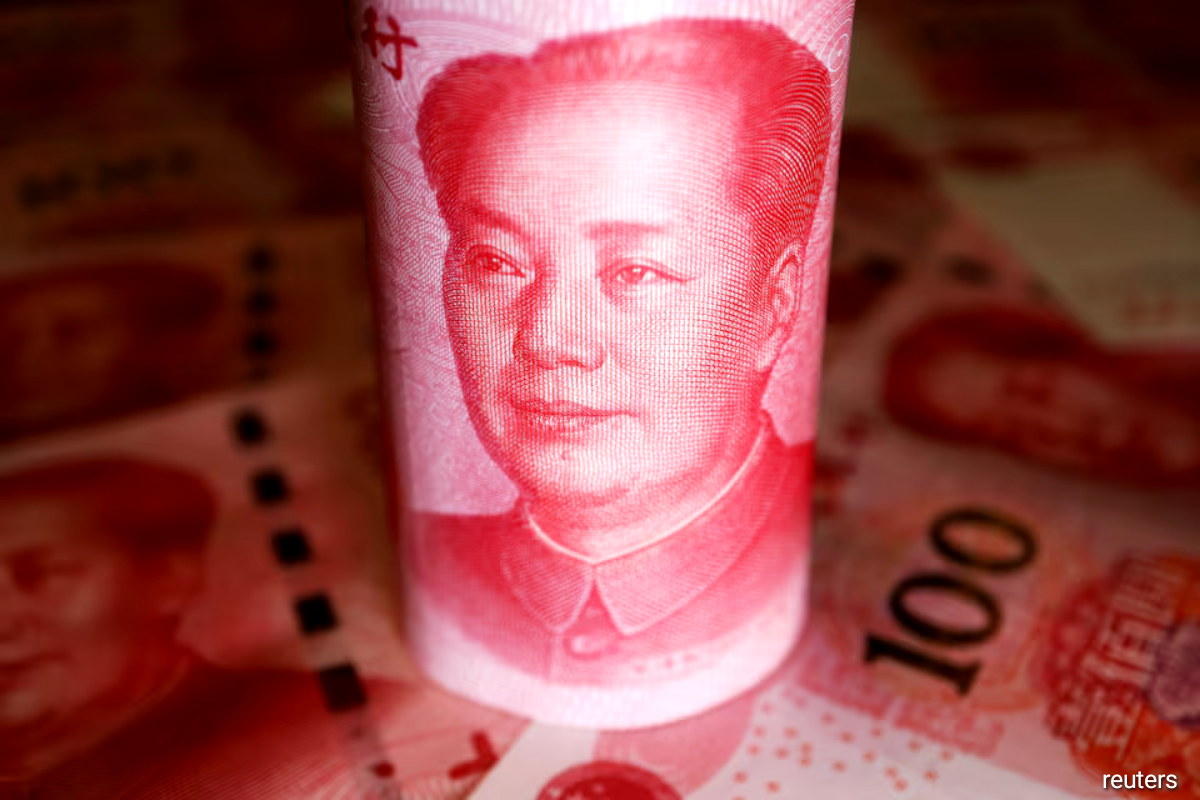
(Nov 24): The central banks of Singapore and China will expand ways for financial institutions to access yuan funding in the city-state to help finance a broader range of corporate activities, in another step to promote the currency's international use.
The Monetary Authority of Singapore (MAS) and the People's Bank of China will upgrade the MAS RMB Facility to better meet the growing yuan financing needs in the region, according to a statement Monday (23 Nov). The facility, backed by a bilateral currency swap deal, will be structured into two parts: an RMB Corporate Facility and an RMB Liquidity Facility.
The deal with Singapore aligns with broader efforts by the PBOC's Shanghai branch to expand the yuan's role as a pricing, investment and reserve currency over the next decade, including supporting multinational corporations in conducting global treasury management in yuan and developing offshore markets.
"This latest initiative reinforces Singapore's position as one of the leading offshore RMB hubs, especially being a gateway for Southeast Asia," said Frances Cheung, head of foreign exchange and rates strategy at Oversea-Chinese Banking Corp (OCBC). "The enhanced facilities will promote the use of RMB in a broad range of transactions such as trade financing, working capital and intra-group funding."
The corporate facility will fund third-country trade financing, working capital, capital expenditure and eligible intra-group transactions in yuan, with borrowing tenors expanding up to six months, MAS said. The liquidity facility will continue to provide backstop funding to support stability in Singapore's offshore yuan market.
The move comes as yuan deposits in Singapore reached a record high of 337 billion yuan (US$50.6 billion) at the end of the first half of 2026, according to MAS data compiled by Bloomberg. The initiatives were announced at a Joint Council for Bilateral Cooperation meeting in Singapore on Monday.
The corporate and liquidity facilities are backed by a bilateral currency swap arrangement of up to 300 billion yuan and S$65 billion, which MAS and the PBOC renewed in 2022 through 2027. The facilities will accept Singapore Government Securities and MAS Bills as collateral alongside local-dollar cash, with Chinese government bonds also under consideration, according to the MAS statement.
"If China government bonds become eligible collateral, this would help further increase the incentives for investors to hold Chinese bonds," Cheung said.
Beyond these facilities, MAS and the PBOC are exploring linking their fast-payment systems for small-value transfers, according to the statement. MAS and the China Securities Regulatory Commission also pledged to support cross-border corporate listings and new exchange-traded funds with the Shanghai and Shenzhen bourses.
Uploaded by Siow Chen Ming