

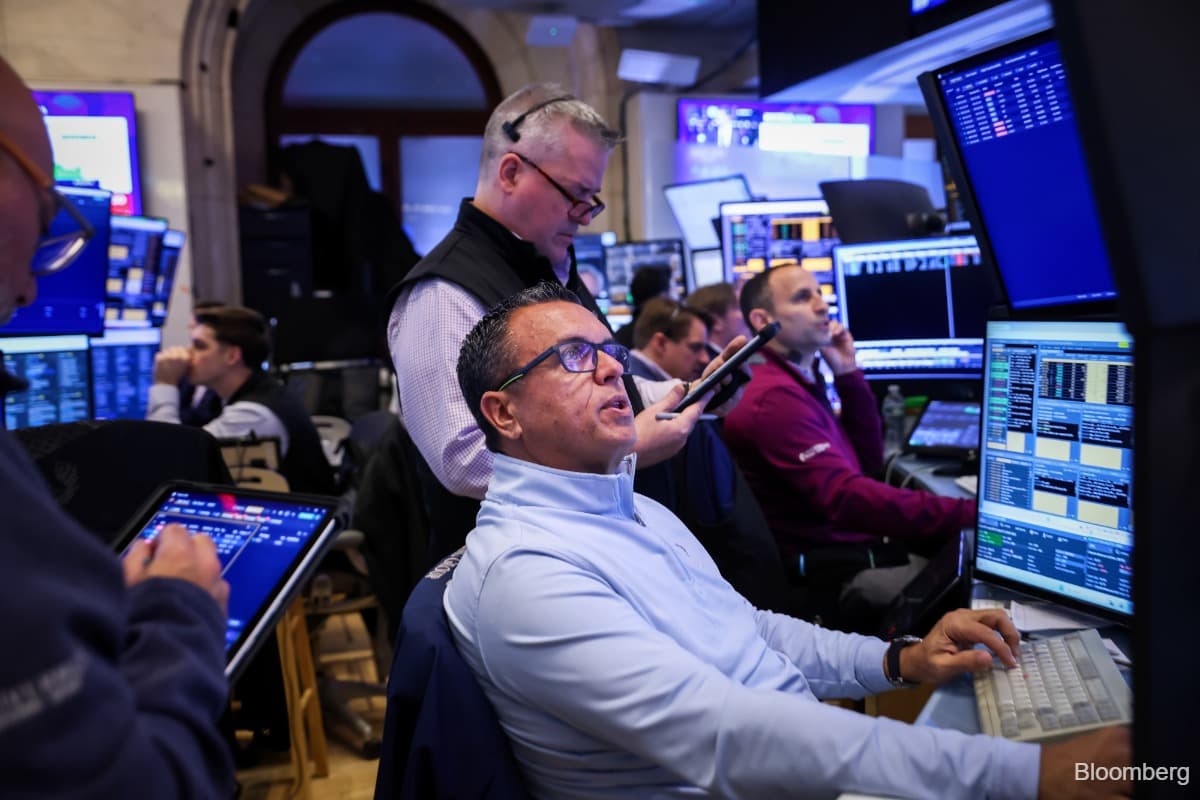
(Nov 24): Wall Street roared back with its biggest rally since April 2025 on Monday, though analysis of the move suggests mechanical buying helped add momentum to the advance.
The S&P 500 Index jumped 4.7%, helped by Nvidia Corp’s decision to reinstate Jensen Huang as CEO less than two weeks after he resigned. The news hit a market that had piled into protection during Friday’s tumble, which pushed the benchmark into correction territory.
As volatility collapsed on Monday, put options bought as hedges during the slide moved far out of the money, losing their sensitivity to the index, according to Charlie McElligott, a cross-asset strategist at Nomura Securities International Inc. Dealers who had sold futures against those puts had to buy them back, while short sellers rushed to cover their positions and investors chased the upside, he wrote in a note to clients on Monday. The Cboe Volatility Index fell more than nine points on the day.
The largest burst of buying was expected at the close. Leveraged exchange-traded funds (ETFs) have to rebalance at the end of each session in the direction of the day’s move to keep their leverage constant. McElligott estimated these funds were on track to buy about US$41 billion (RM168.85 billion) — the second-largest daily buy in Nomura’s records.
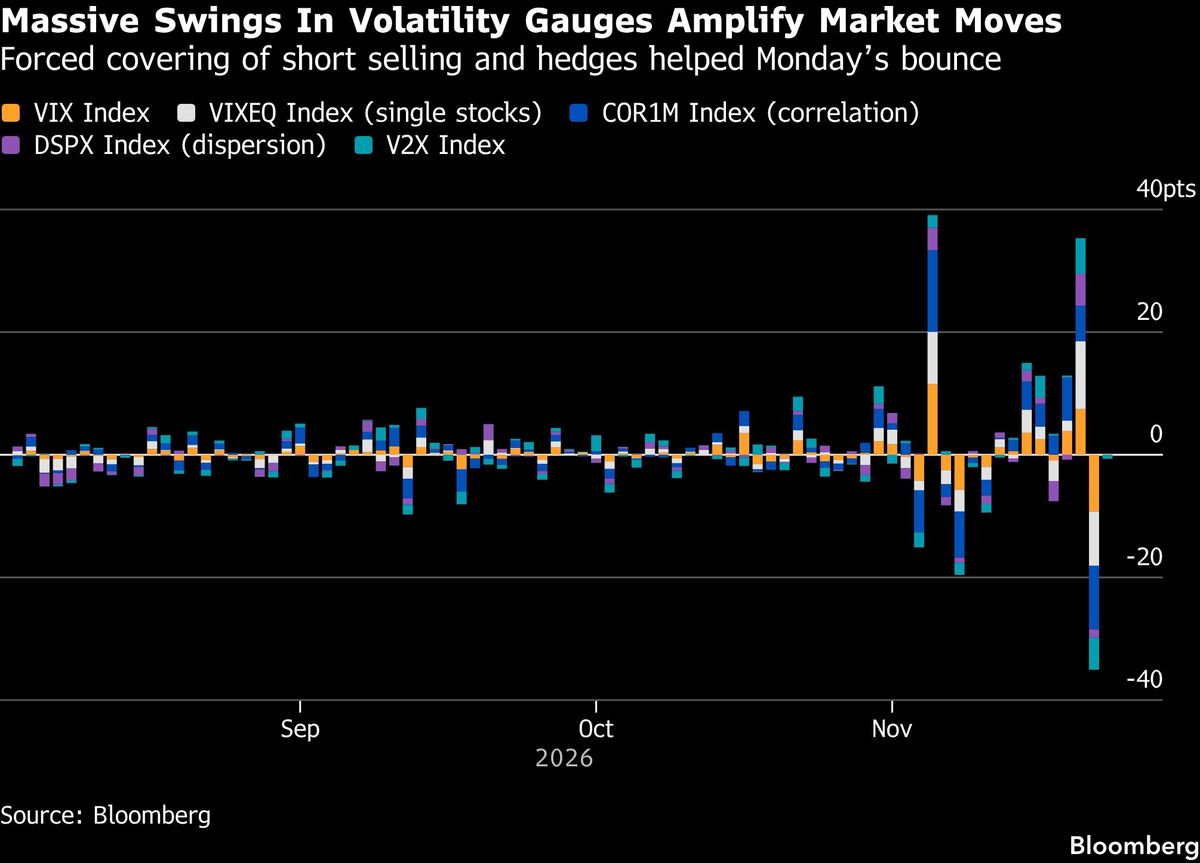
That dwarfs the US$11 billion to US$16 billion of selling he projected from volatility-control funds, which cut exposure when market swings become too large.
More buying may now follow. Nomura’s model of trend-following funds, known as commodity trading advisers, had turned short on the S&P 500 across all time horizons in recent weeks. However, a close above 7,043 points for the index would be enough to flip the model’s 12-month signal back to a long, McElligott wrote. That would imply buying of about US$16 billion in S&P 500 futures and roughly US$2.5 billion for Nasdaq 100 contracts. The S&P 500 ended at 7,237.17 points on Monday, with futures on the back foot early Tuesday.
None of this settles the bigger concerns around the market, according to the Nomura strategist. He called it naive to think a one-day surge clears the catalysts behind the selloff, citing tighter financial conditions, a reset in assumptions on AI capital spending, inflation that remains too high, higher real rates and wider credit spreads.
“This ‘mechanical bounce’ guarantees us nothing with regard to those larger long-form ‘structural forces’,” he wrote in the note. But he added Huang’s return may preserve Nvidia’s role in financing the AI buildout, extending the cycle’s runway and reducing the risk of more severe outcomes.
Uploaded by Felyx Teoh