

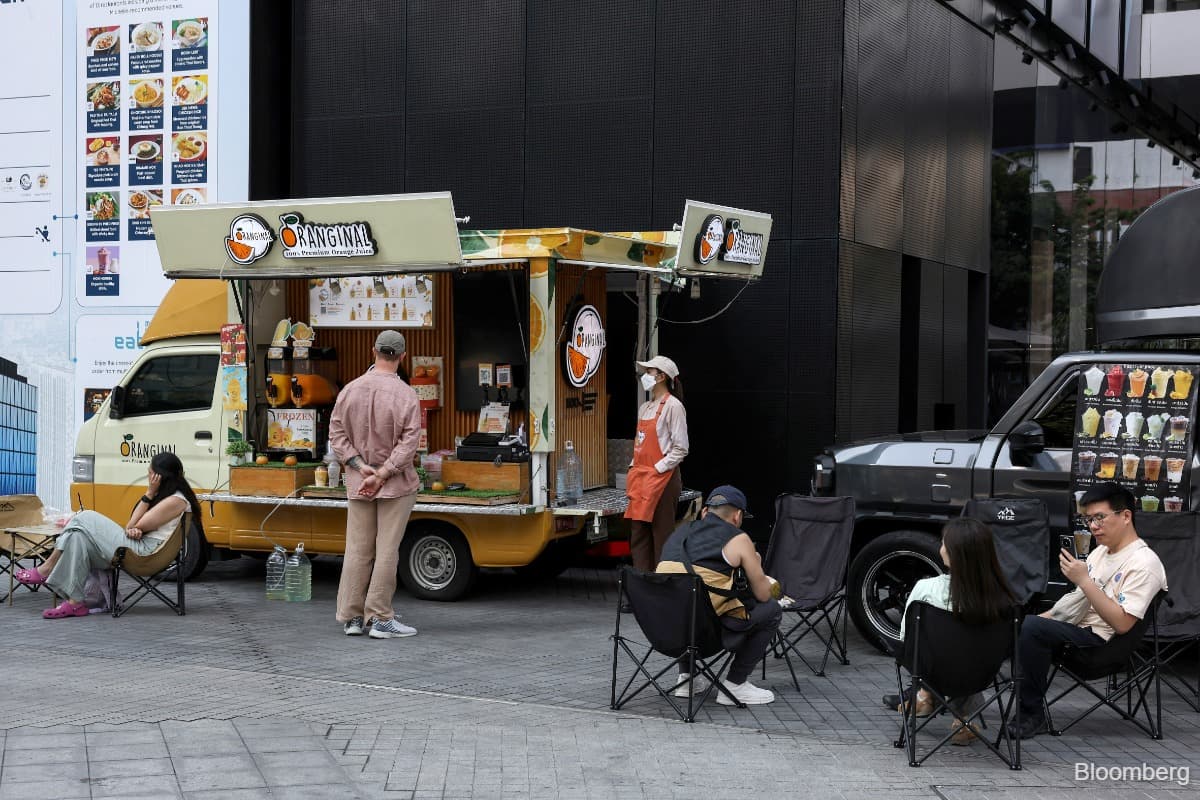
(Nov 24): Street-food carts, neon-lit night markets and farmers tending lush rice fields are fixtures of Thailand’s tourism image. They’re also emblematic of an economic challenge hiding in plain sight.
Much of the activity behind those postcard scenes takes place beyond the tax and registration systems, limiting businesses’ access to affordable credit and leaving the government with a narrower revenue base.
About 2.5 million businesses, or 78% of Thailand’s total, operate informally, according to research presented Tuesday at the Bank of Thailand’s annual symposium. About 26 million people, or 65% of Thailand’s workers, are informally employed, while legitimate informal activity may account for 21% to 35% of gross domestic product, the research showed.
That vast informal economy is taking on greater significance as Thailand confronts a fiscal squeeze. Years of budget deficits have pushed public debt closer to its ceiling, leaving the government with diminishing room to stimulate an economy already struggling to grow at its potential.
“Ultimately, informal businesses and workers limit the government’s ability to collect taxes,” Governor Vitai Ratanakorn said. “That, in turn, reduces the government’s policy space, and these problems keep feeding back into one another.”
The informal economy isn’t synonymous with illicit activity, and much of it consists of legitimate businesses operating outside tax or registration systems, Vitai said.
Bringing more businesses and workers into the system could broaden the pool of taxpayers and raise revenue without relying solely on higher tax rates.
But doing so is far from straightforward. Nearly a third of informal firms studied would make no profit or lose money after accounting for taxes, bookkeeping and employment-related costs of operating formally. More than 40% would be left with only thin profits.
Some government policies may also give companies an incentive to stay small. Deputy Governor Piti Disyatat said many businesses stay below revenue thresholds of 50 million (US$1.5 million or RM6.1 million) or 100 million baht to retain certain benefits. That can discourage them from growing to their full potential.
Without reliable accounts or income records, firms can struggle to obtain affordable bank financing, limiting their ability to invest and become more productive. Reducing the costs of entering the formal system while improving access to finance and competition would help break that cycle, Piti said.
Unless those problems are addressed, he warned, Thailand’s economy “will continue to grow at below potential”.
Uploaded by Chng Shear Lane