


(Nov 24): JPMorgan Chase & Co and other major precious metals dealers traded a new form of digital gold in London for the first time, an early test of a system that could revamp the plumbing of the world’s biggest bullion hub.
JPMorgan, HSBC Holdings plc and StoneX Group Inc completed their first trades using fractional ownership interests in physical gold bars last week, the World Gold Council industry group said in a statement. While still at a trial stage, a successful rollout of the new system could mark one of the most significant additions to the structure of the London bullion market in decades.
“This is a historic step forward for the gold market,” said David Tait, chief executive officer of the WGC, which led the initiative. “For the first time, leading institutions have transferred, settled and used fractional ownership of physical gold as collateral through real, live transactions.”
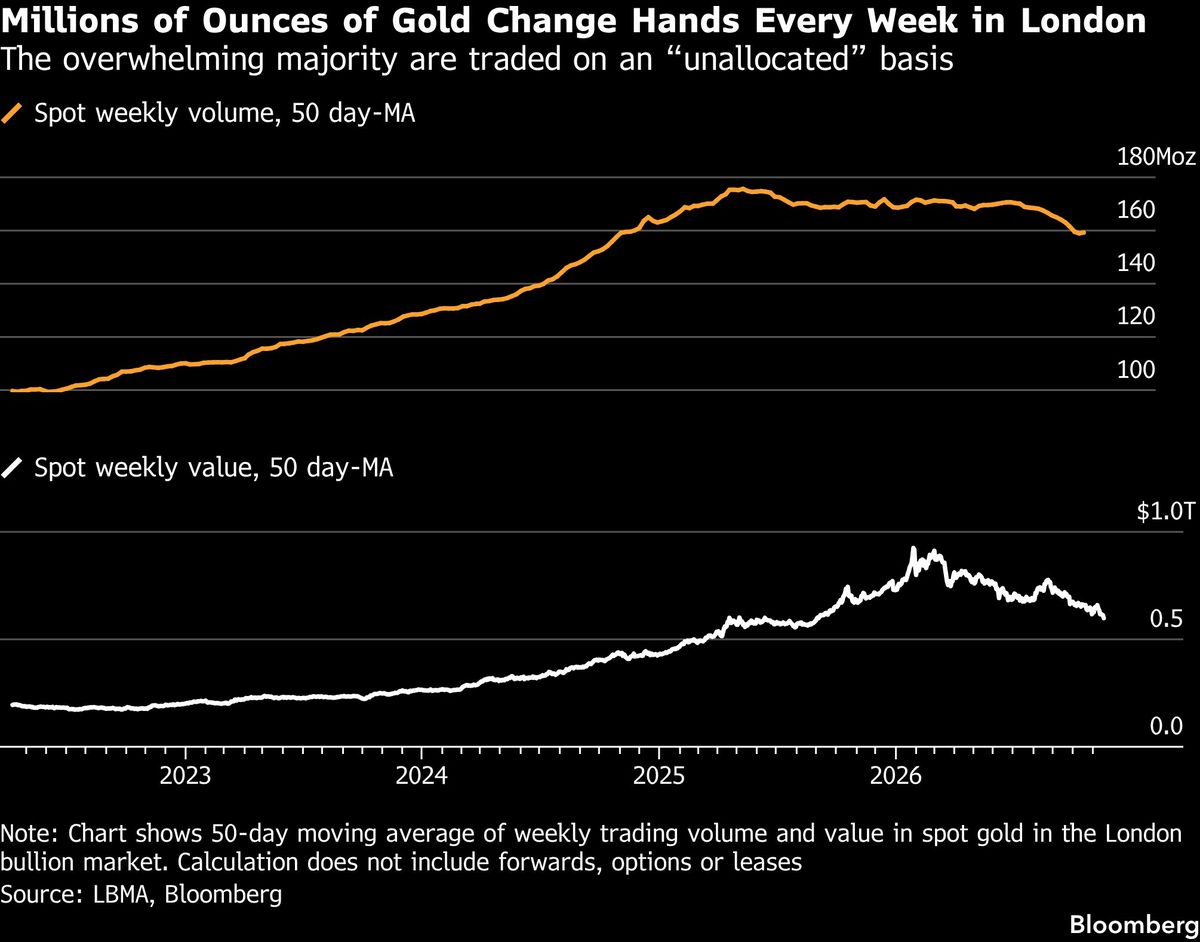
Hundreds of billions of dollars worth of gold change hands every week in London, setting benchmark prices for the global precious metals industry. What is traded in that market, for the most part, are “unallocated” paper contracts that oblige the vaulting bank to deliver gold on request.
Trading unallocated gold is cheaper and easier than transacting in hefty 400 ounce bars, allowing traders to pay lower storage fees and deal in precise quantities of metal. The drawbacks are that holders remain exposed to the creditworthiness of the vaulting bank, and that the paper claims cannot generally be used as collateral.
Banks can post the new fractional gold — called ‘pooled gold interests’ — as collateral without needing to move the physical metal, potentially making bullion a more useful financial asset. The WGC is also lobbying UK authorities to bring gold within the country’s financial-collateral regime, which would make it easier to pledge and enforce in insolvency.
Gold that is fractional, easily transferable and shielded from the insolvency of an intermediary would allow the metal “to be used more widely across financial markets, including as collateral”, Mark Amlin, global head of physical commodities at JPMorgan, said in the statement.
Asian financial centres are looking to capture a greater share of bullion trading from London. Hong Kong began trial operations of a new gold clearing system similar to London’s this year, while Singapore unveiled measures including a gold vaulting service for central banks.
Earlier this year, the UK’s Financial Conduct Authority sought the views of the financial sector on gold tokenization, adding that developing the next generation of gold-market infrastructure would “reinforce and preserve London’s position as a centre for gold trading and custody”.
With well over US$1 trillion (RM4.12 trillion) worth of gold in its vaults, including mounds of central bank-owned metal underneath the Bank of England, London is unlikely to lose its position as the dominant trading hub anytime soon. Many traders also expect the market will probably maintain its primarily “unallocated” structure, even if pooled gold interests prove to be popular with dealers and clients.
Not all prior attempts to reform London’s precious metals market have been successful. Four years ago, the London Metal Exchange abandoned an effort to move more trading onto an exchange, an initiative backed by banks including Goldman Sachs Group Inc and Morgan Stanley, after the contracts failed to attract sufficient volumes.
Unlike some previous attempts to reshape London’s bullion market, pooled gold interests are designed to work alongside the existing over-the-counter system, rather than shift trading away from it, said Mike Oswin, global head of market structure at the WGC. “We are not here to say the unallocated market isn’t working,” Oswin said. “This is complementary to it.”
Several elements still need to be worked out before pooled gold interests can be rolled out more broadly, he added, including deciding how the system would be governed.
Five banks currently provide vaulting and oversee the existing clearing infrastructure in the London market: Citigroup Inc, ICBC Standard Bank, UBS Group AG, HSBC, and the biggest player, JPMorgan. Deutsche Bank AG and Morgan Stanley are also seeking to join the small club, Bloomberg reported in October.
Uploaded by Chng Shear Lane