

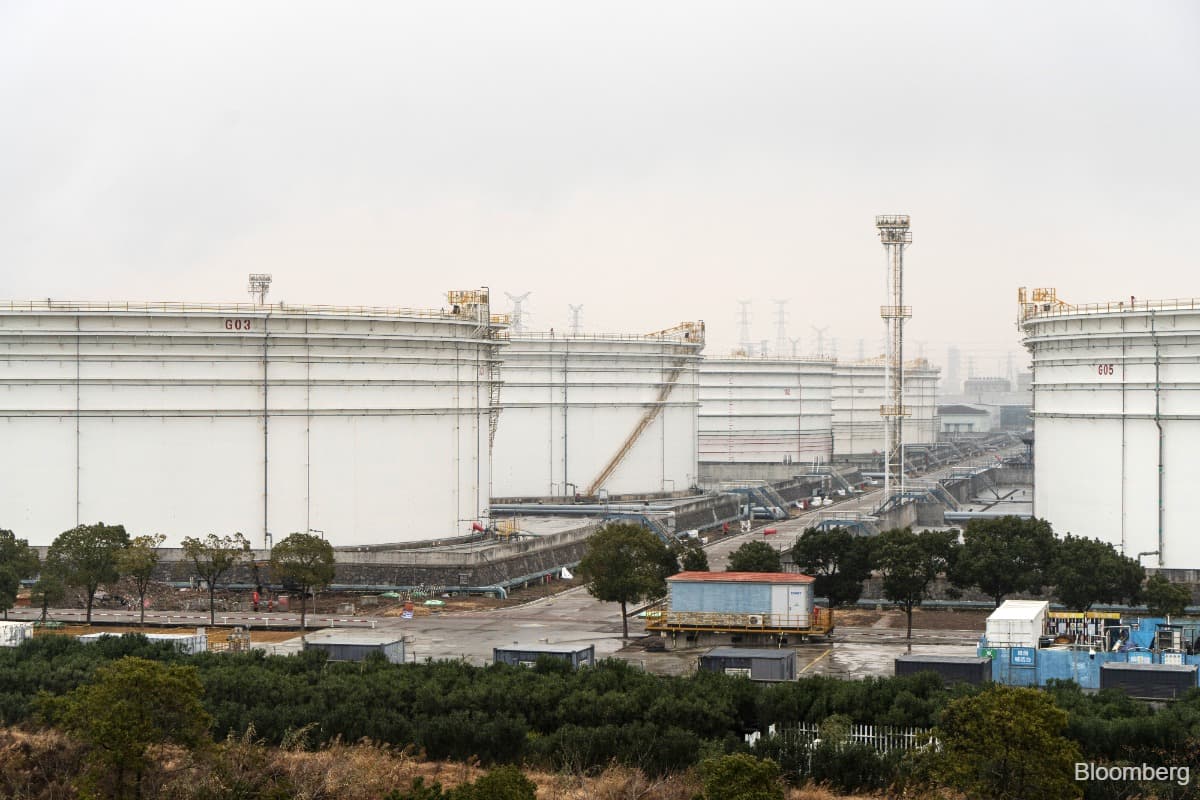
(Nov 24): Chinese state-owned and independent refiners have boosted oil purchases this month, taking advantage of falling crude and transport costs to replenish stockpiles depleted by the Middle East war.
Unipec — the trading arm of China’s biggest refiner Sinopec — has bought as many as 20 cargoes, usually of about one million barrels each, from West Africa for December loading, according to traders. That compares with a monthly average of roughly 20 million to 25 million barrels from the region to all of China.
Sinopec didn’t immediately respond to a request for comment.
The Chinese buyers are also snapping up Persian Gulf and Brazilian shipments. Prompt Saudi and Iraqi barrels have been changing hands at US$2 to US$3 a barrel above the Dubai benchmark on a delivered basis to East Asia, said the traders, asking not to be named as they are not authorised to speak to media. That is down from US$12 for Basrah crude a month ago.
The wave of buying comes as the global oil market is forecast to return to surplus next year, with the help of a recovery in Persian Gulf exports despite the still unresolved conflict. Global benchmark Brent has plunged by around a quarter so far in November, and a key question is whether the Chinese purchases will be enough to arrest the slide.
As crude prices came down, “the most noticeable tranche of incremental buying is from China,” said June Goh, an analyst at Sparta Commodities SA. “That’s because others like the Japanese and South Koreans were already buying at maximum levels over the last few months.”
The falling cost of freight is also helping to spur the buying activity. The cost of shipping a barrel of crude from the Gulf of Oman to China fell to around US$8 a barrel, down from about US$21 last month. Vessel earnings for most major routes to Asia have also dropped.
Uploaded by Arion Yeow