

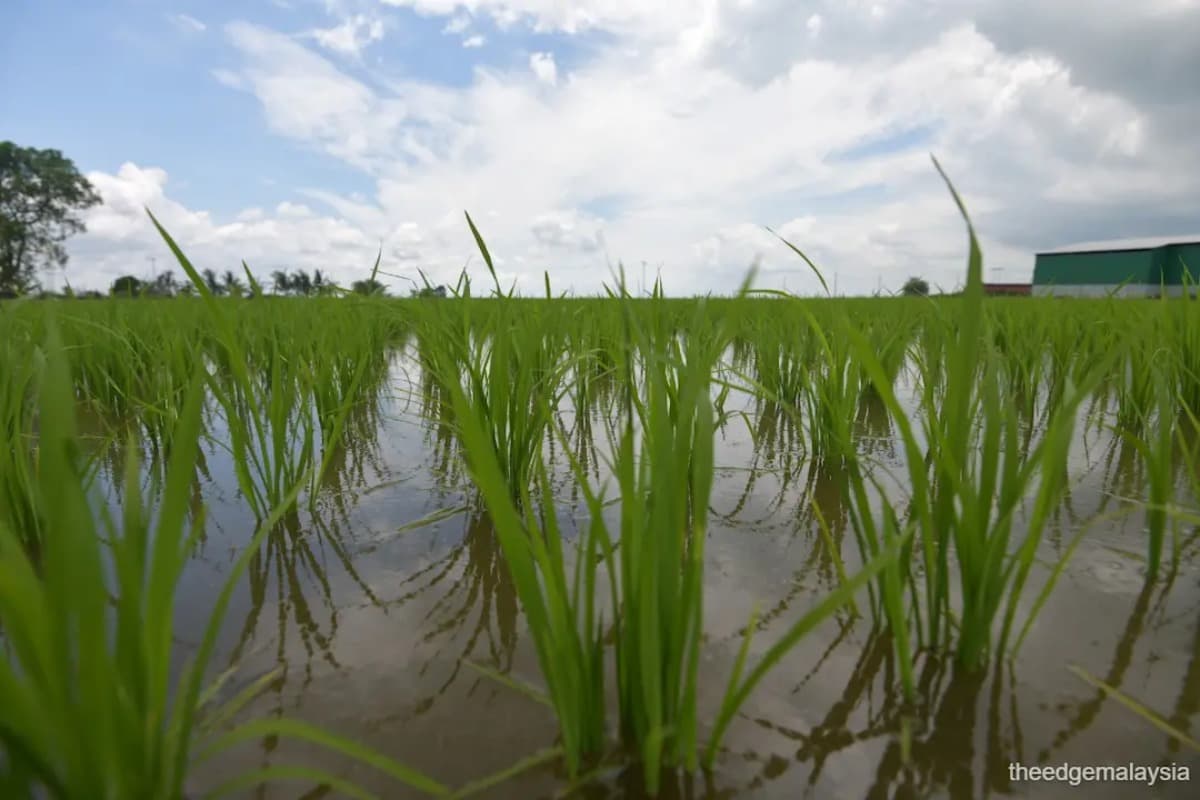
KUALA LUMPUR (Nov 23): Malaysia needs to safeguard padi farmers’ livelihoods as rising input costs amid Middle East tensions and a potential Super El Niño threaten agricultural production and push food prices higher early next year, said the Institute for Democracy and Economic Affairs (Ideas).
Apart from Middle East tensions pushing up fertiliser and fuel costs, farmers also face the threat of lower yields as prolonged dry weather hits crops, said Ideas assistant manager of research (climate and sustainability) Jazreen Harith Jefri.
“Farmers end up paying more to produce less. Higher input costs also tend to be passed on to consumers, from rice and vegetables to chicken and eggs, which depend on imported feed,” Jazreen Harith said in a written response to The Edge following a virtual briefing titled Super El Niño: People, Preparedness and Resilience in a Warming Climate, organised by Tara Climate Foundation on Monday.
MetMalaysia expects hotter and drier conditions, particularly from late January to March next year, potentially heightening the risk of drought and water shortages.
While Malaysia has taken early steps, including expanding the Agriculture and Food Security Ministry’s Smart Irrigation Monitoring System, promoting alternative water-management methods in padi fields and monitoring dam levels, more needs to be done to protect farmers’ livelihoods, Jazreen Harith said.
“In Kedah and Perlis, insufficient water in irrigation dams could delay padi planting and reduce farmers’ income for an entire season. The impact could extend to B40 households and Orang Asli communities with limited savings, making it harder for them to afford basic necessities,” he said.
“One immediate priority is for water and agriculture agencies at federal and state level to use dam monitoring data to give farmers earlier guidance on how much irrigation water is likely to be available and when they can plant,” he added.
The Food and Agriculture Organisation (FAO) has warned of uncertain production prospects for Malaysia’s 2027 main padi crop, with El Niño potentially affecting planting, yields and irrigation water availability.
Malaysia’s 2026 padi output is forecast at 2.1 million tonnes, 4.5% below the five-year average, partly due to reduced planting and yields caused by flooding and dry weather, according to the FAO.
Data centre investments need stricter scrutiny
The threat of a potential Super El Niño also makes it imperative that Malaysia tighten its screening of data centre investments to ensure they deliver economic benefits without straining water and energy resources or burdening households, Jazreen Harith said.
He said federal and state approval processes for data centres should be consistent using IDEAS’ Competitiveness-Green-Inclusive (CGI) framework, which considers their economic benefits, environmental sustainability and inclusiveness. This includes evaluating job creation, water sources for cooling, renewable energy use and potential impact on household utilities.
“The direction so far is positive. What’s needed now is consistent screening and public reporting on data centres’ water and energy use,” he said.
In Parliament on Monday, Deputy Energy Transition and Water Transformation Minister Datuk Seri Abdul Rahman Mohamad said the government would reject data centre proposals that could jeopardise water supplies, regardless of investment size.
Beyond data centre investments, Jazreen Harith said Malaysia should accelerate its transition from fossil fuels to reduce exposure to price shocks, while upgrading the grid and expanding utility-scale battery storage to meet peak cooling demand.
He also urged policymakers to safeguard B40 households against higher electricity bills, saying decentralised solar and off-grid microgrids could strengthen rural water supply and agricultural systems.
Data centres accounted for 9.28% of Malaysia's total electricity consumption as of September, with their share projected to rise to 31% by 2035, according to the Energy Commission.