

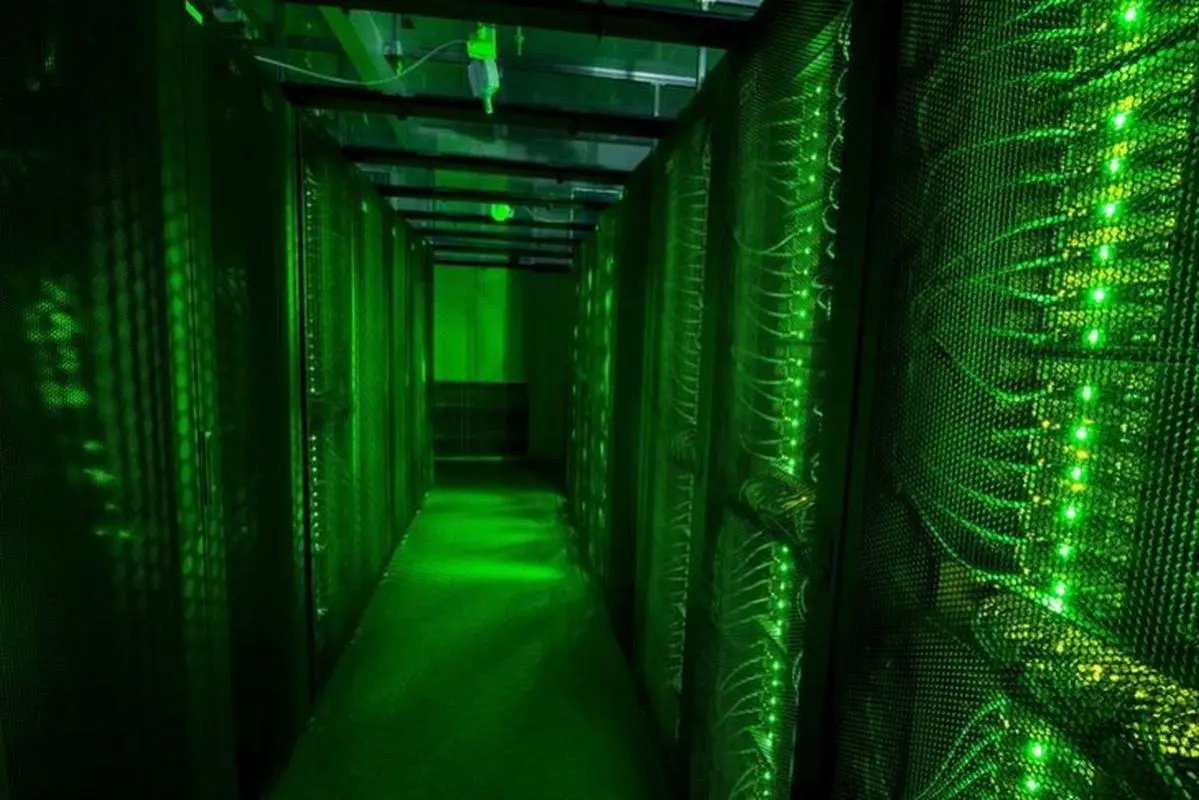
KUALA LUMPUR (Nov 23): Washington's planned tax American companies building data centres abroad, paired with tighter export controls on artificial intelligence (AI) chips, could slow the rollout of new data centre projects in Malaysia, analysts say.
Malacca Securities Sdn Bhd head of research Loui Low Ley Yee said local construction, property, and data-centre-related infrastructure firms could see new project pipelines narrow if US hyperscalers reassess investing overseas.
“However, existing projects [by local developers] with secured commitments are less likely to be disrupted,” Low told The Edge.
The warning comes after United States President Donald Trump vowed last Friday to tax American firms that build data centres overseas, though he did not outline how the tax would be executed or under what legal authority it would be imposed.
Adding to the headwinds, the US Department of Commerce’s Bureau of Industry and Security (BIS) enforced new rules on Nov 19 requiring a US licence to export, re-export, or transfer certain advanced computing chips to Malaysia, Singapore, Indonesia, Thailand, and Brazil.
Under the ruling, overseas data centres already supplying significant computing power to China-headquartered firms have 90 days until Feb 17, 2027, to obtain a licence or face future export restrictions.
According to Bank Negara Malaysia, only 17 of the 120 data centre companies operating in Malaysia are Chinese-owned.
Even for ongoing builds, an analyst who declined to be named, cautioned that licensing uncertainty could temporarily delay banks from releasing approved loan funds.
“While banks may have approved financing for ongoing builds, lenders could hold back on releasing funds until data centre operators prove they can obtain the necessary US licences to bring the chips into Malaysia,” the analyst said.
Despite the potential disbursement delays, the analyst said the direct impact on Malaysian bank stocks should be negligible, as data-centre-related financing — involving major lenders such as Malayan Banking Bhd (KL:MAYBANK) and CIMB Group Holdings Bhd (KL:CIMB) — accounts for only a small portion of their loan books.
On the technology front, Low noted that local semiconductor-related stocks, such as Mi Technovation Bhd (KL:MI), Pentamaster Corp Bhd (KL:PENTA), ViTrox Corp Bhd (KL:VITROX), UWC Bhd (KL:UWC) and Inari Amertron Bhd (KL:INARI), should be cushioned against any potential impact, given their diversified customer exposures and business segments.
Investment, Trade and Industry Minister Datuk Seri Johari Abdul Ghani had said Malaysia has approved 117 data centre projects, of which 55 have begun operations. The remaining projects are still in the planning or construction phases.
All 117 projects will have a maximum energy demand of 23,500 MW. Another 24 applications are on hold as the government reviews the country's power and water capacity.
Builders can manage slowdown
Low said even if data centre build-outs slow down, the construction sector should be able to manage it as Malaysia’s infrastructure development goes on.
"In particular, we continue to favour the power and utilities sector, which remains an evergreen theme supported by structural electricity demand, the National Energy Transition Roadmap (NETR) and continued investments in solar and renewable energy. These longer-term growth drivers should keep the sector attractive, even if data-centre expansion moderates in the near term."
The US' proposed regulatory moves on the tech sector come after espionage concerns were sparked following the admission of the CEO of global chipmaker Nvidia, Jensen Huang, that he had an extra-marital affair.
The woman he is alleged to have had affair with is said to be a China spy who had helped entities skirt existing US curbs on exports of high-powered chips, of which Nvidia is a leading manufacturer.
Aftershocks from the allegations against Huang have buffeted Malaysia's stock market as tech firms and companies in related sectors collectively lost billions in market capitalisation.
The woman Huang is alleged to have had an affair with was an executive at Singapore-based Megaspeed International, which is a major buyer of Nvidia cips and is said to have worked Malaysian tech firms.
Among them is YTL Power, which denies claims that it is involved in the diversion of chips to China.