

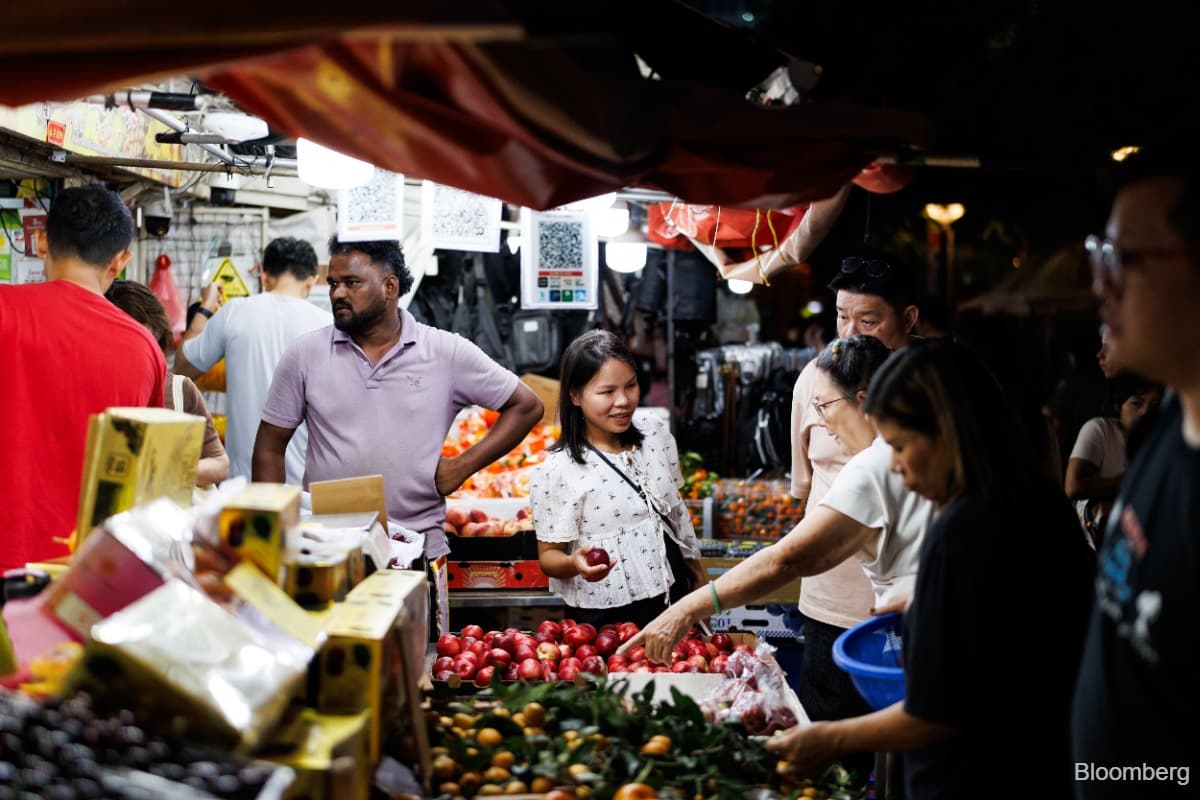
(Nov 23): Singapore’s core inflation decelerated to the slowest in five months after a cut in electricity fees, giving the central bank room to pause as it assesses looming risks to the city-state’s growth prospects.
Consumer prices, excluding accommodation and private transport, rose 1.5% in October from a year ago, data from the Singapore Department of Statistics showed on Monday. That’s down from 2% the previous month to the slowest since May, and below the 1.6% median estimate in a Bloomberg survey.
All-items inflation stood at 1.9%, in line with estimates.
Utilities and other fuels inflation eased to 1%, from 6.1% in September. Electricity rates were lowered by about 10% this quarter, coming down from their record high.
The latest data adds to optimism that price pressures are abating in the trade-reliant nation, after the global oil shock in the wake of the Iran war earlier this year. The Monetary Authority of Singapore (MAS) and the Ministry of Energy, Trade and Industry (Meti) on Monday affirmed their core inflation forecasts at 1.5-2% for this year and 1.5%-2.5% for 2027.
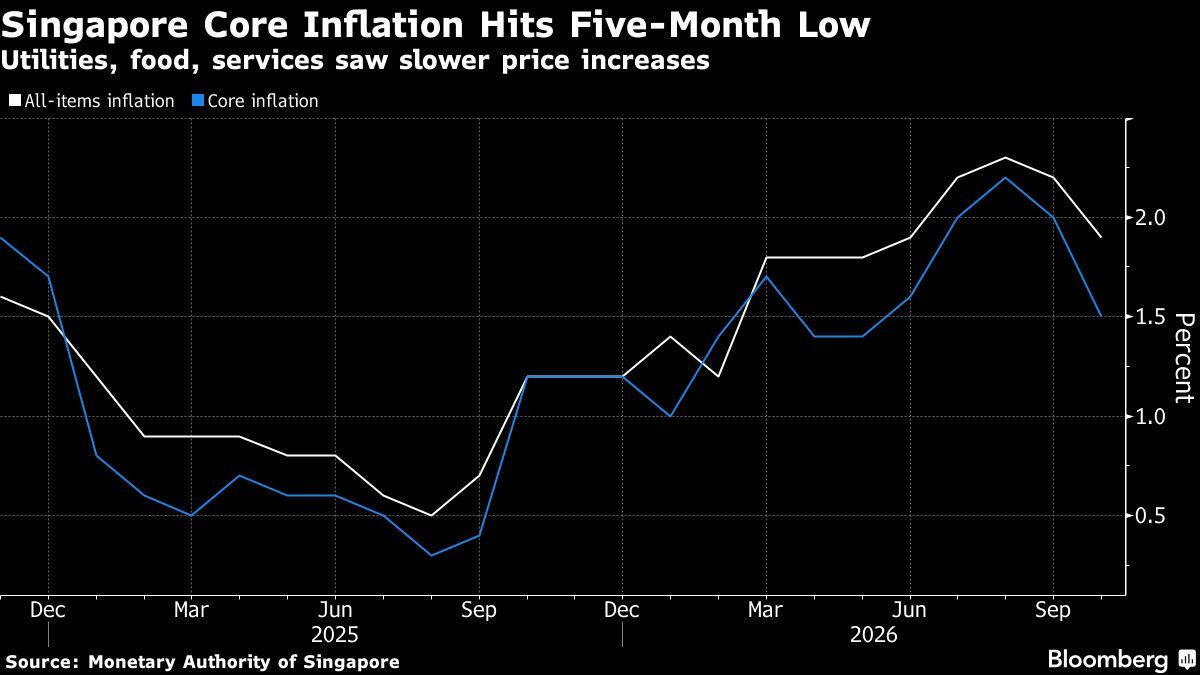
Core inflation could pick up anew in the first quarter if adverse weather hits food supplies and global energy prices remain volatile, the MAS and Meti said in a statement on Monday. Then the gauge should ease more discernibly from mid-2027, they said.
“While the MAS has not closed the door to another calibrated tightening given upside inflation risks, its assessment that core inflation is nearing a cyclical peak in the first quarter suggests that there is scope to remain patient, barring a major external price shock,” said Han Teng Chua, senior economist at DBS Bank Ltd.
The MAS last month bucked expectations of monetary tightening, instead holding policy steady as it expects both the global energy crunch and the artificial-intelligence boom to ease up in 2027. Policymakers have turned one eye on the sustainability of the AI-related demand that’s powered Singapore’s manufacturing and trade. The latest chip restrictions from the US, which target Singapore and other neighbouring countries, add to headwinds.
With Brent oil back around US$92 a barrel and the US midterm results increasing chances of a deescalation in the Middle East, “that takes some heat out of a January tightening” for MAS, said Zavier Wong, Market Analyst at eToro Group Ltd. “It would take crude back above US$100 to change that.”
Singapore is due to report its third-quarter gross domestic product data and set its forecasts for 2026 and 2027 on Tuesday. Analysts estimate GDP likely grew an even stronger 5.6% in the July-September period, compared to the government’s preliminary estimate of 5.4%.
Uploaded by Chng Shear Lane