

This article first appeared in Forum, The Edge Malaysia Weekly on November 23, 2026 - November 29, 2026
A friend recently sent me a WhatsApp message with an attached article of mine titled “Sir Jim, Carrick is your man”. It was a gentle reminder from a Liverpool fan that all is still not well with Manchester United Football Club.
Perhaps it was also a reminder of how wrong I had been about Michael Carrick, after the club’s football hierarchy or the board decided to sack him on Nov 12. His permanent tenure as manager, or head coach, lasted a mere 174 days.
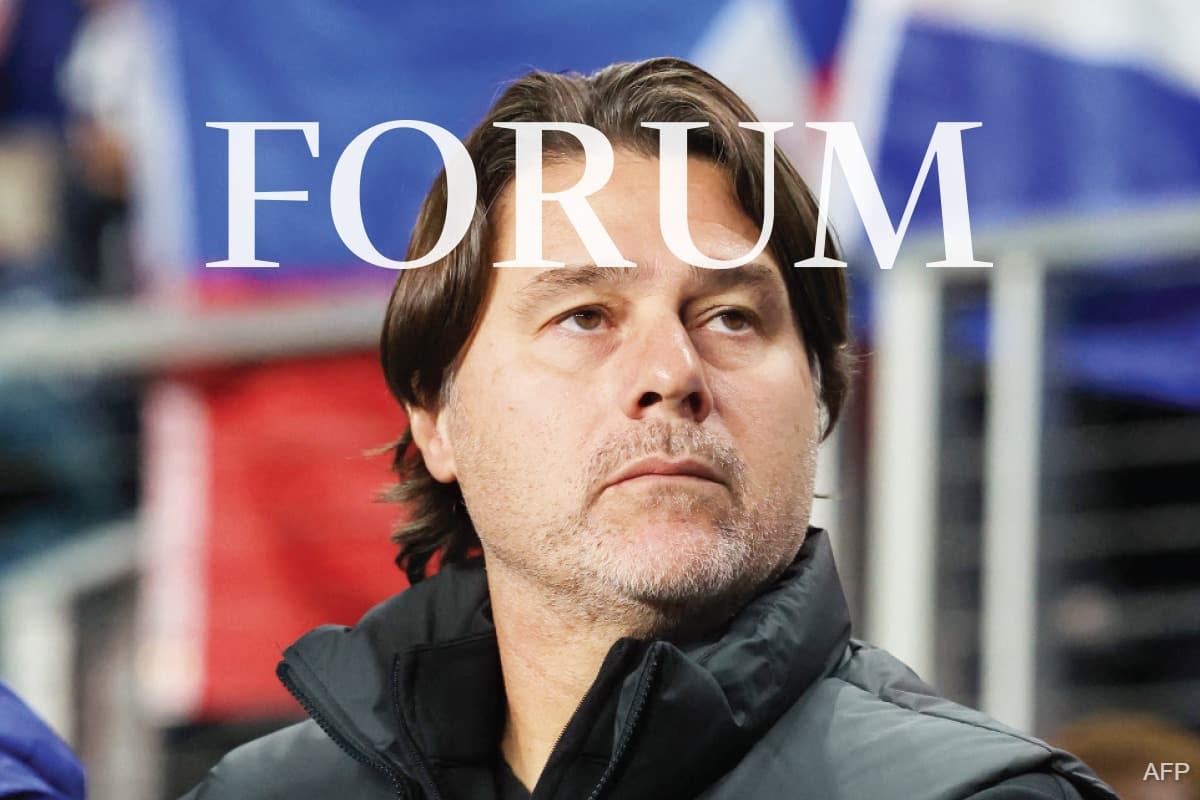
Yet another United manager bites the dust. Since Sir Alex Ferguson retired in 2013, after landing his 13th English Premier League (EPL) title and the club’s 20th, Old Trafford has seen seven permanent managers alongside six caretakers and interim managers. Now, with Mauricio Pochettino taking over on Nov 13, the permanent appointments have risen to eight.
In that earlier article (Issue 1627, May 18, 2026), I argued that Carrick, then caretaker manager, should have been given the permanent job as the club entered the new 2026/2027 season, which started in August.
And why not? Carrick had steadied the ship, got the team playing attractive counter-attacking football and moved away from Rúben Amorim’s rigid system of three centre-backs and two wing-backs. He improved United’s standing from seventh to a third-place finish and secured qualification for the financially lucrative UEFA Champions League.
Depending on how far they progress in Europe’s elite competition, that qualification could generate substantial additional revenue for the club through broadcasting, prize money and matchday income, on top of the commercial benefits. The potential financial gain could be as much as £120 million (RM650 million).
Under Amorim, in the 2024/2025 season, United finished a dismal 15th, its lowest league position since the club’s relegation in 1974. Some fans believed Amorim should have been given more time, but his relationship with the hierarchy’s representatives, director of football Jason Wilcox and CEO Omar Berrada, had become untenable.
I thought Carrick should also have been given more time. You need time to build a good team, and Ferguson was given 6½ years before winning his first league title. But with only eight points from 10 games, United sitting in 18th place and the club sliding into the relegation zone, the hierarchy had had enough. Carrick had to go.
Could he have done better? I believed so, if the club had given him the right support and invested more in players with the additional revenue it had earned from playing in Europe, courtesy of Carrick’s guidance.
What was lacking, with the club involved in Europe and having to play more games, was genuine squad depth. The loss of midfielder Casemiro, who had enjoyed a strong final season before leaving upon the expiry of his contract, was keenly felt.
But it did not make much sense to spend £150 million on three midfielders to replace Casemiro, especially when what was obviously also needed was another striker and a left-back. Going into the season without a reliable backup striker, with a not fully fit Benjamin Sesko — now injured again — and with main centre-back Matthijs de Ligt still not fully match-fit, was asking for trouble. This was compounded by having two defenders with persistent injury problems in the squad, centre-back Lisandro Martínez and left-back Luke Shaw, while facing a demanding schedule of additional European matches.
Fans saw this coming. Football pundits on social media had a field day criticising the club’s transfer policy, while seasoned commentators warned that recruiting second-rate players simply because they were cheaper would eventually come back to haunt United.
Worse still, Carlos Baleba, whom United bought from Brighton for £70 million, arrived with an injury problem. He subsequently suffered a hamstring injury after only a handful of appearances and is now facing another spell on the sidelines, with no firm return date. The transfer was justified by Wilcox and Berrada on the grounds that Baleba, whom United had pursued the previous year, had been valued much higher then, as much as £115 million.
Commercially, United thought it had secured a bargain. In reality, it may have bought a discount that came with an injury tag. It was another questionable decision that attracted criticism. Baleba, at 22, has considerable potential, but why take such a risk when spending that sort of money?
These problems forced Carrick to play players out of position, which in turn led to his tactics being questioned by senior players, including captain Bruno Fernandes. Martínez also openly criticised the hierarchy for not investing enough in new players, while the owners were sending signals that they were not fully behind Carrick.
Once that happened, with respect in the dressing room eroding and the hierarchy openly indicating to the media that it was looking for a new manager or head coach, Carrick’s fate was sealed. In modern football, where billionaires own the clubs, time is almost always not on the manager’s side.
But in United’s case, the revolving door at Old Trafford should tell a different story. The club has tried almost everything: serial winners such as Louis van Gaal and José Mourinho, both of whom had won numerous trophies, including the UEFA Champions League; an experienced EPL manager in David Moyes; former players familiar with the club’s culture and playing DNA, such as Ole Gunnar Solskjær and Carrick; and supposedly astute tactical masterminds such as Ralf Rangnick, Erik ten Hag and Amorim. Yet there is still no solution in sight.
Critics and fans have said time and again that the managers, and the constant changing of them, cannot be the sole problem. The hierarchy must take its share of the blame too. Wilcox and Berrada should be held accountable, and their positions should come under scrutiny for the way they have handled managerial appointments and the transfer market.
None of this absolves the managers entirely. Carrick’s eight points from 10 games was a damning return, while Amorim’s rigid tactics clearly failed to win over the dressing room. But when the same structural problems keep recurring under manager after manager, it is myopic to keep blaming only the man in the dugout.
But who is listening? Certainly, for the time being, not the owners.
The billionaire owners
In the current football regime, where clubs are controlled by billionaires and ultra-rich sovereign wealth funds, managers or head coaches seldom have the final say in running the football side of the business. The days when someone like Ferguson had considerable control over Manchester United are long gone.
In United’s case, since Ferguson retired, the club’s billionaire owners, the American Glazer family and, more recently, Sir Jim Ratcliffe in his role as minority shareholder, have become increasingly influential. Being successful businessmen, they may see themselves as people who know how to get things right, even when it comes to managing a football club, an area in which they are not necessarily the experts.
Former player and seasoned football manager Harry Redknapp sums it up well in an interview with FourFourTwo, the football magazine:
“Football is totally different these days. Chairmen come in and they want to have a say in who is signed and who goes. They put a few quid in and that makes them think they know about football. A manager might go through a bad time, lose a few games and the owner, who doesn’t know much about the game, thinks he knows better and gets rid of the man who actually does.
“There is no loyalty between owners and managers today, or it is very rare at least. The owners don’t love the team they own like Jack Walker did (a fan and the local steel magnate who invested in Blackburn Rovers in 1991, took the club out of the Second Division, put his trust in manager Kenny Dalglish, and made them champions in 1995).
“They just see it as a business proposition and buy to make money. They’ll come in and think they can win the EPL, and when you don’t deliver that straightaway, they don’t understand, so they fire you and get a new manager.”
That is what seems to be happening at United. The club cannot continue sacking managers and expect a different outcome. Having so many managerial appointments and interim spells in just over a decade points to a deeper problem within the hierarchy, including the director of football, CEO and recruitment personnel appointed to run the club.
Enter Pochettino. He has never been a serial winner. He won nothing in England while managing Southampton, Tottenham Hotspur and Chelsea. He did collect domestic honours with Paris Saint-Germain but failed to deliver the Champions League trophy for PSG, despite having three world-class forwards in Lionel Messi, Kylian Mbappé and Neymar Jr.
What can he do if the same internal problems persist? Players may respond immediately, as they have under previous managers, and United may climb out of the relegation zone. But what happens after that? Will he be given time, at least to see out his 2½-year contract and build a strong team capable of challenging the best?
I don’t think so. The club’s record suggests that its billionaire owners have yet to demonstrate a convincing long-term plan built around stability and a willingness to back a manager over several seasons, as Liverpool did with Jürgen Klopp and Arsenal have done with Mikel Arteta.
The fans want the Glazers out. To them, the American owners have never shown sufficient interest in the club beyond its commercial value. Whatever goodwill they once enjoyed has long evaporated. They blame the root of United’s current financial problems and the lack of sufficient funds for the transfer market on the Glazers’ leveraged buyout in 2005, which loaded acquisition debt onto the club’s balance sheet.
Before the takeover, United had relatively little debt. Since then, some estimates show that United had spent nearly £1 billion on debt interest alone.
As for Ratcliffe, much was expected of the Manchester-born United fan when he acquired his minority stake from the Glazers that handed him control of football operations in February 2024. But so far, his football decisions and his confidence in Wilcox and Berrada do not appear to have served the club particularly well.
The goodwill Ratcliffe enjoyed among supporters because of his Manchester roots has also begun to evaporate. His cost-cutting measures have resulted in job losses, while increases in ticket prices have not gone down well with loyal supporters and season ticket holders, many of whom have followed the club for years.
There is also the question of his commitment to the club. Ratcliffe resides in Monaco, pays no taxes in Britain and must spend much of his time outside Britain. That explains why the meeting to discuss Carrick’s dismissal and Pochettino’s appointment was held in Monaco.
Perhaps United needs new shareholders and owners. Selling them to the Arab investors, who have demonstrated the financial muscle and patience to build clubs such as Manchester City and PSG into serial domestic winners and major forces in European football, is one possible option.
When Sheikh Jassim Hamad Al Thani, a member of Qatar’s ruling Al-Thani family, made his bid for United in 2023, he wanted to buy out the Glazers completely and promised to clear the club’s debt. The Al-Thani family, one of the wealthiest ruling families in the world, is estimated to have a collective fortune of about US$200 billion. The deal eventually collapsed because of a valuation gap of about £1 billion between the buyer and the sellers.
If United continues to struggle on the pitch, and the blame is once again placed on the manager alone, it may be time for the Glazers and Ratcliffe to cash out. Many fans will not mind if this happens.
Azam Aris is an editor emeritus at The Edge
Save by subscribing to us for your print and/or digital copy.
P/S: The Edge is also available on Apple's App Store and Android's Google Play.