

KUALA LUMPUR (Nov 23): Easybook, an online bus and travel ticketing platform, is introducing facial recognition at bus terminals, starting with Klang Sentral, to automate passenger checks and speed up boarding.
Passengers who sign up through the Easybook app will be able to pass through participating gates without scanning a QR code once they have registered a facial profile and verified their identity.
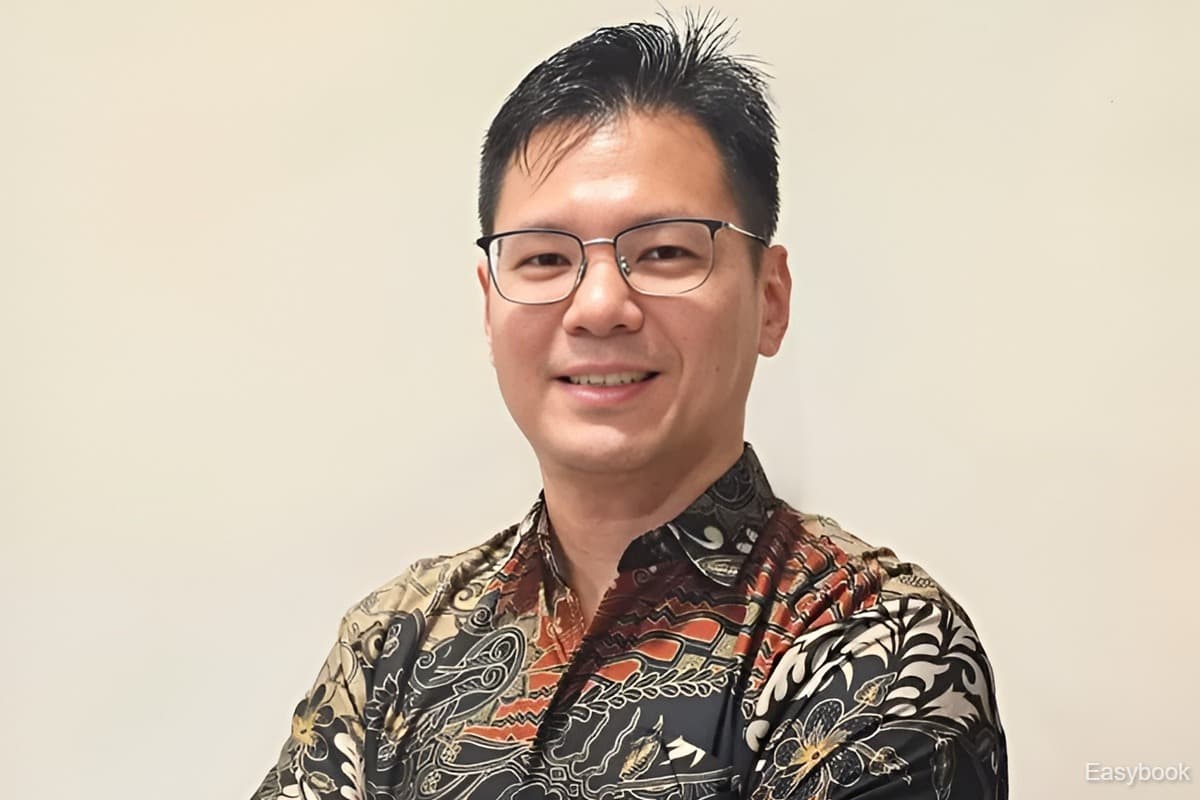
Easybook founder and CEO William Lee said the system was designed to reduce delays, particularly during peak travel periods when passenger checks could hold up departures.
"If that takes even 30 seconds per person on a full coach of 40 passengers, you've already added 20 minutes to a departure. Multiply across dozens of bays at a busy terminal on a public holiday long weekend, and the whole system begins to back up," he said in an email interview with Digital Edge.
Lee said QR codes could be forwarded to others, making it harder for bus operators to verify who was boarding.
"It creates a massive safety gap. If an accident happens, it becomes harder to verify whether the person boarding is actually the person who purchased the ticket," he said.
Easybook is also installing cameras on buses to compare passenger counts with digital ticket records.
Lee said the cameras would help tackle a longstanding problem in the industry, in which drivers or ground agents fill empty seats outside official booking channels.
"The challenge has always been that auditing physical headcounts against digital manifests in real time was simply not practical before," he said.
Lee said the cameras were intended for passenger checks and that Easybook did not plan to use them to monitor drivers or conductors.
Lee said Easybook stored facial data on its own infrastructure to maintain direct control over the information.
"We also follow strict data governance practices, retaining only the information necessary to operate the service and only for as long as required, in full compliance with Malaysia's PDPA requirements," he said.
Lee did not specify how long Easybook would retain facial data or whether passengers who declined to provide it would have another way to board.
Easybook is also introducing robots at terminals, with prices starting at RM5,000 and exceeding RM10,000 for some units, depending on their functions.
Lee said the robots were designed to detect approaching passengers and help them download the app and check in, tasks usually handled by counter staff.
He said wages for terminal staff ranged from RM1,700 to RM2,000 a month and that automating routine tasks could help manage operating costs while freeing staff to assist passengers and run the terminal.
"We're not doing this to be dismissive of our people. The reality is that we need to be operationally efficient to survive and grow, and this is the direction the industry is heading," he said.
The robots and facial recognition gates are part of Easybook's plans to expand beyond online ticketing into transport management systems.
Lee said Easybook's engineering team of about 10 people in China worked with a Malaysian product manager to develop its artificial intelligence (AI) and computer vision tools, including facial recognition and CCTV analysis.
Easybook has also moved most of its systems from public cloud services to its own virtualised servers, cutting IT costs by more than 50%, he said.
The company uses external application programming interfaces (APIs) for its AI features and is exploring whether it can run them on its own infrastructure and train smaller models with its own data.
Lee said Easybook was also in talks to deploy similar facial recognition and secure-entry systems at government buildings, private complexes and other facilities in Malaysia, Singapore and Indonesia.