

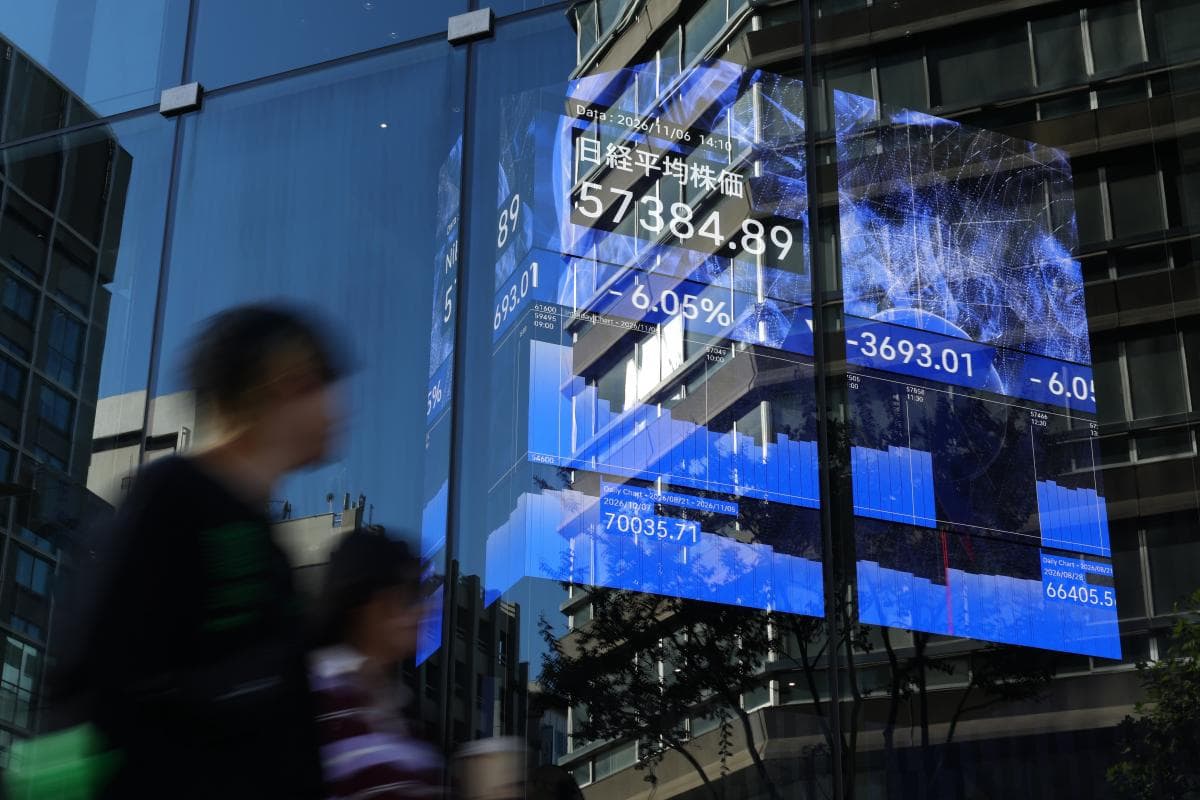
(Nov 23) :Traders in Asia were bracing for another bout of volatility after a sharp Wall Street selloff rattled risk appetite, even as regional authorities stepped up efforts to shore up markets.
The risk-sensitive Australian dollar edged lower in early trading while the Japanese yen was little changed. Equity-index futures pointed to pressure on Asian stocks after the S&P 500 entered a technical correction and the Nasdaq 100 posted its worst week since March 2020. The VIX Index, Wall Street’s so-called fear gauge, surged to its highest since April 2025. Japanese markets are closed Monday for a holiday.
The retreat has fueled concern that the US technology selloff is broadening into a wider risk-off move, leaving Asian markets vulnerable. MSCI’s regional gauge is nearing a bear market after falling about 18% from its June peak, putting the focus on whether authorities can help restore confidence and stem further selling.
“This has been more than an ordinary pullback,” Greg Boland, a strategist at FUTU Holdings-owned Moomoo Securities, wrote in a note. “The speed and breadth of the selling suggest elements of capitulation, with investors increasingly focused on protecting capital rather than buying the dip. Whether this represents a selling climax or the beginning of a deeper market reset remains the critical question.”
Authorities across Asia stepped up efforts over the weekend to stem the deepening stock-market rout. China will ease minimum margin requirements for investors buying securities with borrowed funds, while Taiwan widened curbs on short selling and said it has been buying shares after the island’s benchmark suffered its worst weekly drop in 35 years.
South Korean authorities said they will ease daily limits on company share buybacks for three months and begin preparations to activate a stock-market stabilization fund if needed. The rescue fund was last used during the global financial crisis in 2008, according to local media.
The turmoil has rippled across global markets, engulfing metals and emerging-market assets while driving investors into havens including Treasuries. Risk-sensitive currencies have also been hit, with the Australian dollar erasing its gain for the year and the New Zealand dollar falling to its weakest since the GFC.
Investors are also looking ahead to US inflation data this week. Economists expect the personal consumption expenditures price index, the Federal Reserve’s preferred inflation gauge, to have risen 3.8% in October from a year earlier, according to the median estimate in a Bloomberg survey. The figures are due Wednesday in a Thanksgiving holiday-shortened week.
Still, Friday’s market rout, driven by an unwinding of bets on artificial intelligence-led growth, prompted traders to pare expectations for a December hike as investors piled into Treasuries. Australian bonds tracked the moves early Monday, with yields falling about five basis points across the curve.
Treasury Secretary Scott Bessent warned Sunday that the Fed risks damaging the US economy by overtightening in response to the latest inflation data, pointing to signs of fragility in the financial system.
“Many people believe that they may be making a policy mistake if they overtighten,” Bessent told CBS’s Face The Nation, noting a series of hawkish comments from the central bank’s governors in recent weeks. “We’ve seen a substantial tightening in financial conditions over the past few months.”
uploaded by Isabelle Francis