

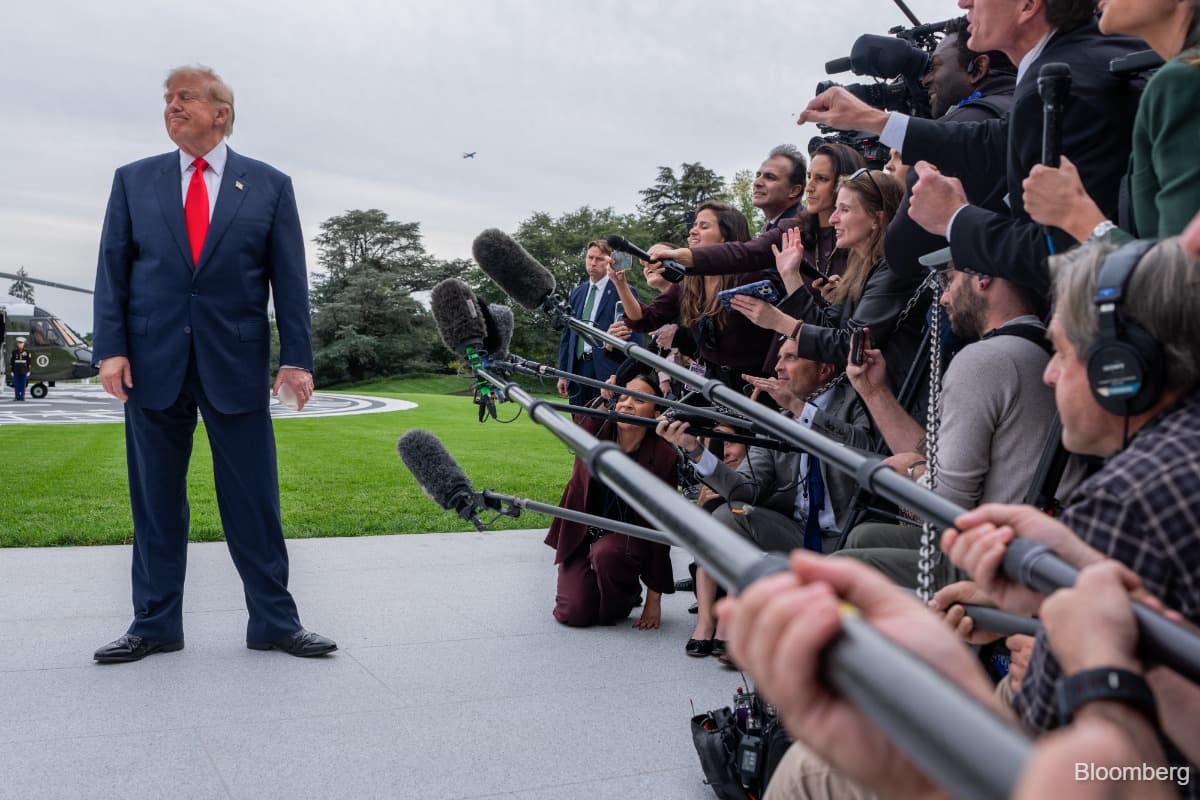
(Nov 21): US President Donald Trump vowed to tax American companies that build data centres in other countries, though he didn’t detail exactly how such a threat would be carried out and what legal authority the government might have to impose one.
If US firms want to build data centres abroad, “they can”, Trump said during a press briefing at the White House on Friday. “But we’re going to put a tremendous tax on them. If they do it, we want them to build it here.”
Microsoft Corp, Google owner Alphabet Inc and Amazon.com Inc run data centre operations across the globe and are spending hundreds of billions of dollars to build even more capacity to power artificial intelligence (AI) systems. While the US is home to the most computing power in the world, tech firms are turning to places such as China, parts of Europe and Latin America to instal more.
Trump has specifically called out Google for investing in data centre operations in Finland as opposed to spending that money in the US. That’s despite the tech company already backing massive domestic projects simultaneously.
The results of the US midterm elections underscored the intensity of the backlash against the sites powering AI systems. Several Democrats who vowed to impose more aggressive regulations won races, potentially leaving half of proposed AI data centre additions across the nation more vulnerable to stricter local scrutiny and pushback.
Still, Trump said on Friday, there are still “a lot of places that want them badly”. He dismissed concerns that more data centres threaten to raise electricity prices for US consumers.
“They have energy, and they have everything,” Trump said. “They’re tremendous assets. They’re going to build their own electricity, so the electricity is going to go down. Actually, your electricity costs will go down.”
An analysis conducted by Bloomberg News last year, based on wholesale electricity prices for tens of thousands of locations across the US, showed electricity costs were as much as 267% more for a single month than they were five years ago in areas located near significant data centre activity.
Uploaded by Tham Yek Lee