


(Nov 20): UBS Global Wealth Management is betting on gains for the pound and UK gilts, confident that Britain’s political stability and efforts to curb spending will give it an edge over much of the euro area.
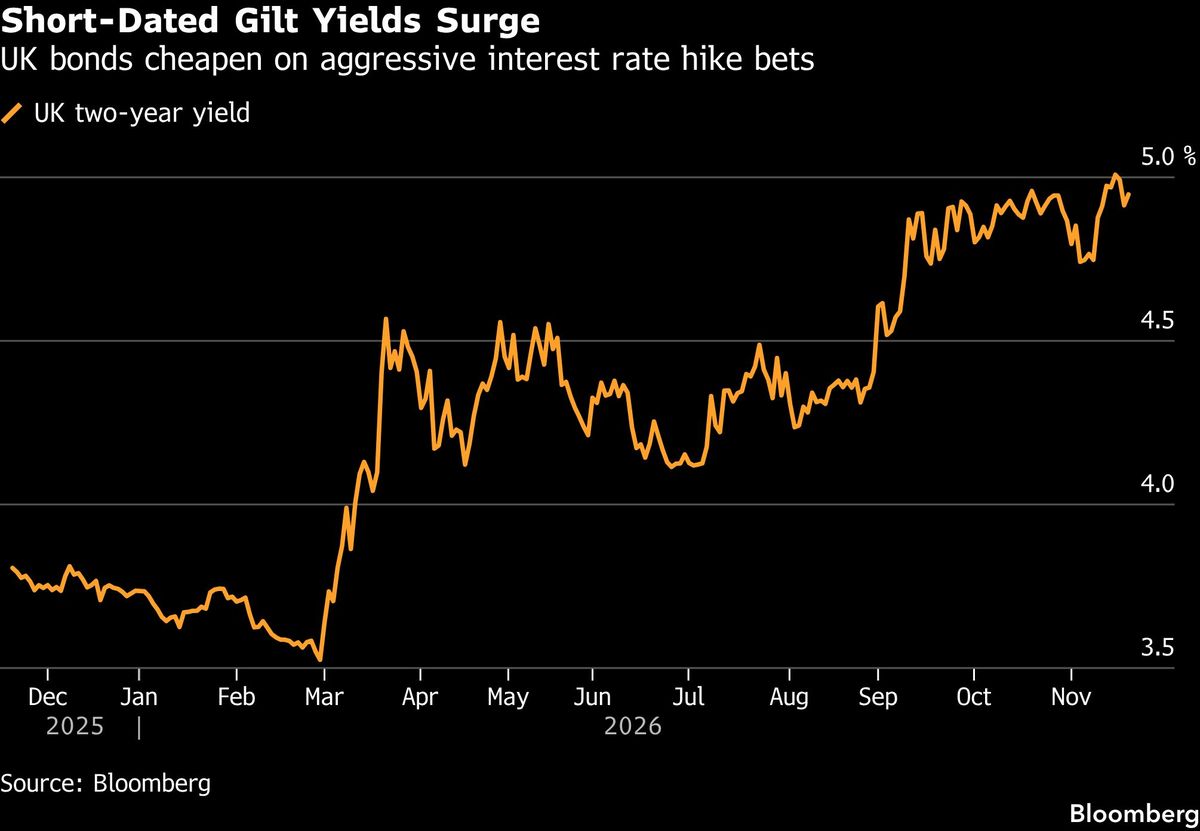
Sterling is UBS Wealth’s preferred Group-of-10 currency, due to its yield advantage over the euro, Swiss franc and Japanese yen. It also favors short- to medium-dated UK government bonds on a view the Bank of England will raise interest rates less aggressively than expected.
For many investors, those factors set the UK apart from the euro area, where large budget deficits and political discord ahead of elections are clouding the outlook. Debt-laden France is seen as a particular risk, increasingly leading traders to shun the euro.
“What we have learned for 2027 is the UK could be the best house in a bad neighbourhood,” said Dean Turner, an economist and macro strategist in UBS Wealth’s chief investment office.
In Europe, the “base case” is for election-linked volatility, he added.
Many investors have warmed to British assets since Prime Minister Andy Burnham took office at the end of July. Interest has picked up further after the government unveiled a budget that avoided big spending increases and pushed to boost ties with the European Union.
Britain’s relatively high yield gives the pound an advantage against most other developed-market currencies, UBS Wealth said in its year-ahead report. Resilient economic activity, a 4% interest rate and the prospect of further policy tightening should keep sterling’s carry advantage intact, the report said.
“Wide rate differentials and contained currency volatility should support total returns, particularly against lower-yielding currencies,” it added.
On gilts, UBS Wealth’s bullishness rests partly on the view that markets are pricing more tightening from the BOE than is likely to materialise. While money markets expect at least three interest-rate hikes by end-2027, Turner sees just one more — in February — as the most likely outcome.
That would leave room for the two-year yield to fall to about 4.5% by December 2027, according to Turner, from current levels around 4.96%.
For gilts, “the risks here still look pretty favourable,” Turner said. “The fiscal consolidation story and the UK stand out.”
Uploaded by Magessan Varatharaja