

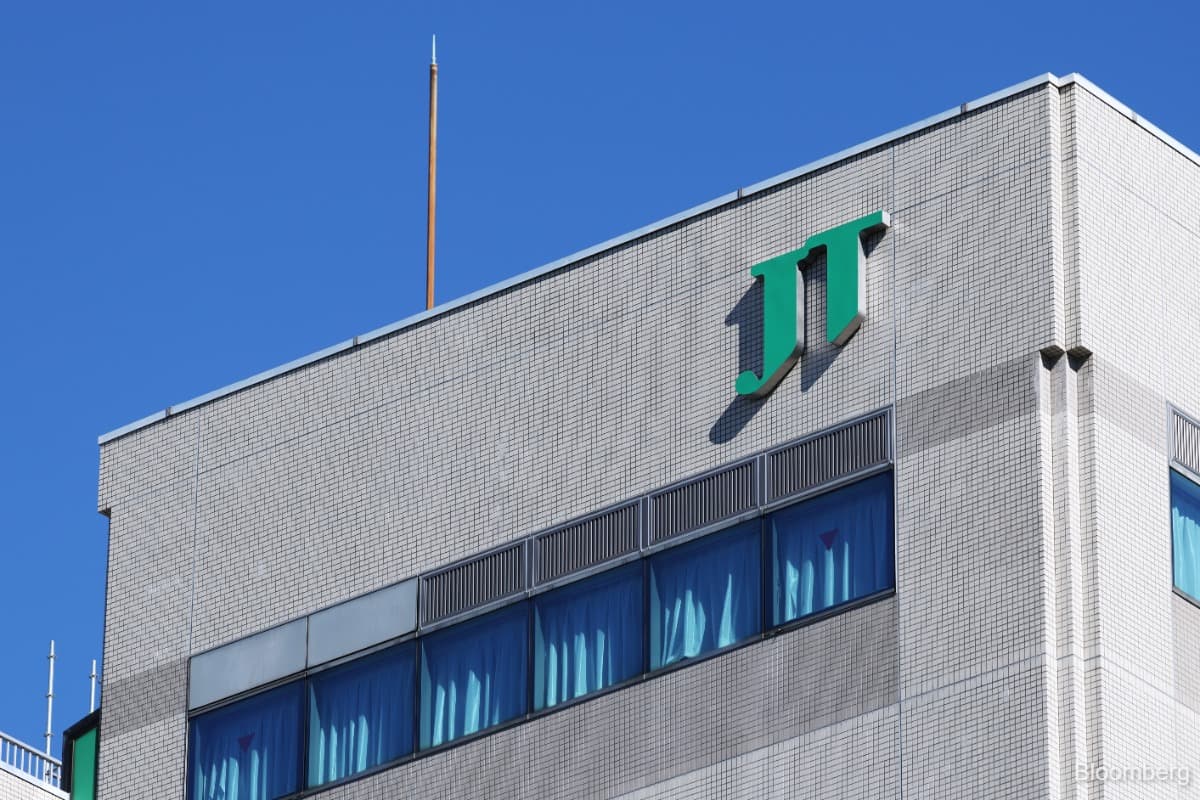
(Nov 19): Japan Tobacco Inc will take a ¥1.4 trillion (US$8.9 billion or RM36.59 billion) charge after losing control of its Russian subsidiaries, pushing the cigarette maker to a full-year net loss and slashing its dividend forecast.
The Tokyo-based maker of Winston and Mevius cigarettes now expects an operating loss of ¥368 billion instead of a ¥1 trillion profit, according to a statement on Thursday. The revenue outlook was cut by ¥63 billion to ¥3.8 trillion.
The writedown comes after the Russian government seized all seven of JT’s local subsidiaries, causing the company to lose management control and remove them from its consolidated accounts. Prime Minister Sanae Takaichi raised the issue of asset seizures, as well as Russia’s arrest of a Japanese journalist, during a meeting with President Vladimir Putin in China on Wednesday.
JT continued operating in Russia after the 2022 invasion of Ukraine while complying with sanctions, leaving it exposed to a market that accounted for about 10% of group sales and a quarter of adjusted operating profit. As recently as last month, the company said it had maintained a solid leadership position in the country and would remain flexible in deciding how to develop the business.
“We would like to ensure that we learn lessons from this and have discussions around it,” Chief executive officer Takehiko Tsutsui said at an analyst briefing. “We would like to look back at this situation and learn from it so that we could reflect our lessons into our risk management structure.”
JT’s strategy will remain largely unchanged even after the deconsolidation of its Russian business, which the CEO said was making a shrinking contribution to growth. The company will continue investing in key markets and growing what it calls reduced-risk products, such as its Ploom range of heated tobacco devices.
Excluding Russia, JT expects adjusted operating profit to grow at an average rate of more than 10% from 2027 through 2029 on a constant-currency basis.
Government stake
Shares of JT have plunged about 25% since Russia moved to take control of its assets in the country, erasing almost all of the stock’s gain this year. Putin’s move delivered a blow to Takaichi’s government because the Ministry of Finance is Japan Tobacco’s biggest shareholder.
Still, the loss was roughly in line with what analysts had expected, said Naoki Fujiwara, a senior fund manager at Shinkin Asset Management Co, adding that the market “may react positively because the announcement removes some of the uncertainty surrounding the situation”.
Russia’s temporary-administration regime doesn’t formally transfer ownership of the businesses to the state or the administrator, and JT said it still indirectly owns 100% of the affected companies. But the restrictions mean it can no longer exercise shareholder rights or make operating decisions as before, forcing it to deconsolidate the units under IFRS accounting rules.
Cutting pay
The chairman, deputy chairman and three representative directors will take a 50% cut in pay for two months, while the representative directors will forgo their fiscal 2026 executive bonuses. JT also halved its year-end dividend forecast to ¥68 a share from ¥136.
Russia has long been one of JT’s most important overseas markets. The company has operated there since 1999 and employs about 4,000 people, with production sites including plants in St Petersburg and Rostov-on-Don. It strengthened its position with the US$1.6 billion (RM6.58 billion) acquisition of Donskoy Tabak in 2018 and holds about 41% of Russia’s combustible-cigarette market.
The seizure comes as Putin intensifies moves to take control of foreign-owned businesses. Since September, Russia has placed assets belonging to companies including Nestle SA, Auchan and German grocery chain Metro Cash & Carry under temporary management, part of a broader campaign targeting businesses from countries Moscow considers unfriendly.
The action also adds to worsening ties between Moscow and Tokyo. Japan joined Western sanctions against Russia following the invasion of Ukraine, while the countries remain divided by a decades-old territorial dispute and have never signed a formal peace treaty ending World War II.
Uploaded by Felyx Teoh