

KUALA LUMPUR (Nov 19): Malaysia attracted RM87.4 billion in digital investments through the Malaysia Digital Economy Corporation (MDEC) in 2025, yet many businesses are still using artificial intelligence (AI) as little more than a chatbot.
According to Eric Pham, founder, CEO and chief architect of Rework.com, about 67% of Malaysian businesses use basic AI tools such as chatbots, while only 19% have integrated AI across their operations.
This gap highlights a fundamental misunderstanding of what digital transformation entails.
“The biggest barrier today is no longer access to powerful AI models. It’s business context. Everyone can access tools like ChatGPT or Claude. But those models don’t automatically understand how a particular company operates,” he said.
He added that while the common approach of adding AI features to existing software can be useful, it is rarely enough to transform how an organisation operates.
Achieving that transformation may require businesses to move away from legacy software, as traditional enterprise systems were built around humans performing tasks, with software playing a passive, supporting role.
“We believe AI agents will become a new workforce: not just answering questions or generating content, but actually performing work inside organisations, alongside people,” said Pham.
“Investment in AI infrastructure is not the same as AI transformation. Data centres, cloud services and access to powerful models create the foundation. But the real economic value comes when businesses turn that technology into better decisions, stronger operations and measurable outcomes.”
To address this gap, Rework.com launched its Agentic Operating System (OS) in Malaysia in October.
“We start from a different point. We structure business operations around services, outputs, knowledge and responsibility, so that AI agents can actually participate in the work. We’re not simply trying to make existing software smarter. We’re building software in which AI can genuinely work.”
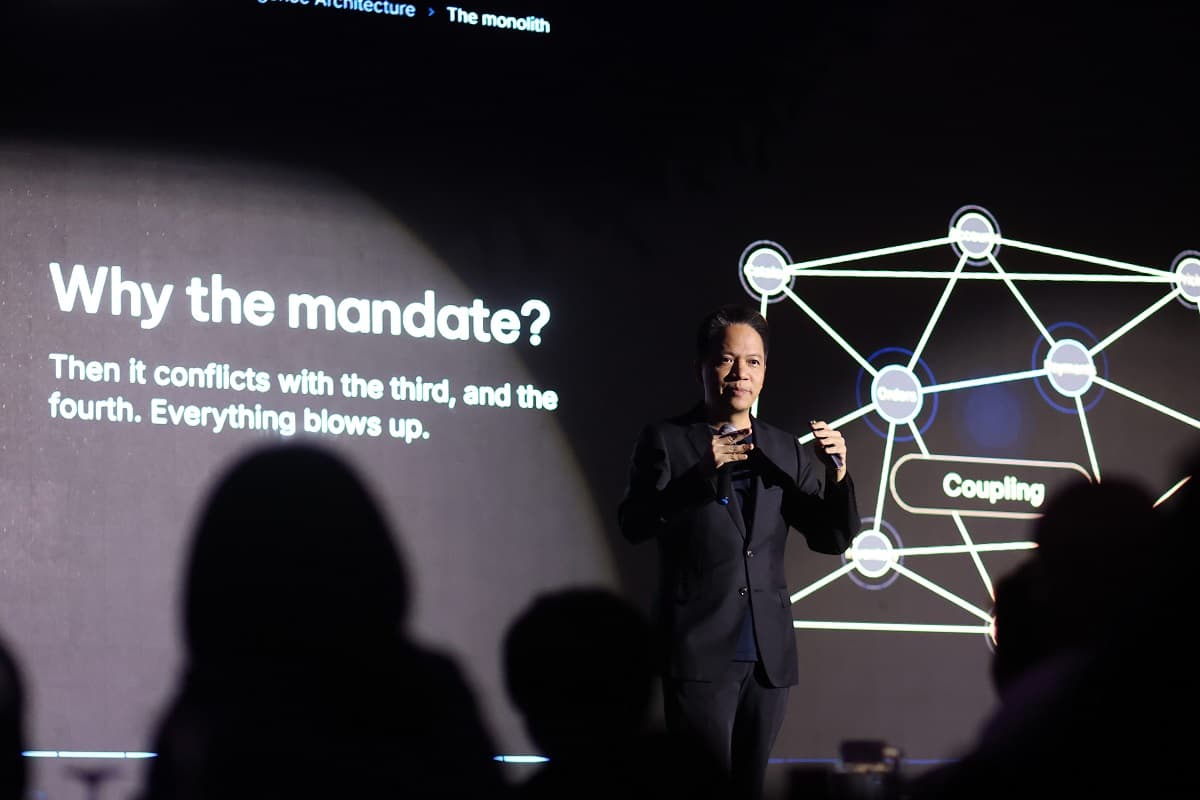
According to Rework.com, its Agentic OS is built around four layers. The first defines how core business operations are structured and executed, while the second establishes clear objectives and accountability for AI agents.
The third incorporates an organisation's proprietary knowledge and historical experience, while the fourth enables AI agents to execute tasks directly within workflows alongside human employees.
In practice, this shifts software from a passive tool to an active participant in business operations.
Pham cited sales operations as an example. While traditional customer relationship management platforms record past interactions and track sales pipelines, an AI agent-driven system can qualify incoming leads, follow up with prospects, draft tailored proposals and move deals towards closure, with humans retaining final approval.
Although standalone generative AI tools have improved individual productivity through tasks such as drafting emails and summarising documents, Pham argued that the greater opportunity lies in improving productivity across an organisation.
“Can AI help an entire sales team generate more revenue? Can a company handle twice the workload without doubling its headcount? Can it deliver better customer service? Enterprise AI should be measured by business outcomes, not by how many people use AI tools.”
This is particularly relevant in Malaysia, where businesses operate across different industries, languages and levels of digital maturity.
Pham said companies need systems that can adapt to these differences without requiring years of integration work.
Rework.com currently serves more than 12,000 customers globally across human resources, sales and work management, and views Malaysia as a key market for its Southeast Asian expansion.
SMEs could have an edge over larger companies in AI adoption
As businesses begin to recognise that AI adoption involves more than using chatbots, Pham believes small and medium enterprises (SMEs) could be among the biggest beneficiaries of deeper AI integration.
He argued that larger corporations have traditionally held the advantage in digital transformation because of their greater financial resources and dedicated IT departments.
However, the rise of autonomous AI agents could change this, as SMEs may be able to implement organisation-wide changes more quickly and adapt their operations with fewer constraints.
“With AI, a company no longer needs a large dedicated team for every function to access capabilities in customer support, marketing, sales or data analysis. AI Agents can take on substantial parts of that work, while people focus on decisions, relationships and higher-value tasks,” said Pham.
“So I don’t see SMEs as destined to fall behind. In many cases, their speed and flexibility could be an advantage.”
Pham also noted a willingness among Malaysian business leaders to modernise their operations.
During engagements with local companies, the Rework.com team observed interest in restructuring business processes, not only among startups but also among established enterprises in traditional industries.
He cited the example of a Malaysian furniture retailer that, until recently, relied heavily on manual paperwork and fragmented WhatsApp conversations to coordinate its daily operations.
Recognising the limitations of these informal workflows, the retailer is now moving towards an integrated digital system, with AI expected to play a role in supporting its future growth.
“Many of the businesses we meet are growing and thinking long-term,” said Pham. “They’re not just looking for another tool; they’re looking for a foundation they can grow with.”
Rework.com aims to provide a common software architecture that can accommodate the needs of both SMEs and larger enterprises, allowing businesses to integrate AI into their operations without having to build complex systems from scratch.