

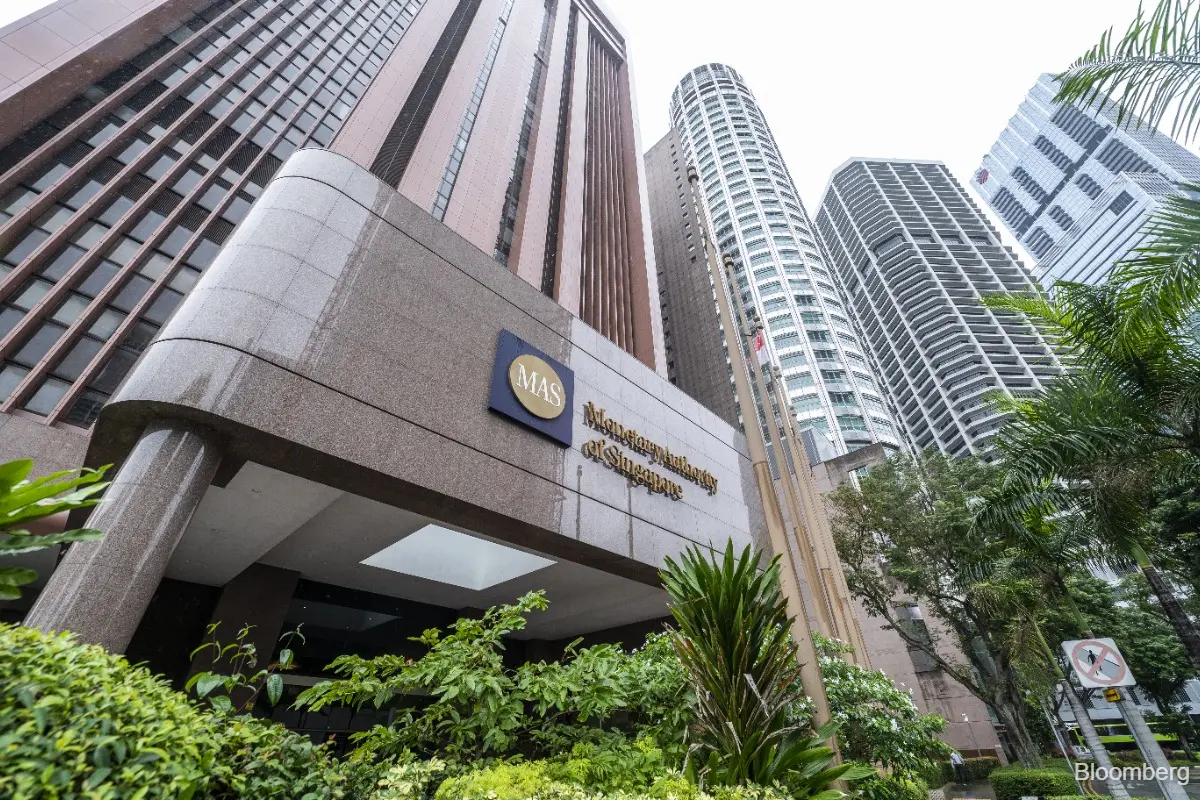
(Nov 19): Singapore’s central bank warned that artificial intelligence agents could move deposits and other funds more quickly, raising new liquidity and financial-stability risks.
“Agents have the potential to move money and allocate assets more quickly for smaller incentives,” Monetary Authority of Singapore managing director Chia Der Jiun said in his keynote address at the Singapore FinTech Festival on Thursday.
Financial institutions may need to consider limits on transactions instructed by AI agents to manage liquidity risk, while regulators will need to weigh the implications for financial stability, he said.
The warning comes as banks, payment firms and technology companies race to make AI-driven commerce a reality, with agents increasingly being designed to shop, make payments and manage money on behalf of users. Their growing autonomy is forcing financial institutions to work out how much authority to give them and who is responsible for their actions.
Chia cautioned against giving personal agents login credentials to financial accounts, saying there is “insufficient assurance of safety.” MAS plans to develop a common “know your agent” protocol for banks and payment providers to verify an agent’s identity, authority and mandate, and will test agents monitoring liquidity positions and making payments using tokenised deposits or stablecoins.
Charles Schwab Corp chief executive officer Rick Wurster told Bloomberg Television in October that the brokerage was blocking outside agents trying to move client money.
Still, MAS sees benefits from AI agents, including lower search costs for consumers and automated procurement for businesses. “It is likely that the future will be a mix of the human economy and a new agent economy,” Chia said, adding that people and businesses must retain meaningful control over how those agents act. “Autonomy has to be bounded. Actions and outcomes have to come with accountability.”
Chia also outlined Singapore’s push to bring tokenisation deeper into capital markets. MAS has issued S$100 million (RM318.93 million) of tokenised MAS Bills settled using Singapore-dollar central bank digital currency this month, and plans to work with the industry to bring other widely used collateral onto digital platforms, which could include foreign government securities and money-market funds.
The move puts Singapore alongside a small group of central banks experimenting with tokenised short-term securities. Switzerland introduced digital central-bank bills in 2024 in what its central bank described as the world’s first live monetary-policy operation using distributed-ledger technology, while the Czech central bank tested tokenised bills this year.
Uploaded by Evelyn Chan