


This article first appeared in City & Country, The Edge Malaysia Weekly on November 16, 2026 - November 22, 2026
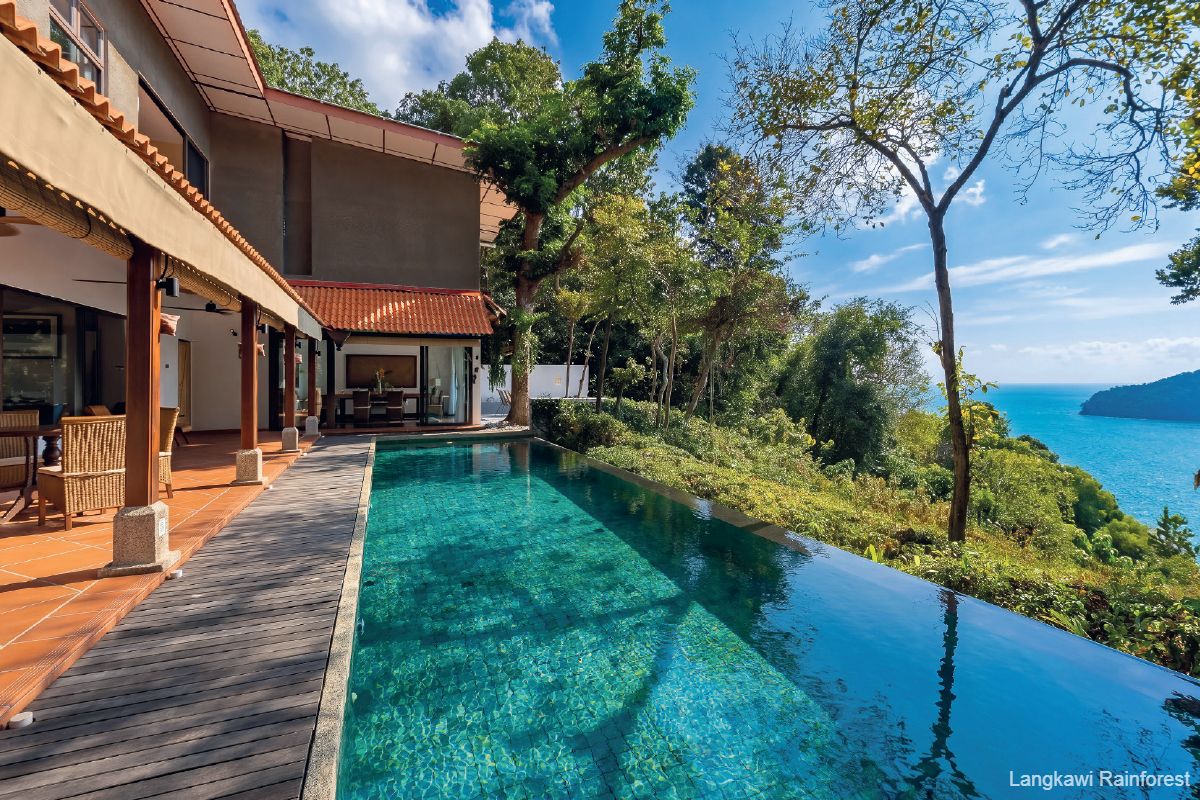
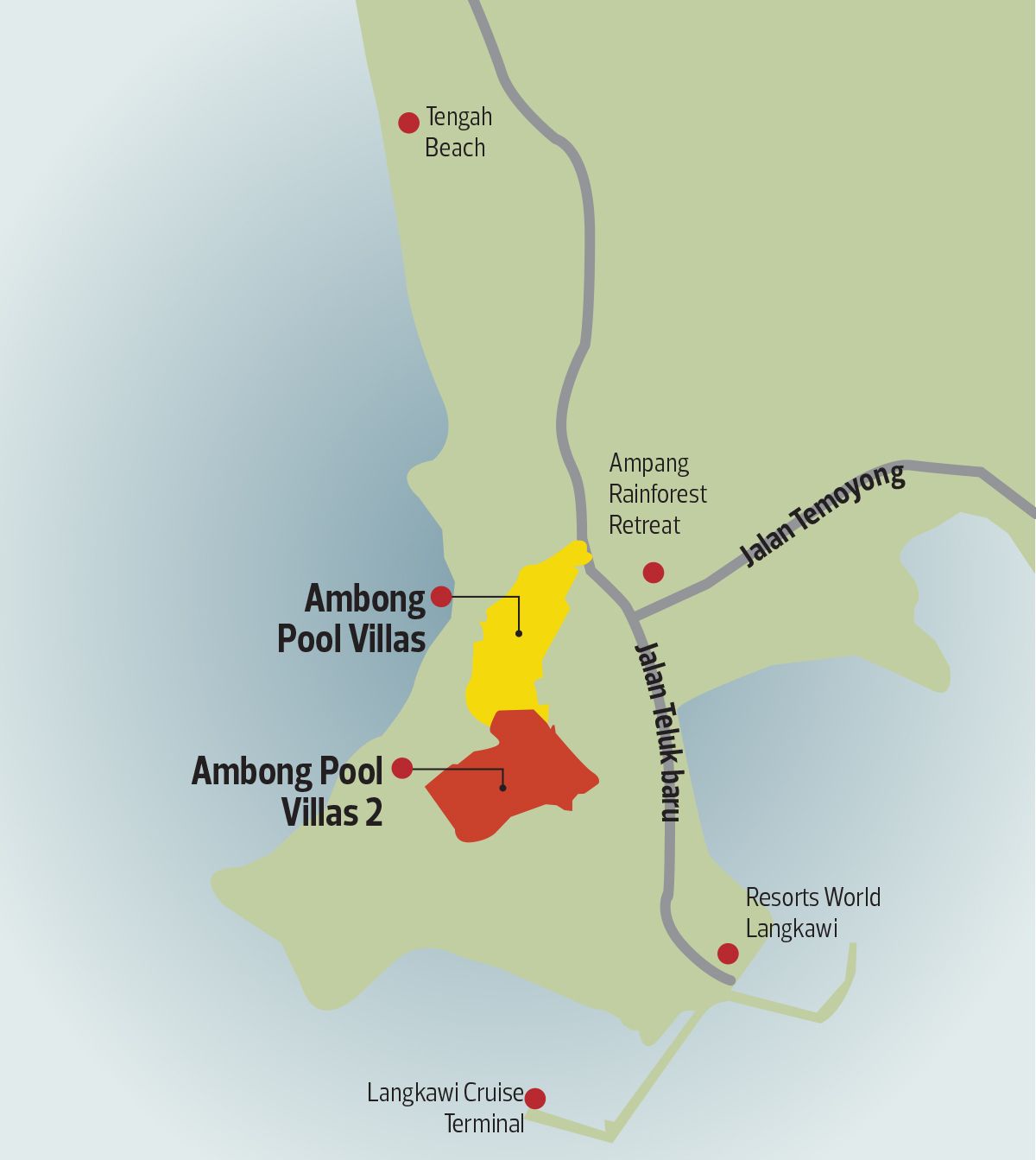
Langkawi boutique hospitality group Langkawi Rainforest Sdn Bhd — the operator of the Ambong-Ambong resort brand — is on the lookout for a joint-venture (JV) partner to develop Ambong Pool Villas 2 (APV2) on its four-acre site near Pantai Cenang. The proposed project adjoins the existing Ambong Pool Villas on an elevated, forested plot.
While the group owns the land outright and unencumbered, Langkawi Rainforest managing director Amran Ahmed says its preferred route remains a strategic partnership rather than an outright land sale.
“If there’s buying interest, it’ll be easy to have that conversation because we own the land unencumbered. But we’ve always leaned towards a joint venture with the right partner,” says Amran.
New plot, new opportunities
The site is located along Langkawi’s southwestern coastline near Pantai Tengah. While not beachfront, its elevation provides natural seclusion and panoramic sea views overlooking the upcoming Resorts World Langkawi marina, with major island jetties, Pantai Cenang and the airport all within a five- to 20-minute drive via Federal Routes 117 and 112.
The villas will be opened for sale and operated under a branded service operator. Under the proposed structure, Ambong-Ambong will contribute the land, brand, resort-management platform, guest ecosystem and local operational knowledge. In turn, it is seeking a partner to provide development capital, hillside engineering and construction expertise.

“We’ve been very picky about whom we partner with because we see this as a partnership rather than a mere investment. Our [future] partner does not necessarily need experience in the hospitality space — since that’s where we come in — but must understand the relationship between hospitality and property,” he explains.
Management of the completed villas remains a core condition for the group.
“We have put that condition upfront because we want to leverage the Ambong-Ambong brand and what we have built. With the new development, we also want to leverage the back-of-house services we already provide. It makes sense for us to manage the new villas as well,” he says, hastening to add that the final framework remains open to refinement with the right partner.
The four-acre site, which shares a boundary and access road with the existing resort, sits between 55m and 88m above sea level. It is subdivided into 13 parcels: 12 designated for standalone private-pool villas, and one for a clubhouse with reception and back-of-house facilities. The proposed villa mix comprises four 4-bedroom, five 3-bedroom and three 2-bedroom villas, with lot sizes ranging from 7,700 to 12,600 sq ft. JLL Malaysia has been appointed as a marketing agent for the site.
Amran notes that this four-acre plot is the group’s sole landholding adjacent to the Pool Villas cluster, but is not its only expansion option.
“We have more land on the Ambong Rainforest Retreat side; if we do [APV2] successfully, that will be the next development.”
From family cottage to two resorts
Amran may have been born in Penang, but Langkawi was his second home. His parents had been visiting the island since the 1970s, when his father began acquiring land there.
“My childhood was very much spent in Langkawi. School holidays were always, by default, in Langkawi. I grew up on the island and came to understand it and its people very well,” he recalls.
Upon his return from university in the early 2000s, his father built a cottage on the family land. As online travel agencies were beginning to change how travellers booked accommodation, the family listed the cottage when it was not being used. Demand encouraged them to expand.
“That did pretty well, and we grew organically from there,” Amran says. “In 2011, we had two units, and by 2015 we had 11.”
That collection of units became Ambong Rainforest Retreat, the group’s original 11-key property. In 2016, Amran left his corporate banking career to manage the business full time.
That same year, Ambong-Ambong decided to build a separate, more upmarket product on another site about 300m down the road. Construction of Ambong Pool Villas began in late 2016 and was completed in December 2017, when the property received its first paying guests.
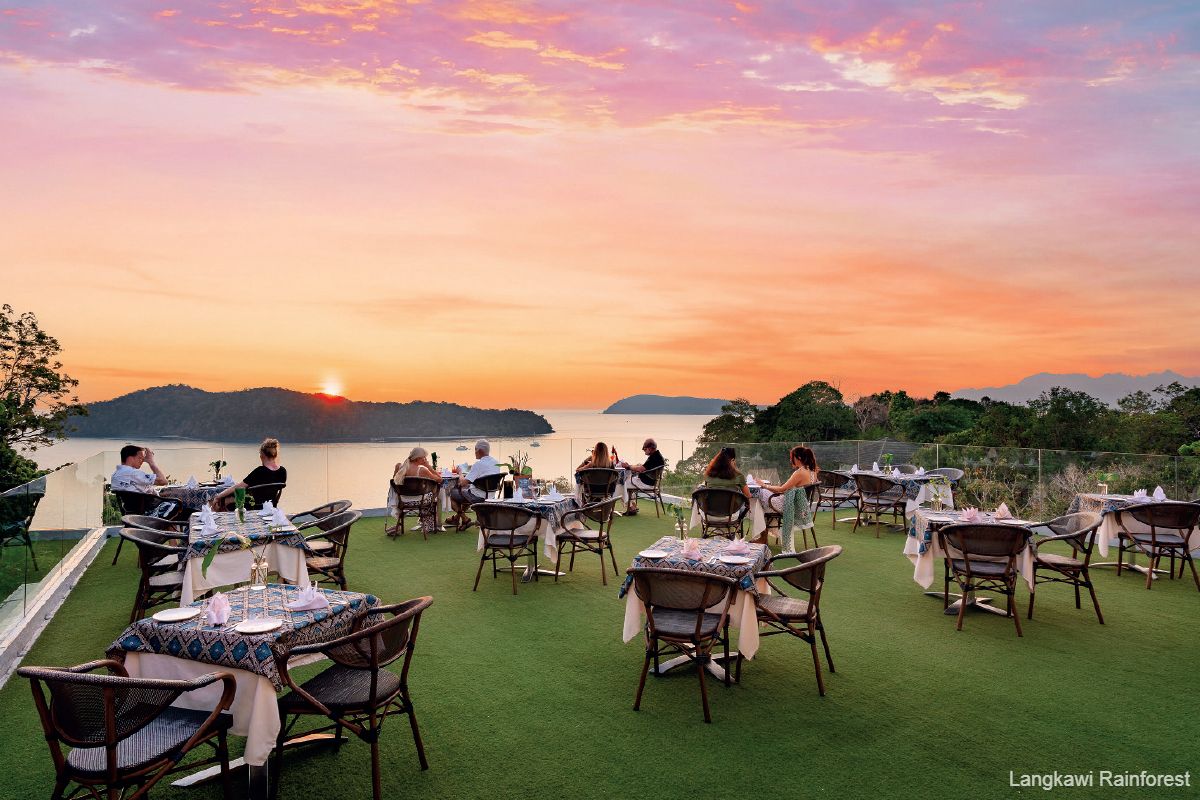
The move into private-pool villas allowed the group to reposition itself upmarket. Each villa enabled Ambong-Ambong to roughly double its average daily rate (ADR).
Ambong Rainforest Retreat was then selling at about RM1,000 a night, while the new villas opened at about RM2,000. Today, Ambong Pool Villas has an ADR of RM2,400, with an average occupancy of 65% over the past three years.
The two properties now anchor a wider ecosystem that includes Amaala Spa & Wellness, Rimba and Pegaga restaurants, the 11-acre Buluh & Tebing Organic Farm and the Langkawi Cooking School. The group employs about 60 people across its resorts and farm.
It positions itself as a boutique operator whose value lies in privacy, personal service and a landscape-led guest experience — characteristics it now hopes to carry into APV2.
Guest demand
Ambong-Ambong’s guest mix is broadly international. Leading source markets post-Covid-19 show a majority of UK tourists at 15.7%, followed by Saudi Arabia (11.5%), Malaysia (9.2%), Singapore (8.7%), Australia (8.2%), France (5.2%) and the US (4.9%).
Amran attributes the villas’ appeal to the privacy they afford. Guests can remain within their own compound for days, with food and spa services brought to them.
“Guests love us because of the complete privacy — when you’re in your villa, nobody can see or hear you,” he says.
The combination of rainforest, ocean views, and local wildlife adds to the appeal.
Repeat guests currently account for about 7% of business. Amran wants to raise that proportion to 10% or more.
“[Guests] like returning to the same place, seeing the same faces, staying in the same room and having the same experience every year,” he says. “They book their 10 nights a year in advance.”
He believes those guests are natural candidates for villa ownership. Some British and European visitors have already built their own villas in Langkawi, usually on long leases, and manage them individually or list them on short-term rental platforms, Amran says.
He sees that as proof of not only demand, but also of a market gap. Individual villa owners must appoint their own managers, arrange housekeeping and list properties on rental platforms, often without consistent hotel services.
“That market is growing, and is another sign that the demand is there,” he says. “It’s about putting the right product in front of the right market.”
The commercial ambition for APV2 is a further step up, with Amran aiming for an ADR “almost double” that of the existing Ambong Pool Villas.
“Our ADR at Ambong Pool Villas is RM2,400 right now, and for a villa in the new development, we want to go to RM4,600-plus. So, we want to almost double our rate,” he says.
He points to The Datai Langkawi, Four Seasons Resort Langkawi and The Ritz-Carlton, Langkawi, as evidence that the “Jewel of Kedah” can support premium pricing. While these are established international brands, he believes a home-grown operator can enter the ultra-luxury space.
“I think there is potential for us to go from where we are now to an ultra-luxe product that operates in that space — even knocking on the door of an Aman or Soneva resort.”
Low-density ethos
Locating the Ambong-Ambong resorts on Google Maps is difficult, as the pin sits atop a dense forest canopy.
“If you look at an aerial shot of Ambong Pool Villas and the Rainforest Retreat, you will hardly see any buildings,” Amran says. “It’s mostly trees, and you can just about make out that there’s something in there.”
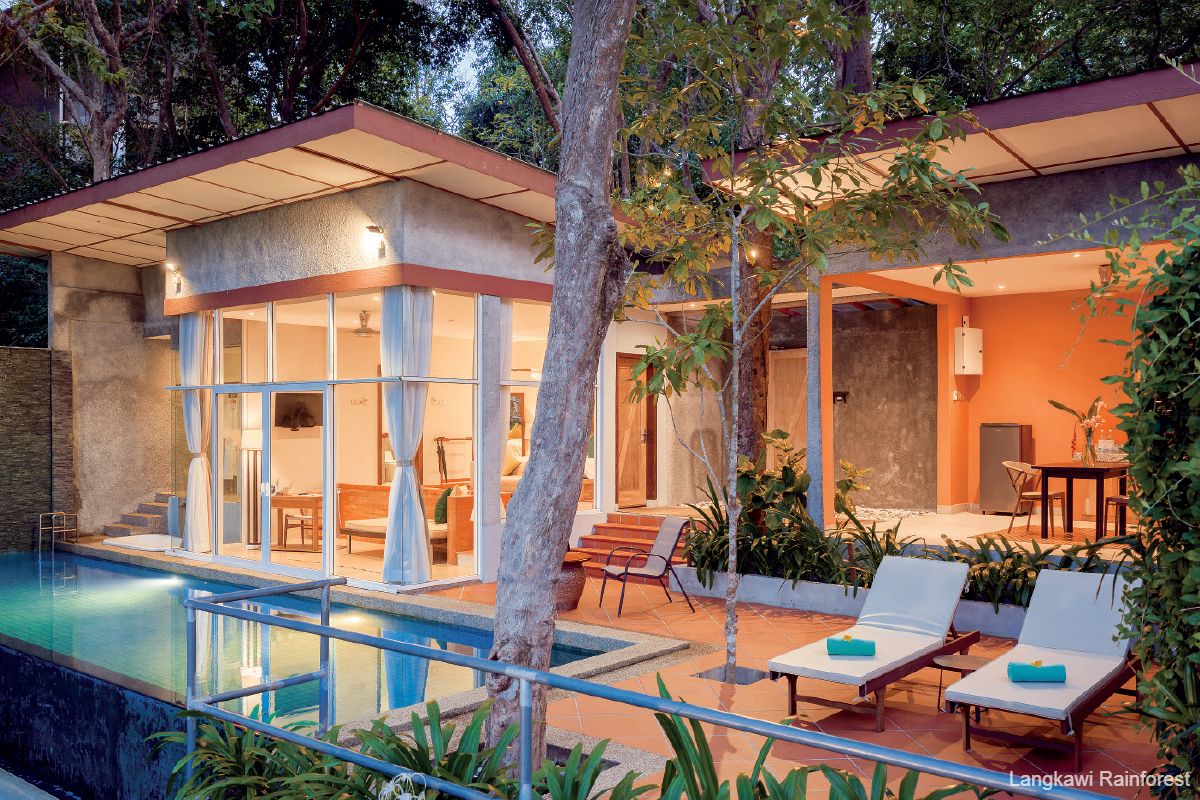
Ambong-Ambong’s design principles include minimal cut-and-fill, buildings and roads that follow natural contours, protection of the ridgeline, passive cooling, landscaped buffers, and careful management of drainage, stormwater and slope stability.
Amran says the same philosophy shaped the existing resorts.
“We could have built three or four storeys and jammed in 60 or 70 keys, which is your standard hotel model,” he says.
Instead, tree clearance and earthworks were kept to a minimum. Trees larger than six inches were not cut down, and the buildings were designed to sit within the forest canopy.
He accepts that a higher-density development would likely have generated stronger early returns. But he argues it would have eroded the brand identity.
Amran believes the low-density approach also gives the assets greater longevity. A 70-key hotel may produce a better return in its first five to seven years, he says, but could face stronger competition as newer properties enter the market.
“We feel a product like this can last in perpetuity,” he says. “With a 70-key build, you lose the rainforest, you lose nature, which is what we’re selling.”
The site’s gradient is both an asset and a delivery challenge, requiring experienced hillside engineering, disciplined construction methods and careful management of access, drainage, sewerage and environmental impact. All final planning, hillside, environmental, infrastructure and strata approvals remain subject to the relevant authorities and technical studies.
Ambong-Ambong’s wider operations reflect the same approach. Its 11-acre organic farm, located about 45 minutes from Ambong Rainforest Retreat, supplies a portion of the produce used by Rimba and Pegaga. The farm supplies all eggs used by the resorts, along with seasonal vegetables, and the resorts’ compost food waste before sending it to the farm.
Last year, the group opened the Langkawi Cooking School at the farm. Guests harvest seasonal produce and join cooking classes, an experience Amran says reinforces the group’s circular-economy message.
“Guests walk around the farm, harvest whatever’s available and end [their visit] with a cooking class and lunch,” he says.
The company is also working on regenerative-tourism initiatives, including artificial hornbill nests designed to encourage nesting on its property. While the nests have yet to pay off, Amran says the initiative is also intended to raise awareness of coastal deforestation and its impact on wildlife.
Langkawi’s expansion
Amran believes Langkawi is approaching a pivotal turning point, driven by major regional infrastructure projects. A key catalyst is the planned ONE°15 Marina Langkawi at Resorts World Langkawi, developed in collaboration with Singapore-listed SUTL Enterprise Ltd. Expected to welcome its first yachts in the second half of 2027, the upgraded facility will expand the existing single pontoon into a marina with more than 90 berths capable of accommodating superyachts up to 140ft.
“Linking up the waterways between Singapore, Penang, Langkawi and Phuket will be a game changer for the island,” Amran says.
He also points to Disney Cruise Line adding Langkawi to its itineraries from Singapore starting in December. “Singaporeans are finally waking up to Langkawi over Bali or Batam — especially since it is just a 1½-hour flight north.”
While APV2 is independent of the marina development, the property directly overlooks the marina area. Ambong-Ambong expects the project to capitalise on the influx of yacht owners and high-net-worth travellers. The project has also drawn interest from neighboring landowners seeking JVs, though the group remains disciplined about density.
“If a potential partner insists on building 30 villas, there is room to expand on our existing footprint,” says Amran. “We have several plans, but are focused on APV2 at this stage because, for us, this is a sizeable project. It will be bigger than what we’ve done previously. So, the right partner is key.”
Save by subscribing to us for your print and/or digital copy.
P/S: The Edge is also available on Apple's App Store and Android's Google Play.