

(Nov 18): Tencent Holdings Ltd’s revenue missed estimates, underscoring the urgency of an effort by China’s most valuable company to reorganise its workforce around a bold bet on artificial intelligence.
The country’s social media leader reported revenue rose 8% to RMB207.3 billion (RM128.12 billion) in the September quarter, lower than the average analyst projection. Net income barely grew during the period.
The tepid results raise questions about billionaire co-founder Pony Ma’s efforts to close the gap with long-time rivals Alibaba Group Holding Ltd and ByteDance Ltd in the AI era. Last week, he called on half of Tencent’s 100,000-strong workforce to harness artificial intelligence in search of new growth avenues while urging the rest to try boosting efficiency in its gaming and social media businesses.
Tencent has claimed a spate of early successes in its AI push, releasing an Hy4 model this month that it said ranks among China’s most powerful. Its WorkBuddy office tool claimed 32 million monthly active users in September, more than its direct rivals combined. At the helm of those efforts is Dowson Tong, one of Ma’s key lieutenants, who is driving teams to experiment with products.
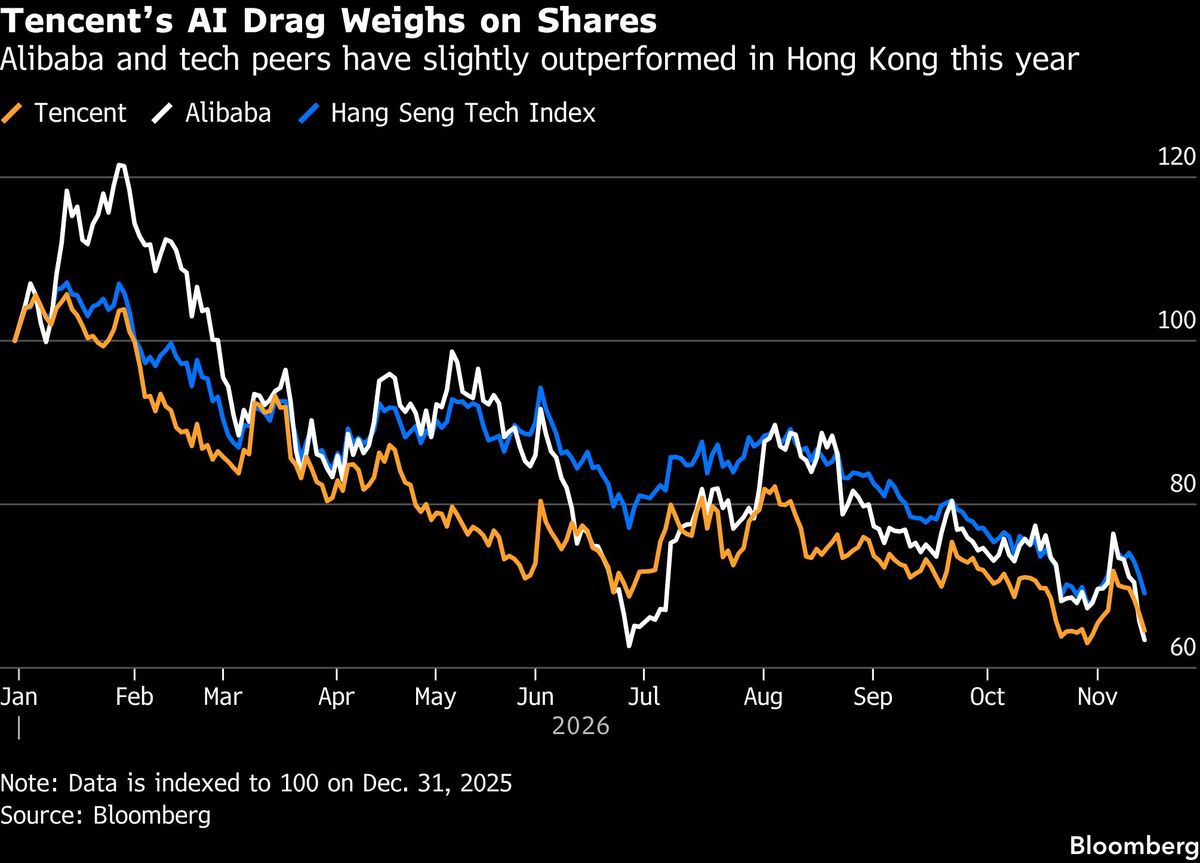
However, the company is still playing catch-up with upstarts such as DeepSeek and Moonshot AI, bringing in former OpenAI researcher Yao Shunyu to help. Its flagship chatbot has failed to challenge ByteDance’s market-leading Doubao, which started charging subscriptions after cementing its place as the country’s most popular ChatGPT-style platform.
Ma slammed Tencent’s AI endeavour as “a leaky ship” in May, then gathered employees at a company anniversary celebration this month where he urged them to contribute more. “If you don’t embrace the ongoing intelligence revolution, you get disrupted. This is a matter of life and death,” Ma said, according to a transcript of his remarks published by Tencent.
Competition in China’s AI arena is only set to intensify with ByteDance preparing to launch a personal AI assistant and Alibaba planning to spin off its chip unit via an IPO in Hong Kong. Complicating matters, Washington this week unveiled new rules aimed at cutting off Chinese access to Southeast Asian data centres, disrupting a vital avenue for training and developing AI.
Much of Tencent’s hopes now rest on WeChat, the ubiquitous app that is already shouldering much of the monetisation burden in areas from advertising to live shopping. WeChat’s native agent, Xiaowei, has been in testing since summer. Executives hope it will morph into an AI-first ecosystem that is central to the everyday lives of more than a billion people.
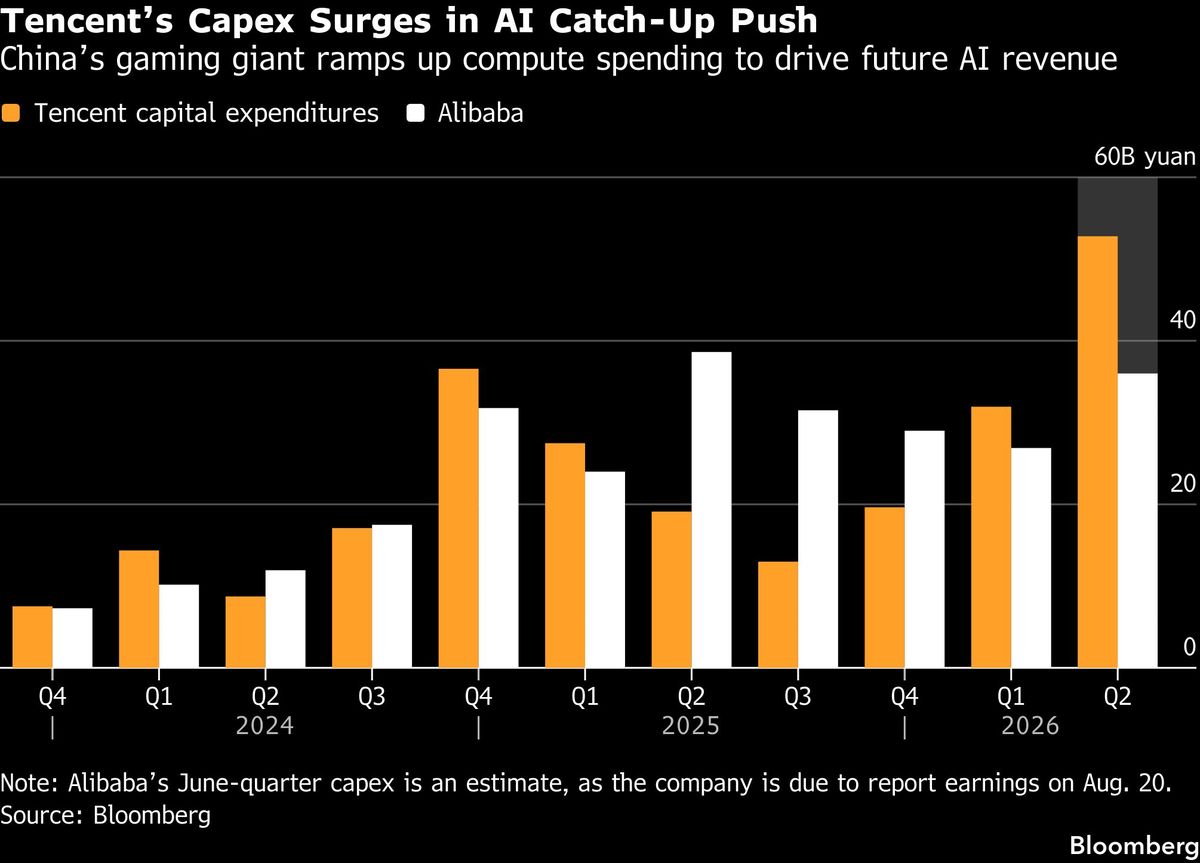
Chinese big tech firms have shifted toward building out AI data centres and stocking up on scarce chips even as investors increasingly scrutinise the near-term payoffs of such endeavours.
Tencent’s free cash flow turned negative in the June quarter after it hiked capital spending by 180% to US$8 billion (RM32.78 billion). That is still on the conservative side compared with Silicon Valley giants like Meta Platforms Inc and Microsoft Corp.
Funding a big portion of that spending is Tencent’s mainstay games business. The company has become more cautious about starting projects anew during a global industry downturn while turning to what it calls “evergreen” titles such as Honor of Kings to reap consistent profits.
In global markets, Path of Exile 2 from a New Zealand studio owned by Tencent is scheduled for a full launch in December after an initial rollout two years ago.
Uploaded by Arion Yeow