

(Nov 18): UK inflation accelerated to its highest level in a year after a surge in energy bills and motor fuel costs.
Consumer prices rose 3.6% from a year earlier, up from 3.5% in September and marking a fourth consecutive increase, the Office for National Statistics said on Wednesday (Nov 18). It was in line with economists’ expectations.
The pound slightly extended losses after the inflation data, down 0.2% on the day to US$1.3182, as traders pared bets on further Bank of England rate hikes. Swaps imply 90 basis points of additional tightening by the end of 2027.
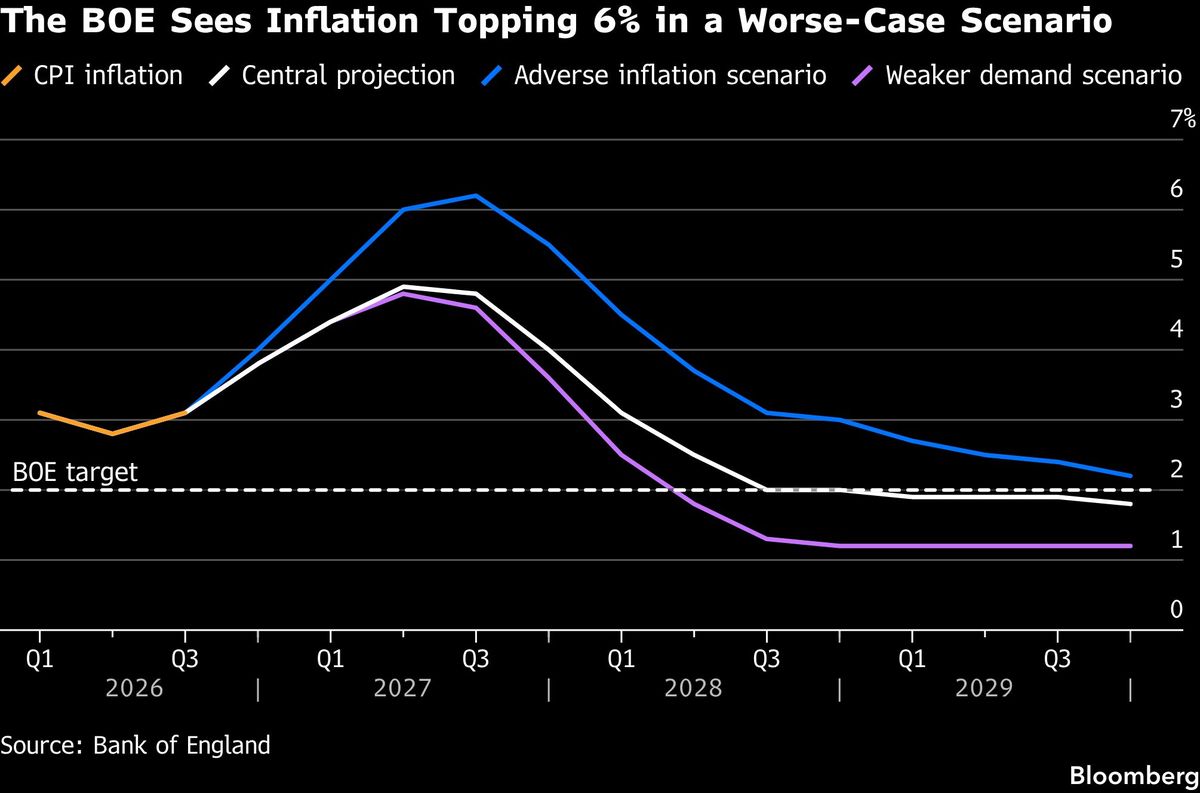
The inflation numbers, which came slightly below the BOE’s expectations of a larger rise to 3.7%, give officials some reassurance that the global energy price shock is not yet spreading to other parts of the consumer basket.
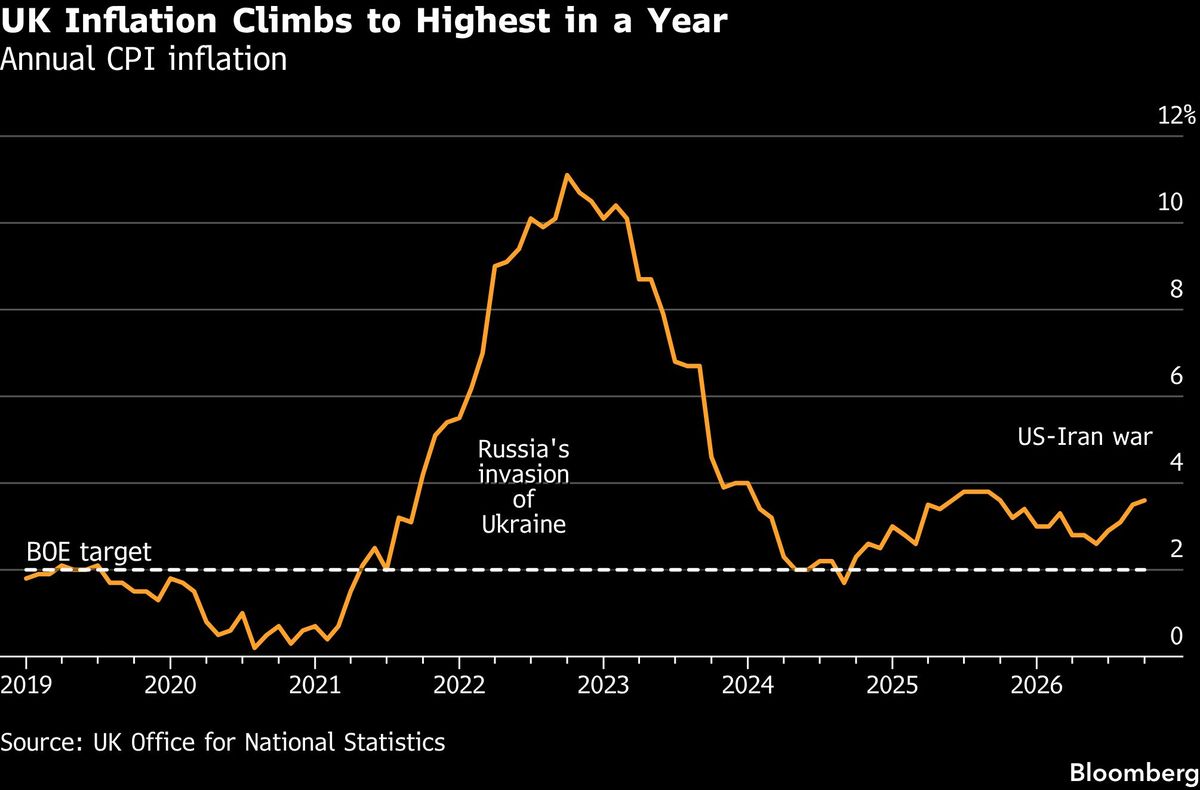
Services inflation, a gauge of domestic pressures watched closely by the BOE, held steady at 3.7%. Core inflation, which excludes energy, food, alcohol and tobacco, also remained the same at 2.8%.
“Today’s slightly softer headline inflation data make a December interest rate hike less likely, but it does little to change the broader outlook,” said David Rees, chief economist at Schroders.
BOE officials raised interest rates for the first time in three years earlier this month to fend off inflationary headwinds from the war in Iran. Policymakers signalled they are ready to act again as soon as December in the absence of any meaningful developments.
The inflation numbers partly reflect a 4% rise in a price cap that sets British household energy bills, as well as soaring fuel costs for drivers. These were only partly offset by lower pressures at restaurants and hotels.
“This remains primarily an energy-driven inflation shock rather than evidence of broad-based price pressures across the economy,” Yael Selfin, chief economist at KPMG UK, said.
Food inflation slowed to 0.8% on an annual basis, down from 1.2% the previous month, due to cheaper fish and chocolate. Price gains in restaurants and hotels also slowed from 3.8% to 3.4% over the past 12 months.
Nevertheless, British households are coming under pressure from the war in Iran. Figures earlier this week showed real-terms pay fell for the first time since 2023, as wages fail to keep up with soaring energy prices.
Prime Minister Andy Burnham announced new help with bills at the October budget, including a £100 payment to millions of homes. However, households face another large increase in the energy price cap in January, which would erode some of that support.
Uploaded by Arion Yeow