

This article first appeared in The Edge Malaysia Weekly on November 16, 2026 - November 22, 2026
FOR decades, tens of thousands of Malaysian families have been trapped in a crushing real estate nightmare, paying monthly bank mortgages for unbuilt homes while struggling to pay rent on the side. When Minister of Housing and Local Government Nga Kor Ming took office in December 2022, he decided that resolving these abandoned private housing projects was not just an administrative duty; it was a moral imperative to restore basic social justice.
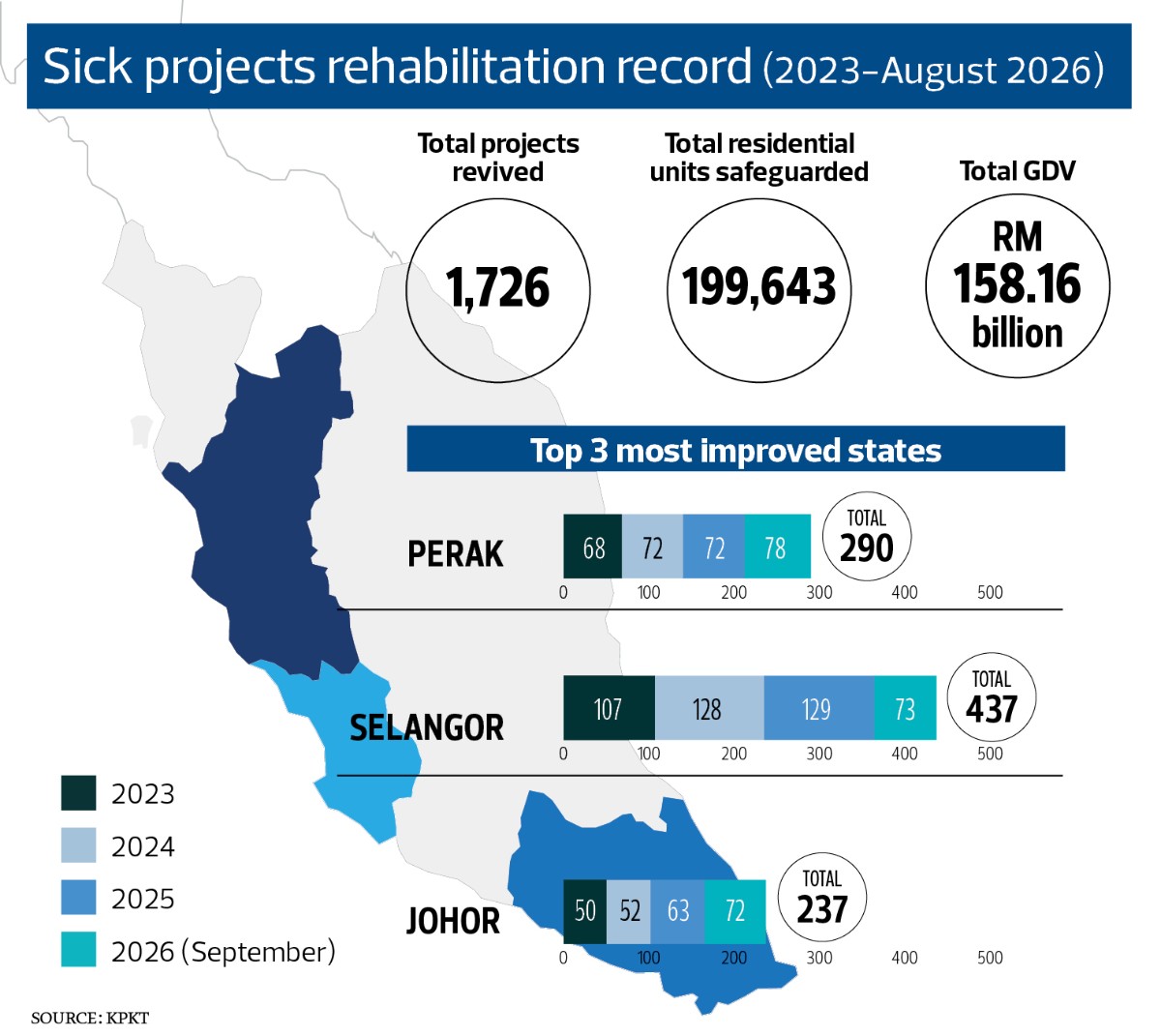
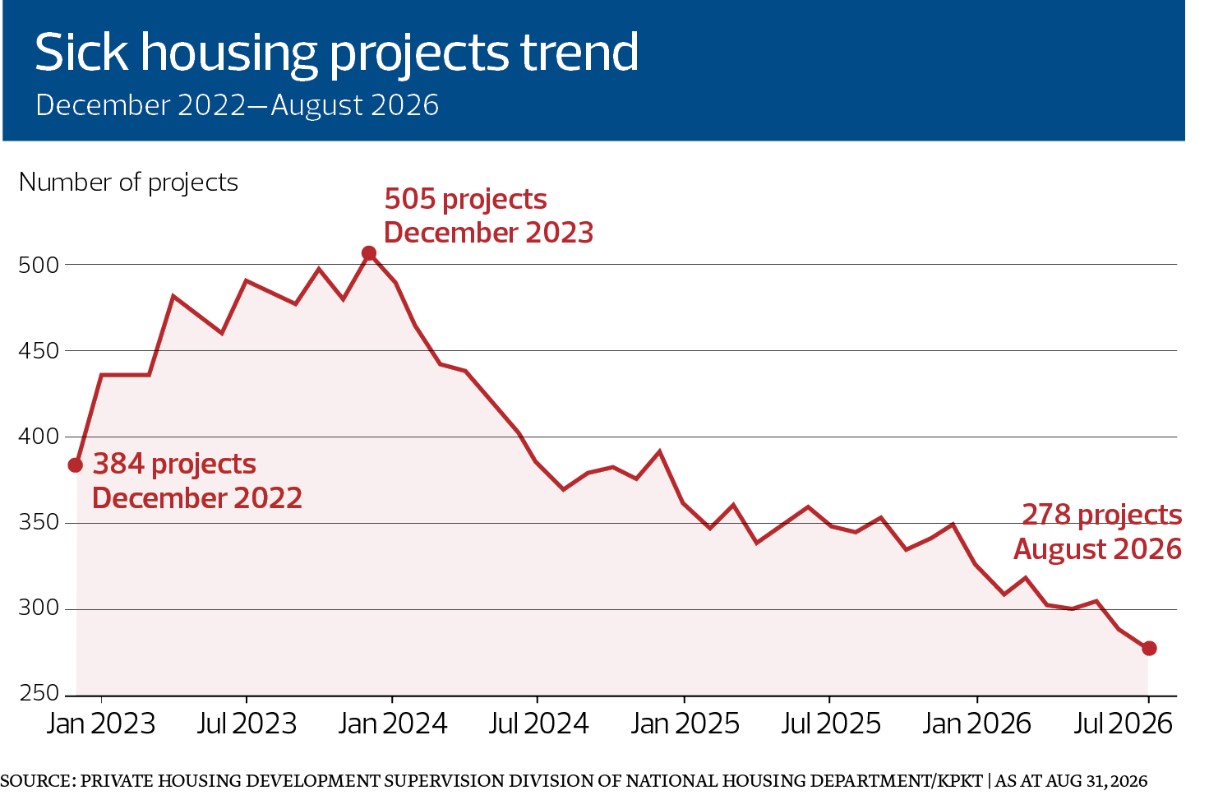
Through hands-on ground interventions by the Special Task Force for Sick and Abandoned Private Housing Projects (TFST) and tough regulatory reforms, the Ministry of Housing and Local Government (KPKT) achieved an unprecedented historic turnaround: rehabilitating 1,726 sick and abandoned private housing developments nationwide as at end-August, worth RM158.16 billion in gross development value (GDV). The effort salvaged 199,643 housing units, safeguarding homeownership for nearly 200,000 families.
From mandatory financial audits to strict director accountability and new buyer safeguards, the ministry is closing historical loopholes to ensure sick projects become a thing of the past.
In the following excerpt from an interview with The Edge, Nga outlines how hands-on enforcement, systemic legislative reforms, and proactive buyer protections are reshaping Malaysia’s housing landscape to achieve zero abandoned projects by 2030.
The Edge: Rehabilitating 1,726 housing projects and safeguarding 200,000 home purchases in under four years is unprecedented in Malaysian housing history. Looking back at when you first took office, what were the most critical leadership decisions and enforcement strategies that enabled KPKT to achieve these numbers?
Nga Kor Ming: When I assumed office as minister of housing and local government, one of the most pressing challenges was addressing the long-standing issue of sick and abandoned housing projects. Some of these projects were the result of human factors, including irresponsible developers and poor financial management, while others were affected by external circumstances, such as the Covid-19 pandemic that severely disrupted the construction industry.
To tackle this issue, we established the TFST in January 2023, with a dedicated mandate to monitor, intervene and facilitate the rehabilitation of problematic housing projects on a regular basis.
We introduced a structured Terms of Reference (TOR) built around four key pillars: Tracking, Resolution, Prevention and Forward Modelling. This allowed us to move beyond merely identifying problematic projects towards developing practical solutions and preventing similar issues from recurring.
More importantly, I wanted to change our working culture from paper-based monitoring to on-the-ground facilitation. On this note, I directed senior officials at the ministry to adopt a more proactive, hands-on approach by conducting regular site visits, rather than relying solely on progress reports in the office. All officers must be on the ground to feel the pulse of the people.
We also intensified roundtable negotiations with all relevant stakeholders, including developers, financial institutions, local authorities, technical agencies and homebuyers, to break long-standing deadlocks and accelerate the rehabilitation process.
The results speak for themselves. From the establishment of TFST in January 2023 until Aug 31 this year, KPKT successfully rehabilitated 1,726 sick and abandoned private housing projects, involving 199,643 housing units with a total GDV of RM158.16 billion. This is the highest record in history.
Behind these figures are thousands of families who have endured years of uncertainty, financial hardship and the frustration of waiting for homes they had already paid for. For me, this is not merely about reviving housing projects. It is about restoring hope, protecting homebuyers and rebuilding public confidence in Malaysia’s housing sector.
My heartfelt gratitude to everyone who helped us achieve the ‘mission impossible’. Their relentless hard work and contribution will be cherished forever.
Abandoned and “sick” projects have plagued homebuyers for decades. From the ministry’s policy perspective, what structural root causes — such as cash-flow mismanagement, speculative launching or poor site feasibility — historically enabled projects to fail, and why was previous rehabilitation so difficult?
The critical issues surrounding sick and abandoned housing projects stem from developers’ weak cash-flow management, misuse of funds or a lack of transparency in Housing Development Account (HDA) withdrawals, deadlocks in technical approvals from local authorities or utility agencies and sudden changes in economic and market conditions.
Historically, rehabilitating abandoned projects has been difficult because existing legislation contains no specific provisions requiring the government to revive private housing developments. Nevertheless, the Madani government views these rehabilitation efforts as a vital social obligation to the rakyat.
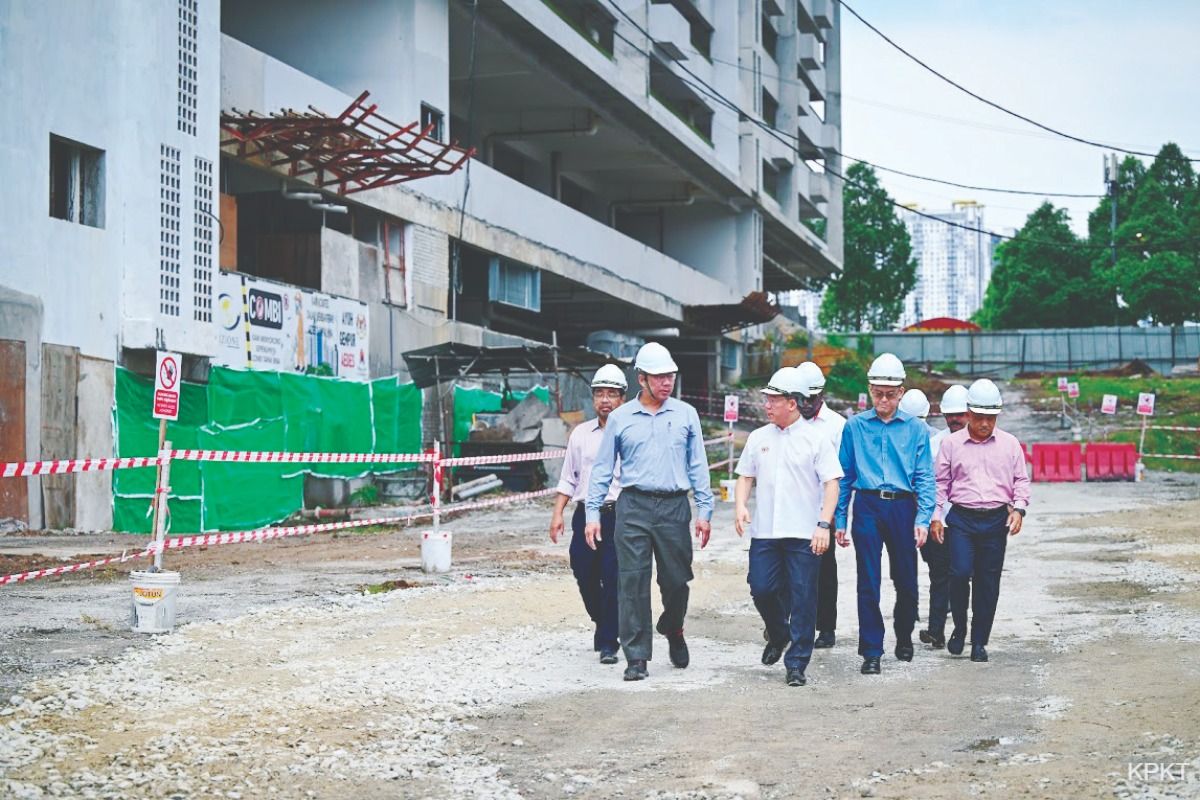
KPKT, through the National Housing Department (JPN), plays an active role as a mediator and facilitator, balancing the interests of homebuyers, rescue developers (white knights), financial institutions, technical agencies, local authorities and liquidators to formulate win-win solutions.
One particular concern in handling such cases is the premature withdrawal of HDA funds based on overstated construction progress. By the time the ministry detects these irregularities and intervenes, substantial funds may already have been withdrawn or misused, leaving insufficient resources to complete the projects.
To address these challenges, the ministry is actively working towards integrating the Housing Integrated Management System (HIMS) with banking systems to enable near real-time monitoring of HDA withdrawals. Under Madani Housing Reforms, we have now introduced mandatory audits of HDAs to ensure greater transparency and accountability in managing funds collected from homebuyers.
My philosophy is simple: every sen paid by homebuyers must go towards building their homes, nothing else.
Behind every abandoned project are affected families facing dual financial burdens (paying housing loans while renting homes). Why is eliminating this issue essential not only for homebuyer welfare, but also for national economic stability and public trust in Malaysia’s property market?
Affected homebuyers bear a heavy double financial burden. They have to continue paying back their mortgages for a house that they never received, while paying rent elsewhere for their current places of residence. It places huge financial burdens on homebuyers, and also mental stress. This not only impacts the social well-being of hundreds of thousands of families but also undermines national economic stability, as household savings become tied up in non-productive assets with huge debt piling up.
Resolving these projects and eliminating abandoned developments is critical to restoring public and investor confidence in the country’s real estate market. Successfully reviving 199,643 housing units worth RM158.16 billion in GDV injects cash flow and equity back into the national economic cycle while ensuring social justice is upheld.
Preventing housing distress requires active participation across the board — from local approving authorities and developers to commercial banks, main contractors and buyers. How is KPKT aligning all key stakeholders to foster an accountable, risk-managed property ecosystem?
KPKT implements an integrated coordination approach through the Forward Modelling mechanism. The ministry conducts continuous engagements with state governments, state housing and real estate boards, local authorities, utility providers, technical agencies, financial institutions, and developer associations. We are strong because we are together.
This year, JPN has organised the 2026 Abandoned Private Housing Forum as a matchmaking platform to enable private sector entities and rescue developers to take over problematic projects. In terms of financial incentives, the government continues its support by providing full stamp duty exemptions on loan agreements and transfer instruments between all rescue developers and original buyers until 2030 to ensure a sustainably supported recovery ecosystem.
Under my leadership, KPKT’s vision is to achieve zero sick and abandoned housing projects by 2030, through a series of institutional reforms including HIMS, Teduh, electronic sale and purchase agreement (e-SPA), mandatory audits on HDA, Option to Purchase (OTP) clause and e-Strata Management system.
We understand that KPKT is studying proactive buyer protection measures, including the OTP mechanism under the proposed Real Property Development framework. Could you elaborate on how this scheme balances developer viability checks with homebuyer protection before formal sale and purchase agreements (SPAs) are executed?
KPKT is currently in the final stages of studying the proposed OTP mechanism after a series of engagements with all stakeholders. Our primary objective is to ensure that developers’ financial viability and project feasibility are properly assessed before homebuyers enter into binding financial commitments, while introducing additional safeguards to protect buyers’ deposits should a transaction be cancelled.
For homebuyers, the proposed mechanism seeks to eliminate the risk of forfeiting non-refundable booking fees and provide greater price certainty during the lock-in period. The final purchase price should remain consistent with the price initially advertised and agreed upon, protecting buyers from unexpected price increases or market speculation before the SPA is executed.
For developers, the mechanism would provide an opportunity to assess genuine buyer interest and market demand before proceeding with a project.
This would allow developers to make more informed decisions on project viability, including the option to discontinue a project at an early stage if it is deemed commercially unfeasible, subject to appropriate safeguards for prospective buyers.
I must note that the proposed OTP mechanism will not be implemented across the board immediately. We have tested and will continue to test the concept through selected pilot projects, allowing the ministry to evaluate its effectiveness, identify potential loopholes and further refine the framework before wider implementation.
KPKT has set an ambitious national goal to completely eliminate sick and abandoned private housing projects by 2030. Are current interventions on track to meet this target, and what next-generation preventive or regulatory measures will KPKT deploy over the coming years?
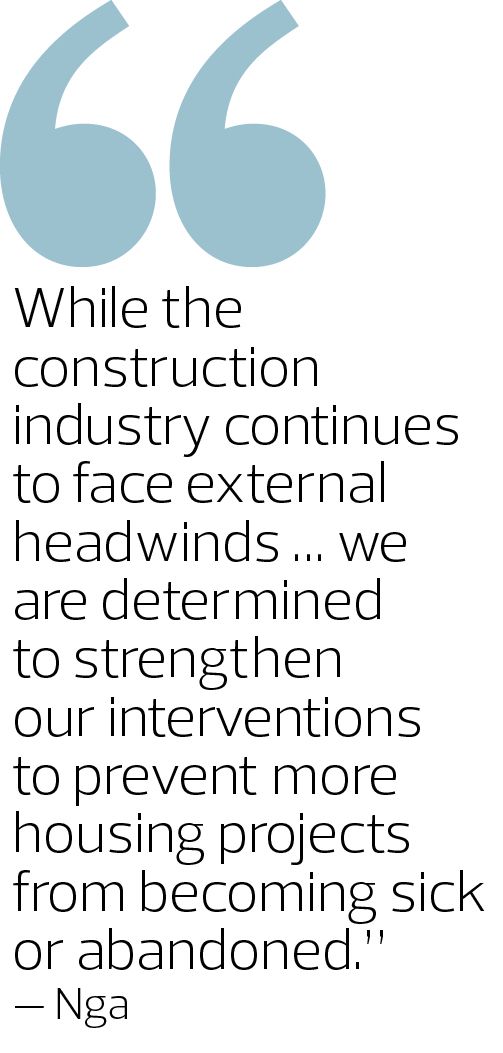
KPKT remains firmly committed to achieving the target of zero abandoned private housing projects by 2030. While the construction industry continues to face external headwinds, including global geopolitical tensions that have contributed to fluctuations in construction material costs, we are determined to strengthen our interventions to prevent more housing projects from becoming sick or abandoned.
As such, KPKT has introduced several Madani Housing Reforms. From a legislative perspective, we are studying the proposed Real Property Development Act, which would expand the existing regulatory framework to cover a broader range of developments, including mixed-use developments.
We are also reviewing the Housing Development (Control and Licensing) Act 1966 (Act 118) to strengthen enforcement against errant developers and enhance accountability within the industry. Among the proposed reforms are greater enforcement powers for the housing controller, stricter accountability for company directors, including former directors who may have committed offences during their tenure, and an expansion of the financial jurisdiction of the Tribunal for Homebuyer Claims beyond its current RM50,000 limit.
For developers, the government recognises that reviving abandoned housing projects often requires substantial financial resources and the participation of credible rescue developers, commonly known as white knights. To encourage greater private sector participation, Budget 2027 has proposed 100% stamp duty exemptions on property transfer instruments involving rescue developers and original homebuyers, effective Jan 1, 2027 to Dec 31, 2030.
For homebuyers, we want to empower Malaysians to make more informed decisions before committing to what is often the biggest financial investment of their lives. Through the ministry’s Teduh portal, prospective homebuyers can access information on housing developments and check the status of developers, including those who have been blacklisted. This enables buyers to conduct their own due diligence and better understand the risks before purchasing a property. This is in line with KPKT’s vision of ‘Humanising Housing’, as outlined in the National Housing Policy 2026-2035.
Save by subscribing to us for your print and/or digital copy.
P/S: The Edge is also available on Apple's App Store and Android's Google Play.