

During a recent visit to the Chinese History Museum in Kuching, I stood before the story of my great-granduncle, Ong Tiang Swee, one of Kuching's pioneers and community leaders. His father, Ong Ewe Hai, was my great-great-grandfather.
What a small world. My roots may reach across generations and borders, but my heart belongs to Malaysia. For me, Malaysia's shared table is personal.
Our conversation began with a question Malaysians love to argue about. Who owns rendang? The law can answer only part of it. The larger question is what food asks of us once it reaches the table. On that, the chef continues.
In international interviews over the years, from CNN's TalkAsia to the BBC, I have often returned to the same question. What is food to me?
My answer has never changed in all my years of travel. Food is the bridge that connects people. Through food you find love, you find friendship, you find peace and respect for all humankind.
When I meet you, I try to see straight to your heart, not the colour of your skin.
Start with gratitude, because that is where every meal starts. When rezeki comes down to us, we are asked to be thankful for it and to take care of it. We must pass down what we know about cooking, planting and tending the earth so that the next generation can survive and eat well.
That is why food is a celebration. A festival, a kenduri, a wedding. When the feast reaches the table and everyone sits down together, that is the longest happiness there is.
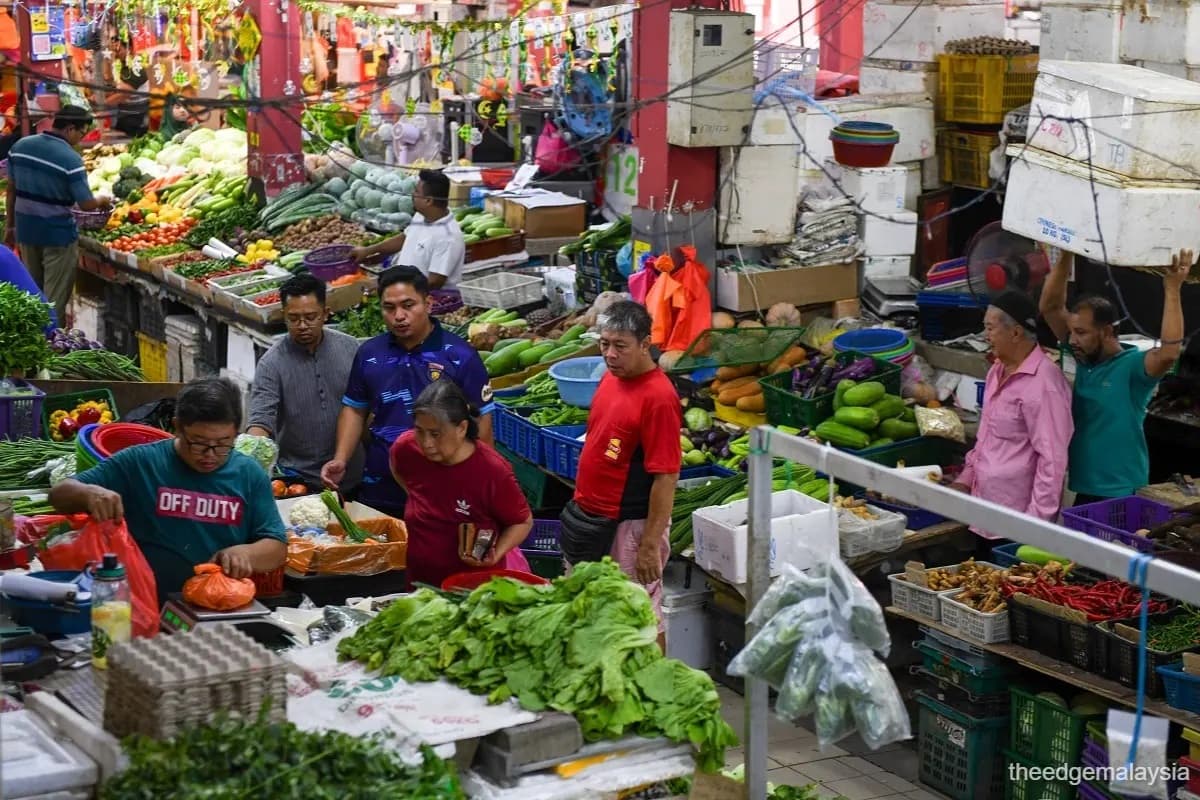
And Malaysians do something precious every single day, and sometimes forget how precious it is. We sit at one table across race and religion. Our festivals are different, but the table is the same. At a dining table, nobody eats as a race. We eat as a family.
People love to quarrel about where food comes from.
My answer is to study the history. You cannot change it. You can only respect it. Malaysia's table was shaped by communities rooted here for generations, including the Orang Asli and the indigenous peoples of Sabah and Sarawak, and continually enlarged through centuries of trade, migration and marriage.
Its history runs through the age of Parameswara and the glory of the Melaka Sultanate, the Portuguese who took Melaka in 1511, the Dutch who followed, and the traders and settlers from China, India and across the wider archipelago.
Food travelled the way people travelled, and it kept evolving as communities lived and cooked alongside one another. You can taste that history in the food we cook today.
And the crossings made the food better. Knowledge is for everyone. When techniques are shared, nobody loses and the whole table wins. Chinese cooking techniques met the spice traditions of Malay and Indian kitchens. Many forms of Malaysian Chinese cooking absorbed local herbs and rempah, creating flavours that are unmistakably Malaysian and enjoyed by visitors from around the world.
In Kuala Lumpur, I have watched visitors from China lining up for our kam heong crab and chilli crab. They come here, to Malaysia, for these flavours.
That is what happens when cultures cook side by side for centuries. Everybody's food becomes more delicious than it could ever have been alone.
So when Malaysia and Singapore quarrel over laksa or chicken rice, I see two siblings at one family table, each shouting that their mother loves them more.
I have said as much on regional television. When so many people do not have enough to eat, why are we quarrelling over who owns a dish?
We should all say alhamdulillah, and pass the sambal.
Here is the truth underneath all of it. In the deepest sense, nothing on the table was ever really ours. We arrive in this world with nothing and, when we go, everything stays behind.
In cooking, our most valuable inheritance is the recipe, the technique and the ilmu, handed from one pair of hands to the next. When we turn that inheritance into a quarrel over "mine" and "yours", pride and greed take over. And pride and greed have never once fed anyone.
And if a dish is not for you, whether because of taste or faith, there is no need to say anything unkind about it. Kalau tak nak makan, tak payah cakap.
What matters is a good heart, a good mouth and good deeds. Every religion I know teaches us to take care of our neighbour. The Malaysian table ought to be long enough for everyone. Whatever your path, there should be a place for you.
Remember whose table it really is. Some of our tok moyang crossed seas and left their families behind in search of sesuap nasi, a mouthful of rice. Some never saw their families again. Others had been rooted in this land for generations.
Across communities, they worked, endured and, in different ways, helped build the society that became modern Malaysia. We did not bear their hardships. We inherited the result. Surely we can manage not to quarrel endlessly over what they struggled to leave us.
Here, the lawyer, briefly. Food reminds us that not everything that matters needs to be divided into mine and yours.
The law has its place. It protects rights, sets boundaries and safeguards the space in which different communities live according to their beliefs and traditions.
The Rukun Negara calls for courtesy and morality, kesopanan dan kesusilaan. The freedom and respect we ask for ourselves must also be extended to others.
But law alone cannot make people want to sit together, share a meal or care for one another. A constitution may give us a common home. Whether it becomes a shared one is up to us.
That work happens in ordinary places like schools, neighbourhoods, workplaces and dining tables. Sometimes nation-building is as simple as making room for one more plate.
So, says the chef, bersyukur. Cook your grandmother's dish before it is forgotten and teach a younger pair of hands while you cook it. Invite the neighbour whose festival is not yours. Say your doa, give thanks for the rezeki and makan dengan hati yang berlapang. Eat with an open heart.
Can we just eat? Yes, we can.
Chef Wan (Datuk (Dr) Redzuawan Ismail) is a Malaysian chef, restaurateur, television personality, cookbook author and Tourism Malaysia's Food Ambassador. J J Chan is managing partner of CBE (Chan Ban Eng & Co), a barrister-at-law of the Honourable Society of Gray's Inn, London, an advocate and solicitor of the High Court of Malaya, alumni ambassador (Malaysia) for City St George's, University of London, adjunct professor at the Faculty of Law, Universiti Malaya and founder of the Financial Lines Forum. He specialises in financial lines, medical negligence, corporate and directors' liability, insurance/reinsurance and Al governance risk. He also writes regularly on constitutional and public-interest matters.