

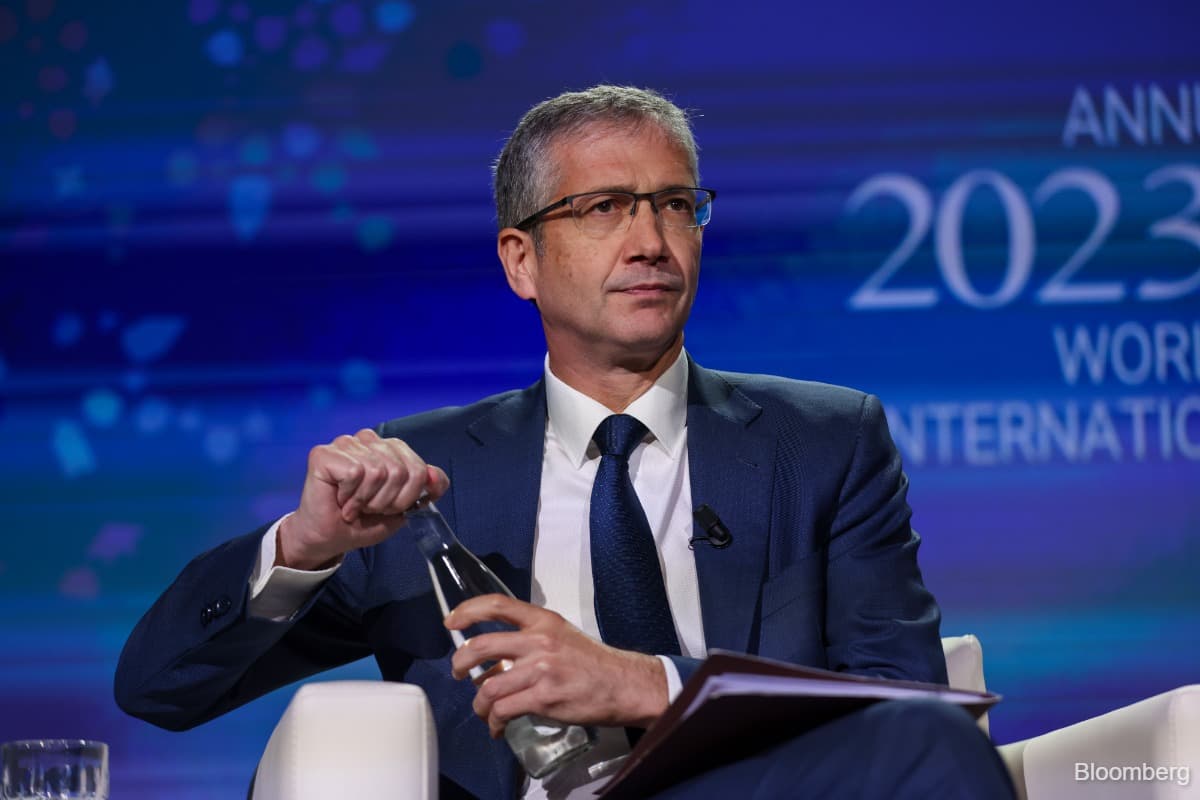
BERLIN/FRANKFURT (Nov 17): Spain's Pablo Hernandez de Cos moved a step closer to becoming the next European Central Bank president on Tuesday as Germany threw its weight behind him and said it was aiming to put a German in the chief economist's role.
European Union governments are negotiating to fill three ECB Executive Board seats that become vacant in the coming months — including the presidency when Christine Lagarde leaves ahead of schedule on Feb 7.
The reshuffle comes as the ECB grapples with a renewed, war-driven rise in inflation while assessing the fallout from France's budget crisis, which has rattled eurozone bond markets.
De Cos' appointment would hand the top job to a southern European policymaker and ally of former ECB president Mario Draghi, reinforcing expectations that the central bank would ultimately use its firepower to contain any new sovereign debt crisis.
German move favours de Cos over Knot
Germany's Finance Ministry said on Tuesday it was seeking the job of ECB chief economist for Princeton University professor Markus Brunnermeier, and people familiar with the matter told Reuters Berlin would support de Cos for the top job at the central bank.
By targeting the chief economist's post, which is responsible for shaping policy proposals, Germany was making it easier for de Cos to win backing for the presidency, given the importance of maintaining a balance between northern and southern Europeans on the ECB's six-member Executive Board.
The move, in turn, complicates the chances of Klaas Knot, the former Dutch central bank governor and de Cos' only rival for the presidency.
Northern and southern European countries have often found themselves on opposite sides of EU economic debates, with the latter typically favouring lower interest rates and greater risk-sharing because of their higher debt burdens.
De Cos has reputation for independence
De Cos, however, has built a reputation as an independently minded policymaker during his years at the Bank of Spain under Draghi and Lagarde.
A former ECB staffer, de Cos rose through the ranks to become the Bank of Spain's chief economist and later governor.
He backed negative interest rates and large-scale bond purchases when inflation was weak, including during the pandemic, but also supported the ECB's most aggressive rate-hiking cycle when prices surged after Russia's invasion of Ukraine.
Money markets are pricing in two or three ECB rate increases by the end of next year, and economists expect de Cos would broadly continue the gradual tightening path laid out under Lagarde.
"We would read that as slightly dovish at the margin, but he is a consensus-builder rather than an obvious policy driver, and the other two key Executive Board appointments will be just as important for the rates direction," economists at broker Mizuho said.
ECB policy is decided by the 27-member Governing Council, meaning even the president has limited scope to steer interest rates single-handedly.
France to get third board seat
France, which alongside Germany and Italy effectively holds a permanent seat on the board, is expected to take the remaining vacancy when Isabel Schnabel steps down in early January.
While the ECB president formally allocates portfolios, economists said Paris may seek to take over Schnabel's market operations brief, which includes responsibility for the ECB's bond-buying programmes, given France's recent debt-market stress.
The eurozone's second-largest economy is expected to put forward a female candidate to meet political demands for more gender balance at the top of the central bank.
Former OECD chief economist Laurence Boone and deputy Banque de France governor Agnès Bénassy-Quéré are widely seen as possible candidates.
Governments have until Wednesday to submit candidates to the Eurogroup of eurozone finance ministers.
Uploaded by Magessan Varatharaja