

This article first appeared in The Edge Malaysia Weekly on November 16, 2026 - November 22, 2026
PENDING studies on how best to implement further pension reforms, it is hoped that Putrajaya’s decision to raise minimum and living wage benchmarks as well as automatically register Malaysians as members of the Employees Provident Fund (EPF) at age 18 in Budget 2027 will nudge more individuals to start accumulating old-age reserves earlier.
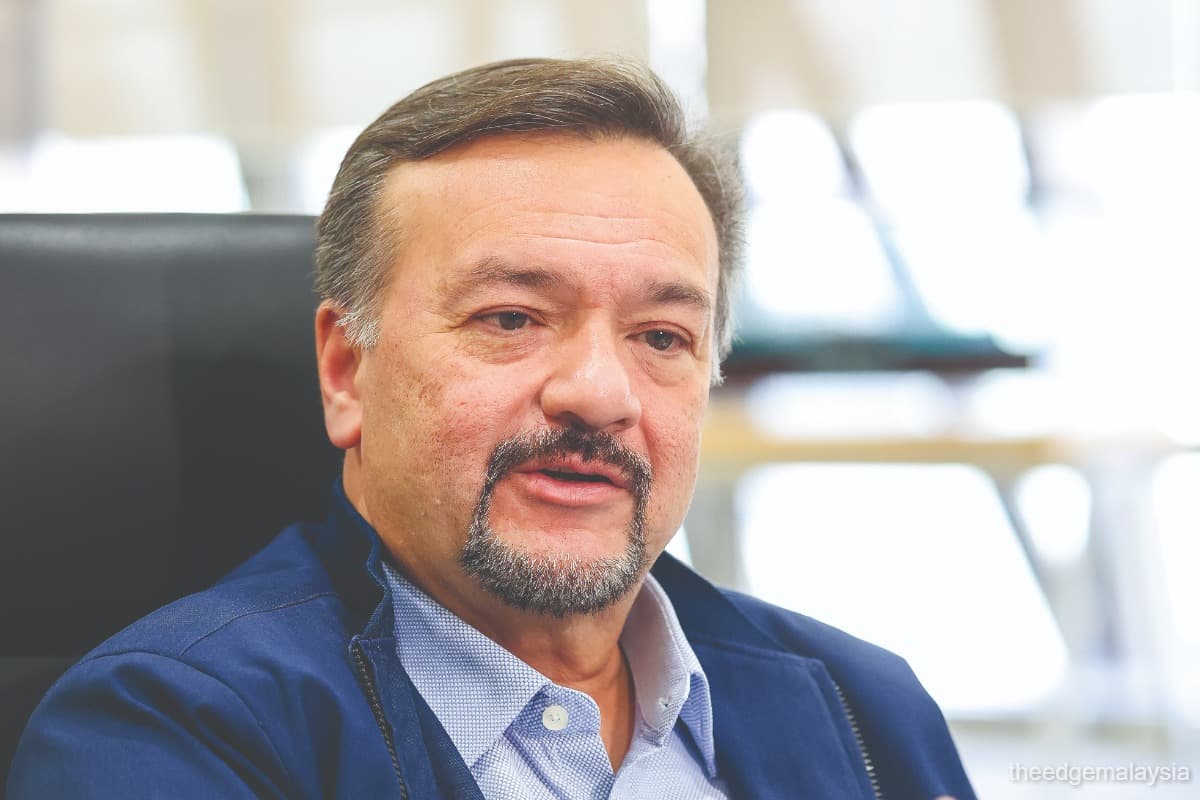
“The EPF continues to refine its schemes. The first refinement was to look at how to shore up people’s ability to save more through voluntary contributions by making it easier to increase savings. The cap for voluntary contributions was lifted (from RM60,000) to RM100,000 per year (in 2023). For the informal sector, government (matching) incentives were put in place to help build the nest egg,” Minister of Finance II Datuk Seri Amir Hamzah told The Edge in a recent post-Budget 2027 interview.
“The second was to increase the desire for a person not to take out [EPF savings in a] lump sum [but choose a monthly structured payment option] so that at the end of the day, people have more because whatever is left inside [EPF] compounds and continues to earn dividends. I think we are getting traction,” he adds, referring to efforts to raise awareness on the power of compounding interest as well as the rebranding of EPF’s age 55/60 voluntary structured monthly withdrawal scheme to i-Emas to reinforce the importance of managing EPF savings as a sustainable source of old-age income.
Indeed, automatic registration makes it easier for Malaysians below age 60 to access the i-Saraan scheme for self-employed individuals. Through this scheme, the government provides a 20% matching incentive of up to RM500 per annum (for RM2,500 deposited into EPF), with a lifetime limit of RM5,000 per individual, from as early as age 14. The lifetime incentive for e-hailing and p-hailing drivers is higher at RM6,000 under the i-Saraan Plus scheme.
Still, with around three million, or 8.4%, of its population already aged 65 and above, and the country expected to become an aged society within two decades, can the country afford not to speed up reforms to sustainably expand old-age social safety nets — starting with younger cohorts yet to enter the workforce? After all, there is also a need to ensure existing infrastructure keeps up as more Malaysians live well beyond the average life expectancy of around 76 years in the face of higher cost of living.
The reality on the ground, however, is this: whether it is public pension or private retirement savings, Putrajaya seems to have succeeded in only taking small steps so far in the face of political pressure and public pushback on long-standing practices even though it acknowledges the need to move beyond savings accumulation to adequacy and sustainability.
“Malaysians don’t like [it] when you slap things involuntarily [that would] shock a system, like you suddenly say, ‘I don’t allow you to withdraw [EPF savings]’. So, this is part of the mode to convert people to accept that [not withdrawing in a lump sum] is a good thing.
“We need to look at whether, at some point, we make it a change in the scheme itself. But this needs detailed study. Do we start with a refinement for the younger generation? In Budget 2027, we said everybody is automatically registered with EPF at age 18. Hopefully, that would get people saving earlier. As long as EPF returns are good, I think people will have the incentive to top up themselves,” Amir elaborates.
Even though restricting lump-sum withdrawal would help stretch EPF members’ retirement savings, Putrajaya is likely to take the voluntary route — especially for older EPF members — to gain buy-in.
The i-Emas structured monthly withdrawals for those aged 55 and above, for instance, continue to be voluntary and are expected to remain that way, especially for older EPF members who are already in the workforce. Like subsidy rationalisation, any changes are expected to be implemented in phases to gain buy-in and allow the market to adjust. Even the rebranding of i-Emas required extensive communication to counter fear-mongering of retirees being denied access to their EPF savings.
Fear of a sudden change, which reflects the significance of EPF savings to ordinary wage earners, exists despite any alterations to EPF withdrawals requiring legislation change to be passed in parliament. This is why the country has not been able to align lump-sum withdrawal from age 55 to the retirement age of 60, despite it having been considered for at least 15 years.
Public pension reform ongoing
Amir Hamzah also affirms that civil servants hired on three-year interim contracts since Feb 1, 2024, will see their contracts extended pending the final refinement to details of the new public service “contributory permanent appointment scheme”. Again, this reflects the challenge of striking the right balance to gain public acceptance of tough but necessary fiscal reforms some three years and four months since the cabinet’s bold July 2023 decision to stop promising a pension to new civil servants.
A “contributory permanent appointment scheme” essentially means civil servants hired from Feb 1, 2024, will have to save towards their retirement with EPF, just like wage earners in the private sector.
“We continue to have people on contract basis and extended until we have resolved this conversion to a DC (defined contribution) scheme. That’s been worked through by the Public Services Department. The conversations are going well, so I don’t think that is going to be a big issue because for the person going to a DC scheme, there are other enhancements given to ensure they have certain privileges, especially on medical. I think within the next two years, something will transpire … The government is committed to go through on that basis because it will at least have us transition to where people are also contributing,” he says.
Even though having new civil servants on a DC scheme means the government will need to make an employer’s contribution to EPF, and does not immediately bring down an already sizeable public pension bill, Amir Hamzah says Putrajaya is prepared to do so as it recognises the power of savings and compounding interest.
“We’ve noticed, as we do that, the ability for the fund to generate enough returns to have adequacy of savings is better. And we’re giving flexibility. People who come and work in the civil service on a DC scheme, should they decide to leave, they don’t lose out because the money is already in a DC scheme, right? Of course, the civil service worries about retention. But I think there are other things that they can do to attract talent and to keep talent,” he adds, noting that there are “smarter minds in the Public Service Department” able to manage that transition to an EPF-like DC scheme from the legacy defined benefit (DB) public pension where the burden of ensuring retirement savings adequacy and managing longevity is entirely borne by the government.
In a written reply to parliament in June 2026, Prime Minister Datuk Seri Anwar Ibrahim said areas being fine-tuned include “retirement benefit packages and the appropriate implementation measures” to ensure that the new scheme “will safeguard the country’s fiscal position while continuing to attract the best talent and ensuring that the welfare of public servants remains protected and preserved”.
Sequencing old-age social pension
Even Singapore, which began implementing changes to its Central Provident Fund in the late 1980s, continued to allow the withdrawal of a portion of CPF savings even as it slowly reduced the amount that can be taken out in a lump sum. An annuity programme, CPF Lifelong Income for the Elderly (CPF Life), was created in 2009 to address the risk of Singaporeans outliving their retirement savings. In short, CPF Life introduces a goal for Singaporeans to save towards if they want to have a pre-determined monthly income for life.
At the International Social Wellbeing Conference 2026, themed “The Long Horizon”, held in Kuala Lumpur on Sept 29, D3P Global Ltd CEO William Price reminded delegates of the need to shift the focus from the size of accumulated retirement savings to how much income that pool will generate in old age.
Amir Hamzah says “a lot more thought” needs to go into whether Malaysia will also eventually introduce a CPF Life-like annuity scheme with a lifetime monthly pension promise.
“At the moment, we need to address the basics first. And our basics first focus on building enough retirement savings — thus the push to get EPF basic savings up closer to 100% at some point,” he says, referring to the target of having at least six in 10 EPF members hitting the basic savings benchmark of RM390,000 by 2030 versus four in 10 now.
“Second is to make sure that the social contract obligation between the government and the rakyat is observed to provide the core basic public health facility that the people need,” he explains, noting that reforms include ensuring better control of medical cost inflation as well as providing an option for private healthcare access.
The latter includes the MediAsas medical insurance scheme, scheduled for rollout next January, that is being refined with Bank Negara Malaysia, insurance and takaful operators as well as the Ministry of Health, alongside a unified digital health records system and a nationwide Diagnosis-Related Group (DRG) hospital pricing framework, he adds.
“If we can make the system interconnect in a better form [between private and public healthcare facilities] that help each other … We’re trying to optimise the number of assets at play so that we reduce waiting time and also overall cost. Let’s get that sorted out first before we even talk about social pension. These are basic things that need to get right first now,” Amir Hamzah says, highlighting how concurrent efforts to create better-paying jobs also bolster efforts to shore up retirement savings adequacy.
“If wages remain low, it’s very hard to build adequate retirement. So, we’re pushing those up, which takes us back to the Ekonomi Madani framework [which] says, increase the cake, make quality jobs, make better opportunities work in the country so that people can mobilise and grow and get better. I think we can do that because the country has shown its capacity to scale up, to embrace change, which is why Malaysia is a darling from an international investor point of view today,” he adds, relating how foreign investors tell him Malaysia is “good boring”.
“Good because you have so much opportunity, it’s doing the right things and the numbers are great. Boring [is good] because we live in a very noisy geopolitical world, you don’t want to wake up tomorrow morning with a heart attack. And Malaysia never gives you a heart attack, right? As an investor, you’re always sure of policy consistency, directionality … That is why people want to come here. A lot of other places, it is not so predictable.”
Amir Hamzah — whose current three-year term as senator expires on Dec 11, 2026 and who was CEO of EPF between March 2021 and December 2023 — admits there is need to move faster on reforms.
“Whether we like it or not, we have to accelerate. One of the key things that we’ve been able to prove in the last four years is we can do difficult things. If we set our minds to it, we plan [and] phase it well, we can do it. I think we need to be more focused on building a better place, celebrating successes and always focus on pushing ahead. When we have that positive mindset, a lot of things will change.”
Malaysia also needs greater fiscal space “to do more”, the reason he says the government places constant emphasis on cutting leakages. “Leakages take away from basic infrastructure costs. We have to stop [leakages]. But cutting leakages is not easy. A lot of people make noise because the system has been there for years.”
Malaysians can help by reporting possible leakages, including when foreigners attempt to pump subsidised petrol. Making a conscious effort to save early for retirement with EPF and allowing one’s nest egg to compound also contributes towards greater fiscal sustainability.
Save by subscribing to us for your print and/or digital copy.
P/S: The Edge is also available on Apple's App Store and Android's Google Play.