

This article first appeared in City & Country, The Edge Malaysia Weekly on November 16, 2026 - November 22, 2026
Norwegian paint and coating company Jotun recently celebrated the 100th anniversary of its founding by Odd Gleditsch Sr in Sandefjord, a port town on Norway’s east coast. Back then, Gleditsch Sr had noticed the deteriorating exterior of the country’s whaling fleet due to the long periods at sea and saw an opportunity to provide a protective coating for the boats. That was the start of the company’s journey towards becoming a market leader in marine protective coatings.
From there, Jotun soon expanded beyond its borders. It opened its first overseas factory in Tripoli, Libya, in 1962. Then in 1968, it established a factory in Thailand, launching its presence in Southeast Asia.
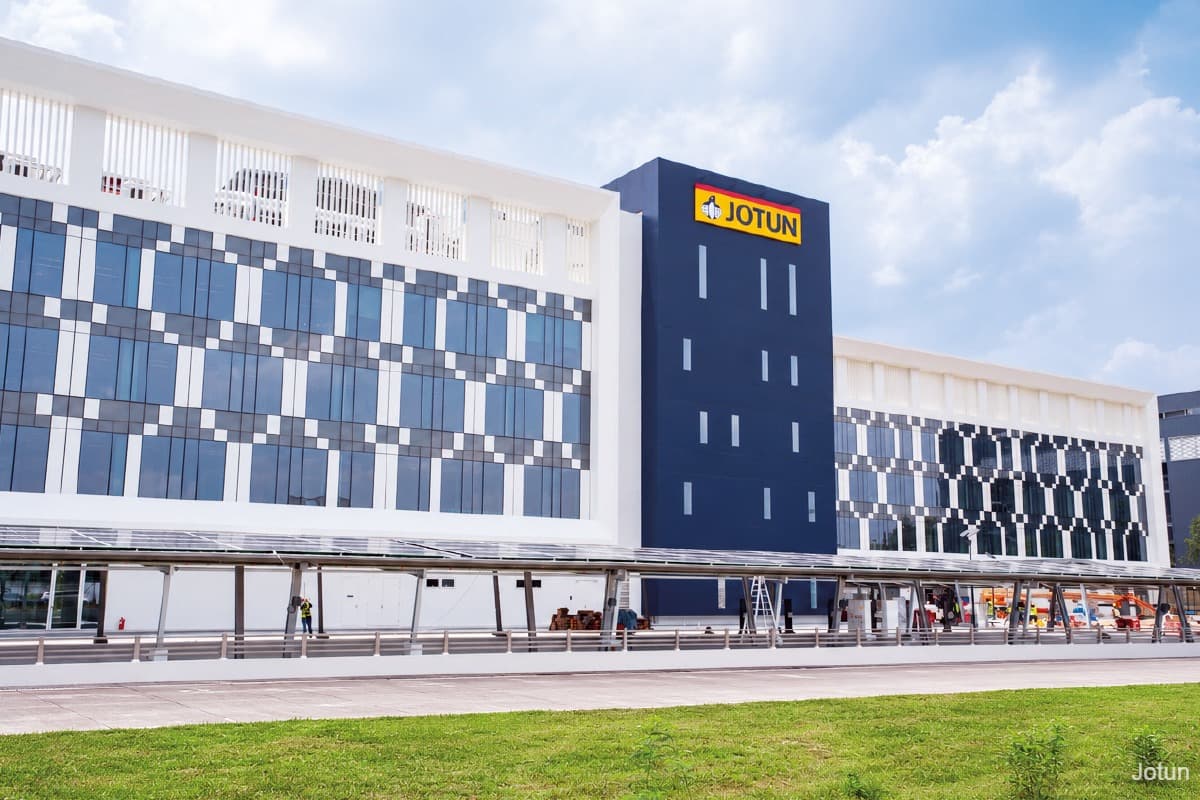
Jotun arrived in Malaysia in 1985 with the opening of a facility in Shah Alam and later, with another in Nilai. On Nov 18, it will launch the RM500 million Jotun Southeast Asia Pacific R&D Centre and regional headquarters in Hicom-Glenmarie Industrial Park, two years after construction began in August 2024.
The facility has a gross built-up area of 15,109 sq m and can accommodate 200 staff members. It has 200 parking bays with 15 electric vehicle chargers, and the solar capacity of 237.9kWp. The building’s facade features a songket pattern.
In conjunction with its opening, Kjetil Urheim, Jotun’s new marketing director for South East Asia and Pacific, talks to City & Country about the company’s plans for Malaysia.
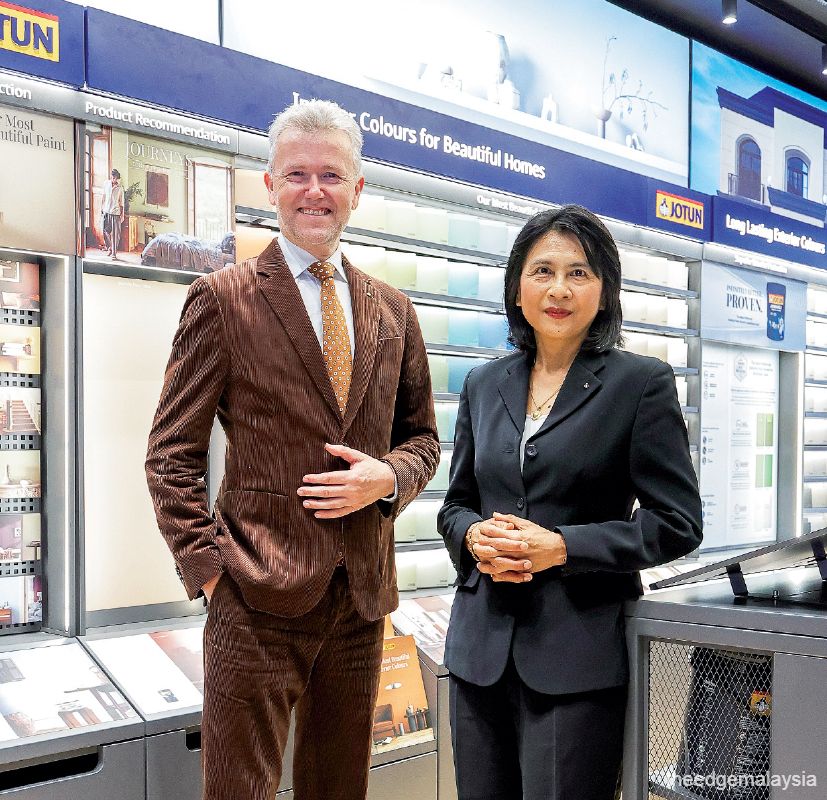
Urheim, who was general manager of Jotun UAE for 5½ years before taking on his new role, says the company has a presence in 100 countries, operates factories in 41 countries and serves four distinct market segments.
“We are in four segments: decorative paints, marine coating, protective coating and powder coating, which is electrostatically applied powder that, when the product is put in a furnace, creates this much, much stronger paint film. You see it on the outside of buildings with aluminium facades,” he says.
Investing in innovation and R&D
Urheim says Jotun positions its products as premium, which means they cost more than other brands. Founder Gleditsch Sr always believed there was market for high-quality products.
“That is why we invest in innovation and R&D. And the opening of this new regional R&D and administration centre [in Malaysia] is to strengthen the innovation work we are doing in Southeast Asia — because we believe in doing the R&D work, especially to be closer to the market. We do [the R&D] here so we are able to provide a suitable product,” he says.
“Also, most of the paints created for Southeast Asia are done in Malaysia, which includes the concept and packaging. So this is really where a lot of value creation happens for the Southeast Asian market for Jotun.”
One way the company shares its expertise is to work closely with architects, interior designers and developers to provide solutions for their specific needs.
“What we do is that we would help them, not only by proposing paints and colours. We’ll help them with the technicalities as well [such as] which paint system is suitable for a building,” says Jotun Paints (Malaysia) Sdn Bhd specifications manager for decorative paints Reinee Teo.
She adds that Jotun paints are rigorously tested.
“We comply with a lot of test reports, a lot of international accreditation standards. We send our paints to Singapore, a third-party lab, to do the tests. There are several tests, like on fungus, on algae, the UV test and also on heat reflective paints.”
The paints are also tested to ensure the colours look as intended under different lights.
“Many homeowners, architects or even paint producers don’t care about something called metamerism. Paint is affected by light; many paints will look different under different lights.
“In Jotun, that’s tested. We can’t accept that you buy a colour and you go home and then it looks completely awful. The paint is tested and it’s proven that that doesn’t happen. So this aspect of making sure that the customer is satisfied and his or her needs are met is what makes Jotun a premium paint,” says Urheim.
In Malaysia, Jotun paint has been used on large developments such as the Petronas Twin Towers, Menara Merdeka Maybank, the Waldorf Astoria Kuala Lumpur hotel and The Exchange 106.
International projects include the Burj Khalifa in Dubai, Shanghai Tower in China, Techo International Airport in Cambodia, King Power Mahanakhon Tower in Thailand, Marina Bay Sands in Singapore, Landmark 81 in Vietnam and Sequis Tower in Indonesia.
Besides buildings, Jotun also provides paints that can be used in data centres, particularly for their fire-retardant and easy-to-clean properties.
“Besides fire-retardant properties, they also need anti-static floor coating for data centres because any spark will be potentially damaging. So data centres are a big business for us actually,” says Urheim.
Jotun has the Jotun Property Maintenance Program for the maintenance of the facades of existing buildings. The programme utilises the Eagle Eye Building Inspection process where a drone with thermal imaging sensors will help detect flaws in a building, after which advice and solutions are proposed for any issues that exist.
“We have been doing this since the day we started … We educate the owners on the need for maintenance. We have a manual to tell them about the defects, how the remedial works are done, and before any repainting is done, we have to ensure that we assess the site and give them the right advice,” says Teo, adding that the repainting service also extends to other buildings like hospitals, high-rises and schools.
Educating customers
To ensure that Jotun paints are utilised correctly, emphasis is placed on educating customers on the properties of the paints and their uses. Urheim and Teo both say it is important to work with all parties and provide the guidance needed for a satisfying finish.
“That is why shop staff training is important. They need to sell our brand and product, explain the difference between ours versus another brand,” she points out.
Urheim concurs. “It’s not like buying a shampoo where you walk into the supermarket, pick a shampoo or chocolate or washing powder. You need advice because you wouldn’t know which specific product you need, because Jotun has a lot of different products.”
While it has a wide range of products and applications, Jotun aims to continue expanding in Malaysia and the region.
“Jotun benchmarks its growth to the GDP (gross domestic product) growth in each Southeast Asia and Pacific market. Based on this, Jotun aims to grow faster than the markets.
“Growth projection for the next five years in terms of GDP for our four main markets of Malaysia, Thailand, Vietnam and Indonesia is about 2% to 6%. We aim to outperform that by growing by about 10%.
“We see Southeast Asia as a growing region of the world. We want to grow even though we are a market leader in marine protective paints in many countries, and for decorative paints, we are in the top two. We definitely see that we have room to grow,” Urheim says.
Finding the right colour
There is a universal desire to create a safe and cosy environment when decorating one’s home. Jotun regional marketing director for South East Asia and Pacific Kjetil Urheim, who has worked with the company in Norway, Indonesia and the UAE, has noticed how every culture has the same basic need.
“It’s probably a bit different for interior and exterior paints, but for the interior, what you want to create is a ‘nest’ for your family, where there is harmony, and a good place to raise a family. And so you want colours that mostly create calmness, harmony and match with items,” says Urheim.
Jotun aims to meet these requirements with a unique system that helps ensure users get the right paint for their needs and wants.
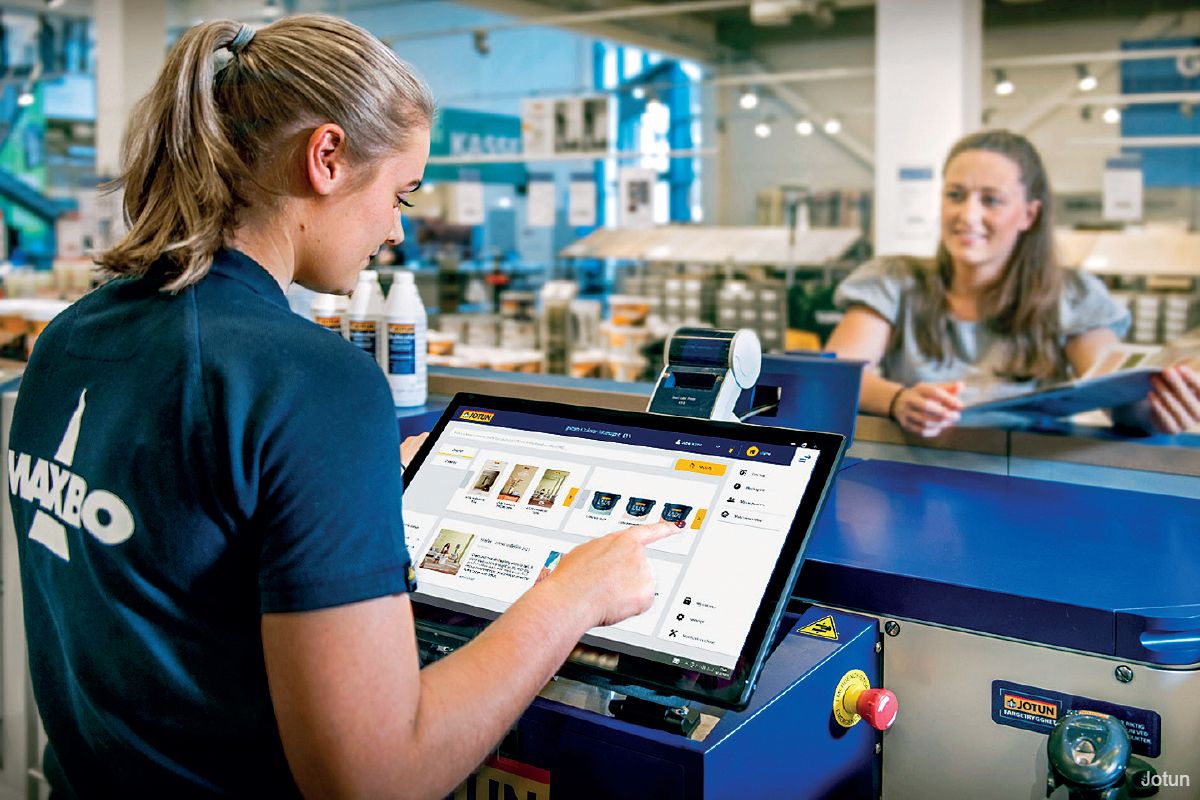
“When you visit a Jotun store today — and it has been so for the last 50 years — there are no ready-made paints on the shelves. Everything is mixed according to your needs and we have a library of 250,000 colours inside our Multicolor machine,” he says.
“Jotun was the innovator and we were the first one to sell or launch the digitally automated tinting machine in 1976, 50 years ago. It was the digitalisation of the industry, which of course streamlined logistics for the paint shops because now they didn’t have to have all the ready-made paints.”
The system, called Jotun Multicolor, is the industry’s first computerised in-shop tinting machine and became the backbone of Jotun’s decorative paint business.
Because of this system, Jotun takes up less space within a paint shop compared with other brands. Urheim relates how during a recent trip to the Philippines he saw rows and rows of ready-made paints by another brand in a shop, whereas Jotun’s space was much smaller.
“For the retailer, this is much more efficient use of space,” he says.
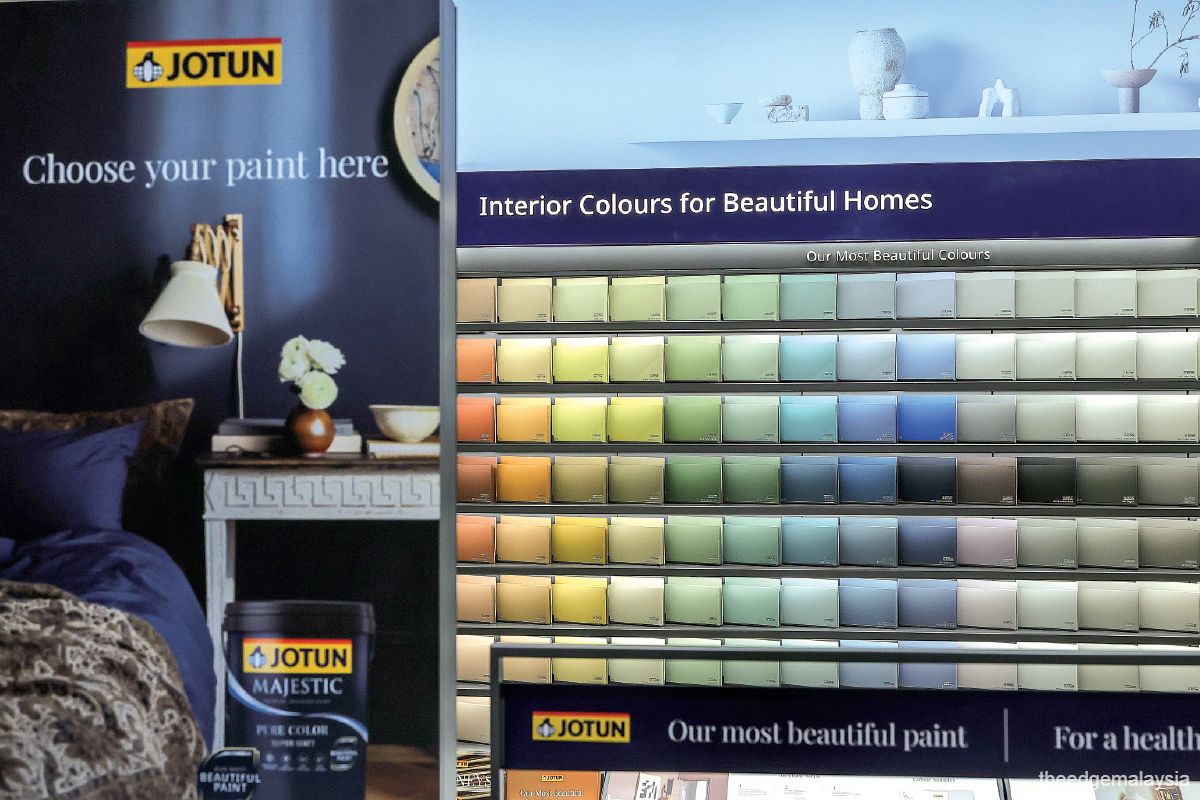
The system has a unique tinting software called Jotun Colour Manager that helps ensure the right colour is mixed for the customer. The process is guided by a colour expert. Customers can choose the hue they want from the fandecks and advanced colour measuring tools reproduce the colours quickly and easily.
Save by subscribing to us for your print and/or digital copy.
P/S: The Edge is also available on Apple's App Store and Android's Google Play.