

This article first appeared in The Edge Malaysia Weekly on November 16, 2026 - November 22, 2026
The palm oil sector is facing renewed scrutiny over haze, the demands of the European Union Deforestation Regulation (EUDR) and diverging sustainability expectations across markets. These pressures are testing whether its sustainability commitments can deliver better practices and stronger demand for certified oil.
Indonesia’s forest and land fires have again put the industry’s fire prevention measures under the spotlight. Environmental and civil society groups continue to press the industry for stronger action on deforestation and the protection of communities affected by its operations. This adds to demands for greater transparency and accountability, with companies expected to demonstrate that their sustainability commitments are being upheld.
Meanwhile, the EUDR is increasing the need for evidence of where palm oil comes from and how it was produced. But buyers across different markets do not demand the same assurances, raising concerns that stricter rules could improve selected supply chains while leaving much of the wider trade unchanged.
For independent smallholders, the challenge is to meet certification requirements, find buyers and earn enough to cover the continuing costs. Connecting farmers with mills and securing buyers willing to support their production remain essential to making certification worthwhile.
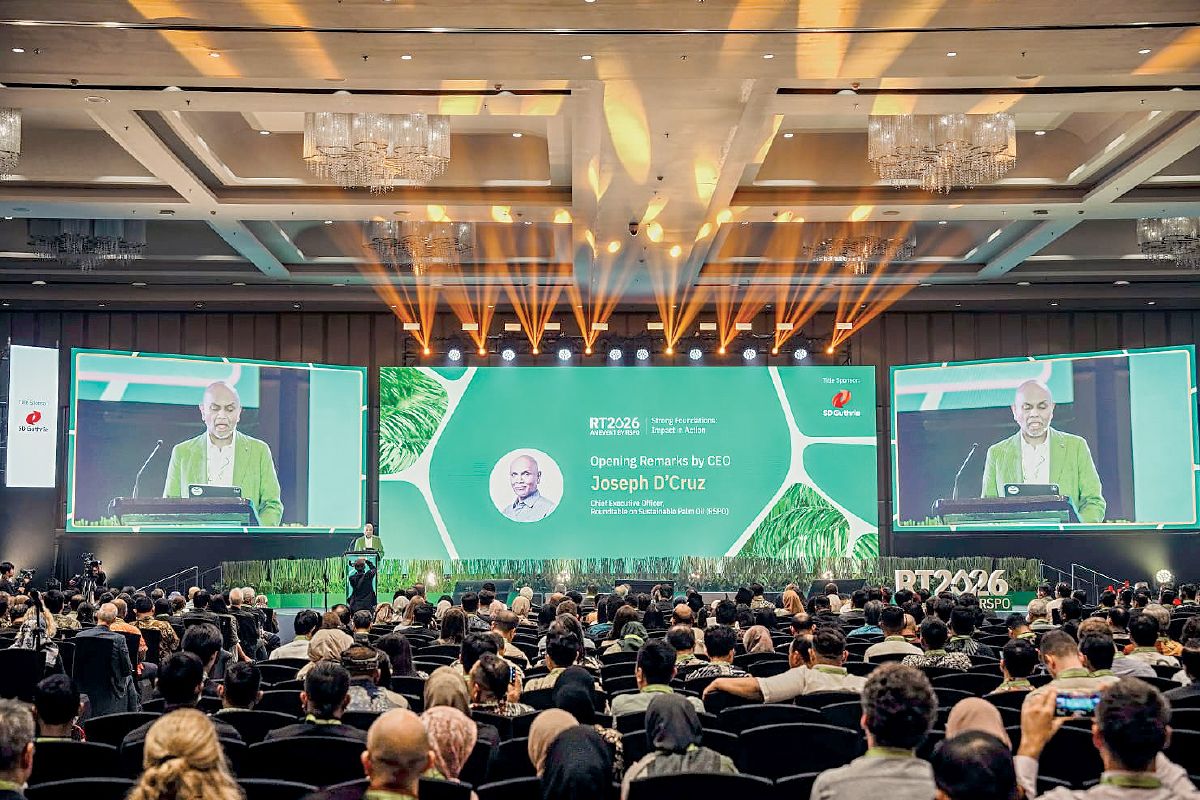
These issues took centre stage at the Roundtable on Sustainable Palm Oil’s annual Roundtable Conference on Sustainable Palm Oil 2026, held in Jakarta on Nov 3 and 4. Here are some of the event highlights.
Haze hangs over palm oil sector
The elephant in the room for the palm oil sector has been the haze from Indonesia’s forest and land fires. With about 1.9 million hectares affected between January and September, pressure is mounting on the industry to address the crisis and strengthen fire prevention, both within plantations and beyond their boundaries.
Fingers have again been pointed at palm oil companies, with the sector’s history of forest clearance and peatland drainage fuelling scrutiny of its sustainability practices. During Indonesia’s plantation boom in the 1980s and 1990s, some developers used fire to clear forests for oil palm and drained peatlands for cultivation, leaving the peat vulnerable to prolonged burning.
These practices contributed to the conditions behind the severe 1997 and 1998 fires that blanketed parts of Southeast Asia in haze. But the industry has since worked to address that legacy through sustainability reforms and stronger fire prevention measures, despite the recent transboundary haze pollution.
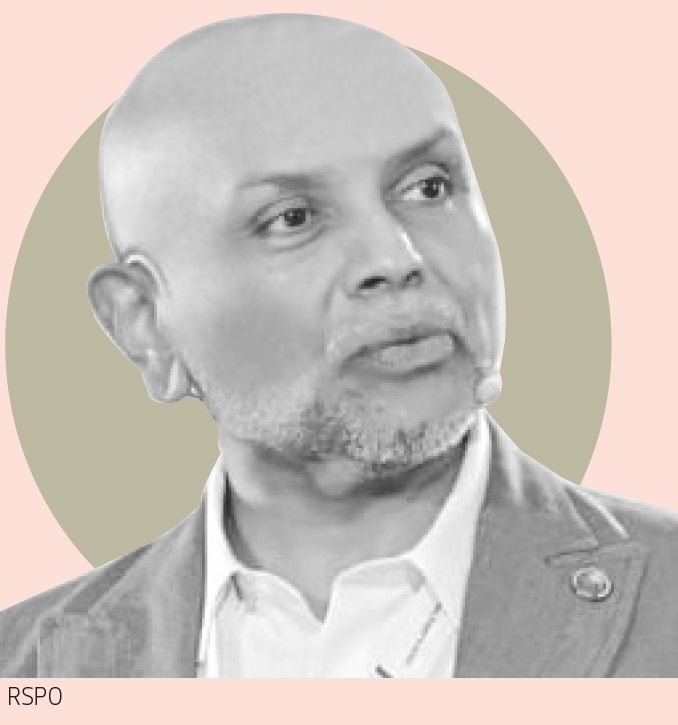
Roundtable on Sustainable Palm Oil (RSPO) CEO Joseph D’Cruz pushed wback against what he described as an automatic assumption that the industry was to blame for the fires in his opening keynote address at the annual Roundtable Conference on Sustainable Palm Oil 2026 (RT2026), held at Swissotel Jakarta Pik Avenue in Jakarta on Nov 3 and 4.
“The moment fires broke out on the ground, there was an automatic assumption that our industry was to blame. Hardly anybody stopped to check. They just assumed the palm industry was guilty,” he lamented.
D’Cruz’s frustration also extended to RSPO’s own members, too few of whom had publicly defended the growers and workers battling the fires. Their silence left those on the ground facing accusations despite efforts to uphold sustainability standards and protect neighbouring communities, he said.
He urged members to counter the accusations with evidence, including audit records and fire monitoring data. Rebuilding trust also requires accountability through independent investigations, published sanctions and action against members who breach RSPO standards.
In a presentation at the RT2026 press conference, remote-sensing scientist David Gaveau showed that about 206,000ha, roughly 11% of the national fire-affected area, lay within mapped oil palm concessions.
Within RSPO-certified concessions, about 14,500ha were affected, representing 0.8% of the national total.
Gaveau also said fires affected about 162,500ha of mining concessions and 117,500ha of pulpwood concessions. Nationally, swamp vegetation accounted for about 35% of the affected area, with fires also recorded in savanna, grassland and agricultural land.
Gaveau added that his team had detected burned areas in some concessions owned by companies being scrutinised by Singapore.
On Oct 23, Singapore’s National Environment Agency sought information from 10 Singapore-registered companies in the palm oil or forestry business about their corporate links, concessions in Indonesia and measures to prevent and fight fires.
Gaveau said the findings justified further investigation but did not establish who was responsible for the fires.
“The fire may have started outside and spread in the concession, or it may have started in the concession. It could have started for multiple reasons, it could be accidental or even be a company worker who started a fire by accident,” he added.
“We know there are overlapping land claims in Indonesia, with communities claiming land sometimes. And this has happened in the past — I am not saying that this is the reason now — but we know it caused the fire.
“But we also know that fires can be started by people who are not working in the [palm oil] sector. It could be hunting, it could be fishing ... you see a lot of burned areas, a lot of riverbanks, timber collection.”
Gaveau said absentee landlords and local elites who invest in land while living in cities could also be involved in the burning. They could pay others to clear the land with fire without being at the site themselves.
“These people are totally under the radar. They pay someone to start the fire. And there is no concession attached to them.”
D’Cruz said the relatively small area affected within certified concessions was proof that RSPO’s requirements were helping growers manage fire risks. Members had prepared for the drought and put prevention measures in place, while monitoring and response systems helped them detect and tackle fires, he added.
D’Cruz said RSPO had received no evidence so far that growers had deliberately started fires within their certified plantations.
RSPO prohibits using fire to clear land or prepare for replanting. Since 2018, its standards have also prohibited new planting on peat. Where oil palm is already cultivated on peatland, growers must monitor water levels and assess peat conditions before replanting.
Certified growers must also maintain fire prevention, monitoring and response systems, including trained personnel and firefighting equipment. They must work with neighbouring communities to address risks around their concessions. D’Cruz said members had been fighting fires beyond their own boundaries as well as protecting their plantations.
These requirements are set out in RSPO’s Principles and Criteria (P&C), which growers and mills must meet to obtain and retain certification for sustainable palm oil production. The rules are periodically reviewed and revised.
RSPO director of standards and sustainability Yen Hun Sung tells ESG Indonesia’s 2015 fire crisis had prompted tighter requirements in the 2018 revision. About 2.6 million hectares burned during that crisis, with an El Niño drought worsening the fires and severe haze spreading across the region, according to the World Bank.
The 2018 revision required certified growers to work with neighbouring communities on fire prevention and control, recognising that fires starting outside plantations could spread onto their land.
The latest revision, adopted in 2024, requires growers to set out how they will prevent fires across their certified land and put those measures into practice. Its guidance also recommends using satellite hotspot alerts to identify possible fires early, so teams can check the locations and respond if burning is confirmed.
Additionally, RSPO’s Firewatch system alerts members to hotspots, which are satellite signals of possible fires. D’Cruz said it had issued more than 2,000 alerts between January and September, with members having investigated and reported back on about two-thirds by the time of RT2026.
He highlighted that the combination of standards, independent audits and monitoring had helped certified growers reduce fire risk.
That being said, there is still a need to strengthen fire prevention across the wider palm oil industry.
Speaking at RT2026’s “Regulatory Compliance vs Impact — Are We Still Mistaking the Two?” panel, Danantara Indonesia’s senior vice-president of sustainability Nadine Zamira Syarief said compliance on paper had not prevented fires from affecting the assets and operations of companies. Fire, climate and nature risks could erode asset values and threaten access to markets and financing.
Nadine said companies needed to work with communities around their plantations to address how people earned a living and cleared land. She suggested making machinery for land preparation more affordable, giving communities an alternative to burning, and sustaining support for village firefighting efforts over several years.
Companies also needed to prepare for dry seasons and fund research to help their operations withstand climate and nature risks, she said.
Nadine added that boards should consider these risks when deciding where to invest. Companies should also measure whether their spending was reducing risks on their plantations and in surrounding areas.
D’Cruz urged other palm oil producers to adopt the fire prevention practices used by certified growers, including producing without burning and maintaining systems to monitor and respond to fires.
RSPO was discussing cooperation with governments across the region and working with industry bodies to encourage more producers to participate, he said.
“So direct offer, direct ask, join RSPO, follow our standards. Even if for whatever commercial reason you’re not ready to join RSPO yet, look at the practices we have on the ground in our certified concessions and figure out how we can apply these. Because no oil palm producer wants to see their farmland burn,” he said.
D’Cruz also raised the possibility of joint investment to help vulnerable farming communities prepare for future fires. He suggested that Singapore’s financial sector help structure longer-term funding, including investment in areas where worsening fire risks might require changes to how the land is used.
Save by subscribing to us for your print and/or digital copy.
P/S: The Edge is also available on Apple's App Store and Android's Google Play.