


This article first appeared in City & Country, The Edge Malaysia Weekly on November 16, 2026 - November 22, 2026
Traditional kampung houses, quaint neighbourhood shops, roadside food stalls and a close-knit community where everyone seems to know everyone. That was my first impression of Setiu, Terengganu.
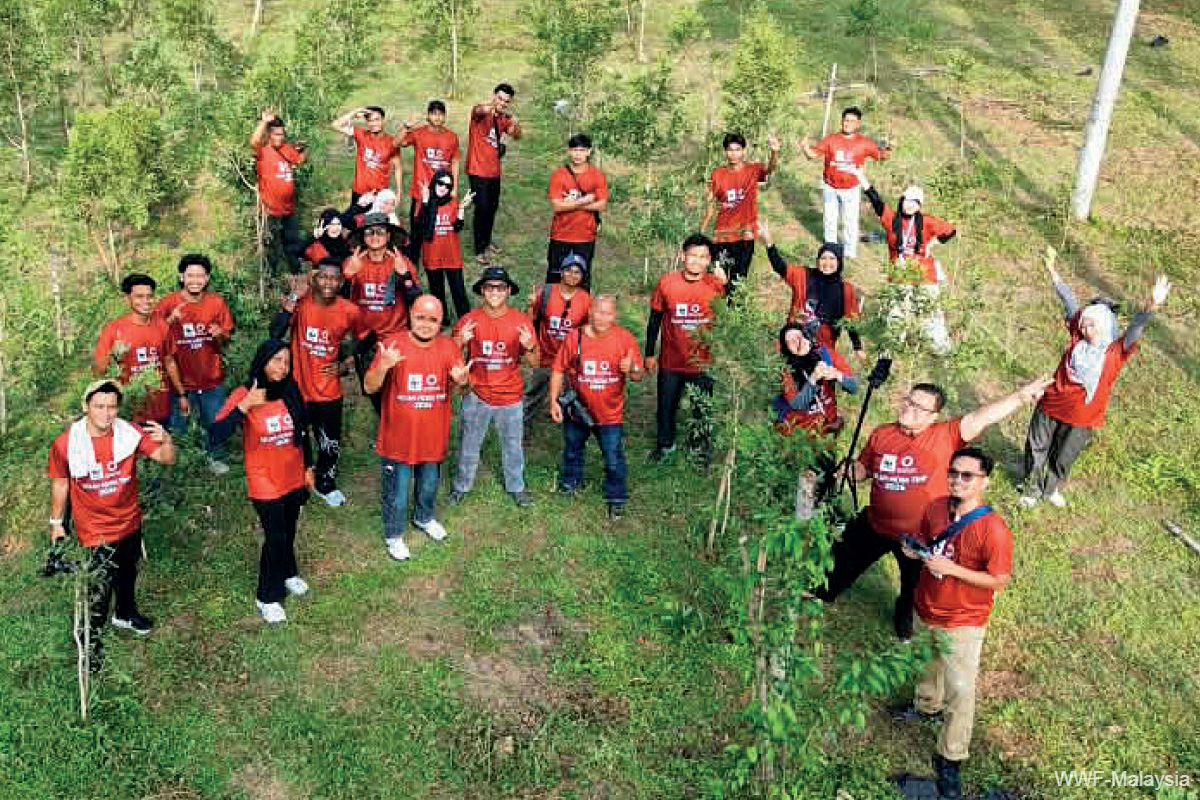
But there is more to Setiu than meets the eye. WWF-Malaysia recently organised a media trip on Sept 29 and 30 to uncover the district’s best-kept secret — gelam (Melaleuca), a member of the tea tree family.
Gelam forests are a type of freshwater swamp forest. According to WWF-Malaysia, they typically grow in valleys, low-lying areas and coastal peatlands, often behind mangrove forests.
So, what makes gelam significant to Setiu? The answer lies in the district’s ecological history, says WWF-Malaysia. Compared with other districts in Terengganu, Setiu is relatively small and has a low population density.
The main economic activities of its residents are largely concentrated in traditional sectors such as fishing, agriculture and self-employment. Some communities also depend on natural resources such as forests, rivers and coastal areas for their livelihoods.
According to WWF-Malaysia’s data, Terengganu has the largest area of gelam forests, covering 14,748.72ha (64.5%) of the total area. This is followed by Kelantan, with 6,350.31ha (27.8%), Melaka with 626.47ha (2.7%), Selangor with 521.04ha (2.3%) and Johor with 415.22ha (1.8%). Negeri Sembilan has the smallest distribution, with 217.57ha (1%).
The total area of gelam forests across these six states is 22,879.33ha.
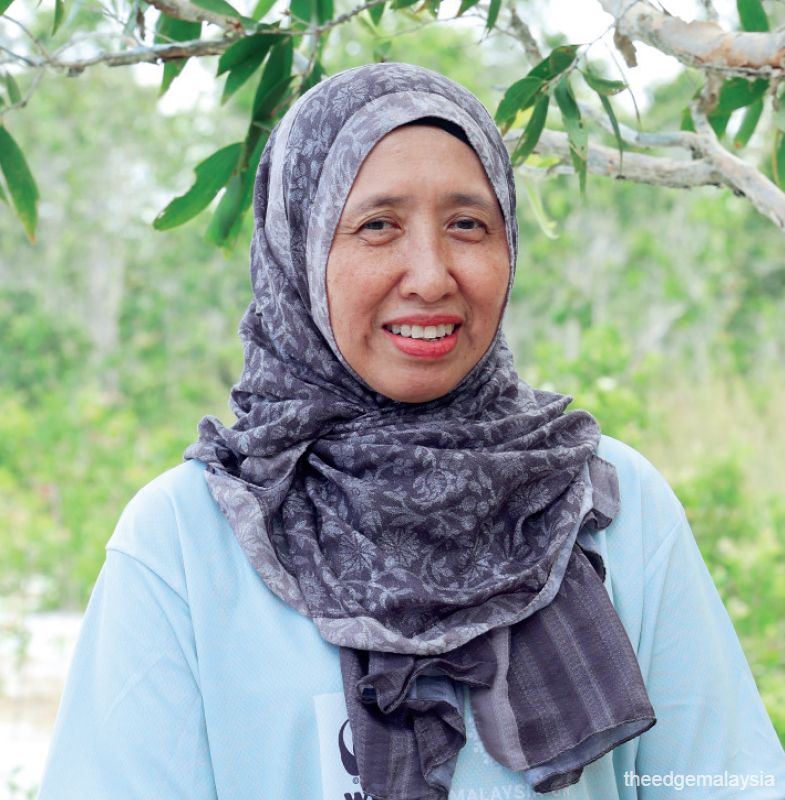
Although Terengganu houses the largest expanse of gelam forests, WWF-Malaysia head of the freshwater team and conservation programme Datin Daria Mathew warns that the country’s gelam forest cover is shrinking.
“Many gelam forest areas have been converted into other land uses, and the remaining forests are also being degraded because of increasing fragmentation. Gelam forests are not widely recognised for their contribution to the economy either,” she explains in an interview during the media trip.
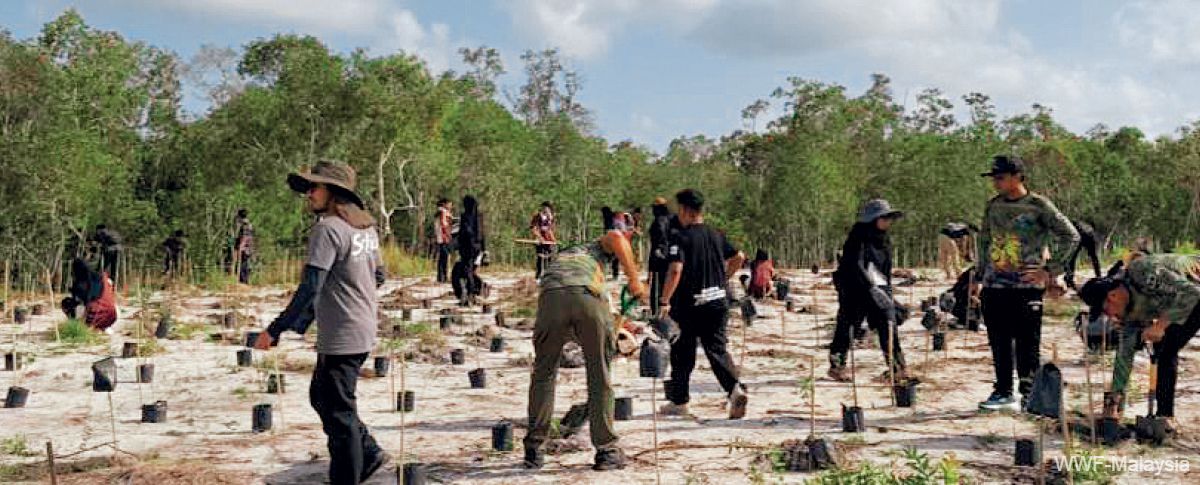
“Traditionally, the community has also had a very strong connection with gelam forests, and people do benefit from these resources. So, for us, the key motivation is the need to conserve these forests. Conservation is our main objective.
“If we don’t take action and actively work to conserve gelam forests, we may reach a point in the future where there are no gelam forests left in Malaysia. So, we’ve been advocating for their conservation and recognition.”
The Gelam Cure initiative was founded in 2018 and is funded by the Malaysia-UN SDG Trust Fund. Daria adds that the project is about the ecological restoration of gelam forests while ensuring that it benefits the community by restoring gelam trees and processing them into essential oil and value-added products.
This will help the community earn recurring income while conserving local ecosystems.
WWF-Malaysia’s research highlights the significant ecosystem value of gelam forests, including benefits that are not always easily quantified. Using the methodology proposed by The Economics of Ecosystems and Biodiversity (TEEB), the team estimated the total economic value of 748.05ha of gelam forests at RM3.95 billion, or RM5.28 million per hectare.
The ultimate goal of the Gelam Cure initiative, Daria says, is to empower the Setiu community to sustain its livelihoods.
“If the community becomes independent, we don’t necessarily have to be involved all the time. We can still stay connected and provide guidance and advice whenever they need it. But if we can step away from this place and let them drive it independently, that would be the ultimate success,” she says.
Gelam restoration sites
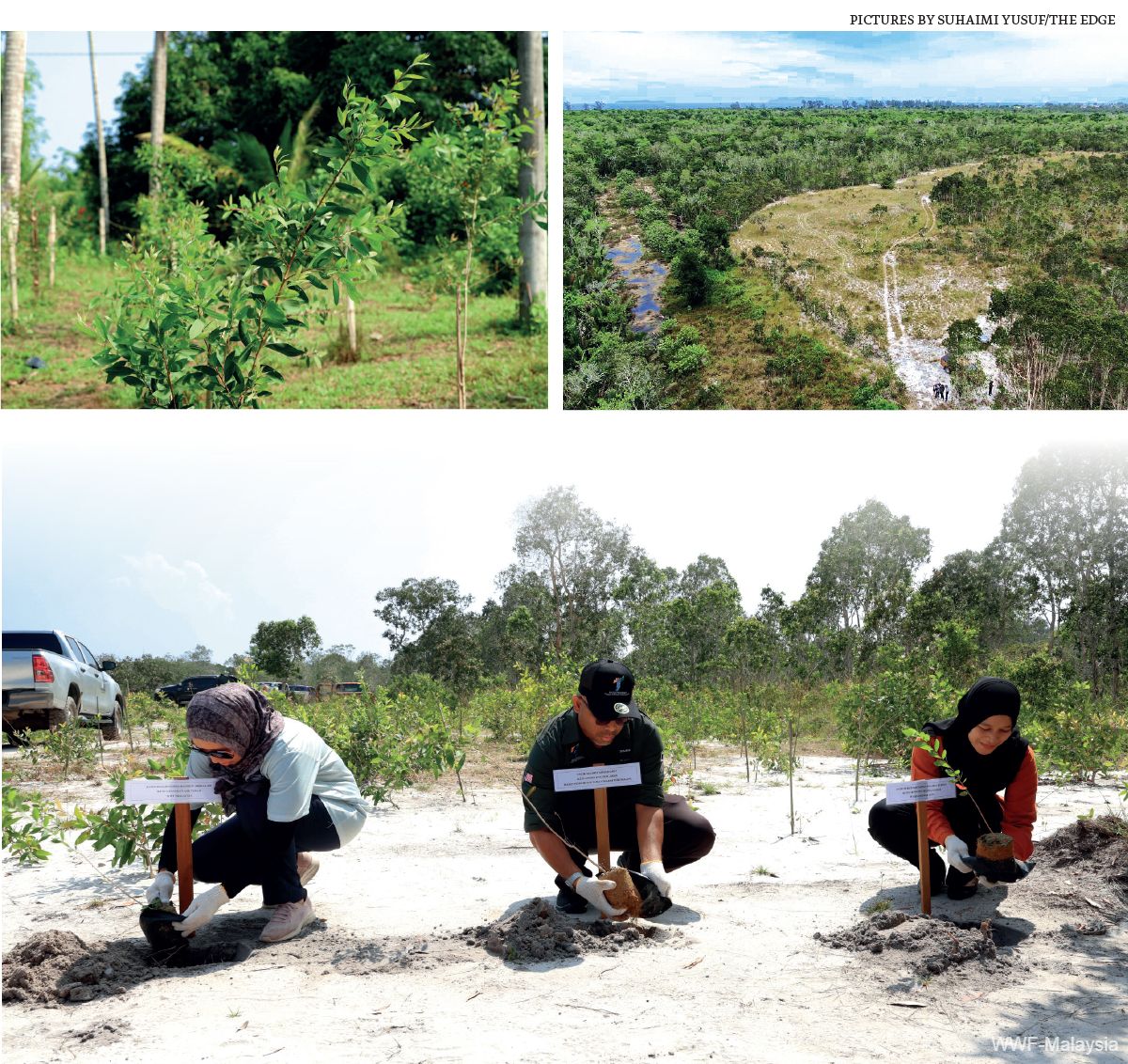
The total area of gelam forests identified for restoration covers 11.5 acres: nine acres in the Setiu Wetlands State Park and the remaining 2½ acres on community-owned land. So far, roughly three acres of the state park area have been restored through gelam replanting activities.
Gelam seedling nursery
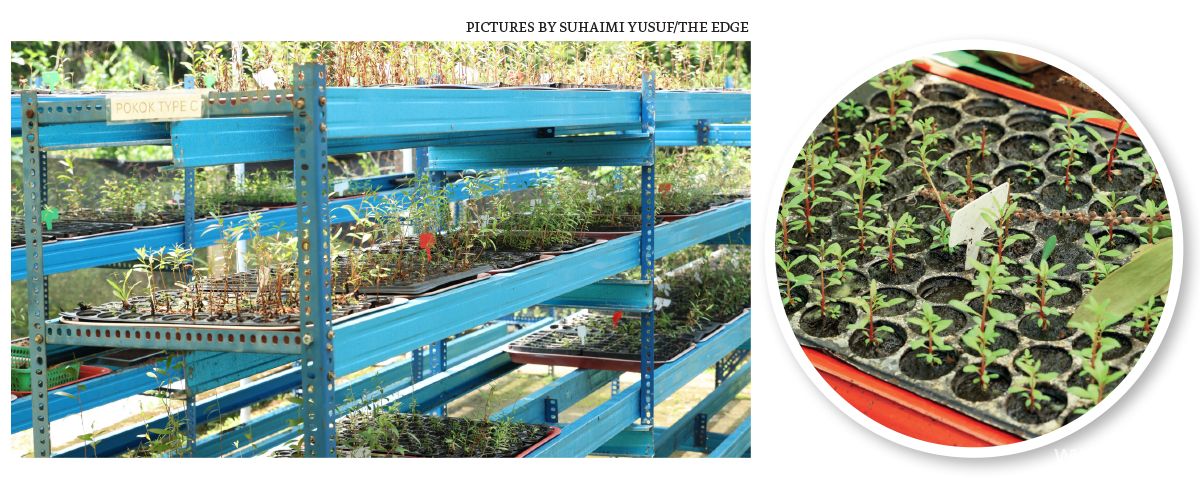
The gelam seedling nursery follows a multi-stage process, beginning with seed collection and then germination over 14 days. The germinated seeds are transferred to trays, where they grow for one to two months before developing into four-month-old seedlings. After six to seven months, the seedlings are mature and ready for planting.
Products made from gelam
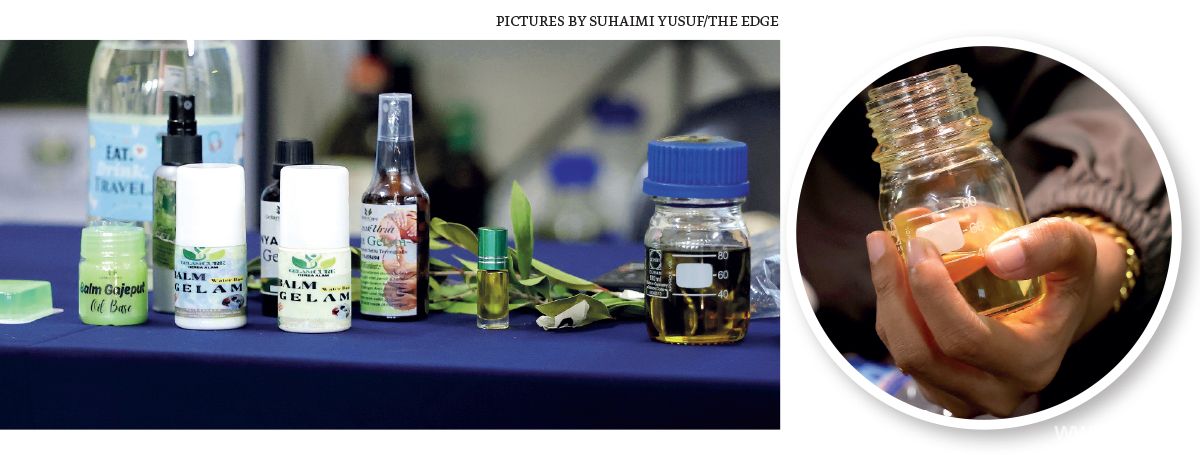
Gelam forests offer a range of socioeconomic benefits, from generating sustainable income and promoting ecotourism to preserving cultural heritage.
According to WWF-Malaysia, gelam also creates income opportunities through non-timber forest products, including essential oils, traditional medicines, wild honey and handicrafts such as kercut.
Every part of a gelam plant can be transformed into a product. The bark is used as a patching material for repairing boats, and the trunk is used to construct fences and foundation piles for buildings.
Gelam leaves are boiled to prepare a herbal beverage for women during postpartum recovery and to lower blood sugar levels. The forests also provide resources for kelulut (stingless bee) honey production, habitats for edible wood ear mushrooms and raw materials for producing other gelam-based products.
So far, eight types of gelam-based products have been successfully developed by the local community, including aromatherapy oil, hydrosol, lip moisturiser, water-based balm, oil-based balm, balm lotion, massage oil and soap.
Gelam essential oil extraction process
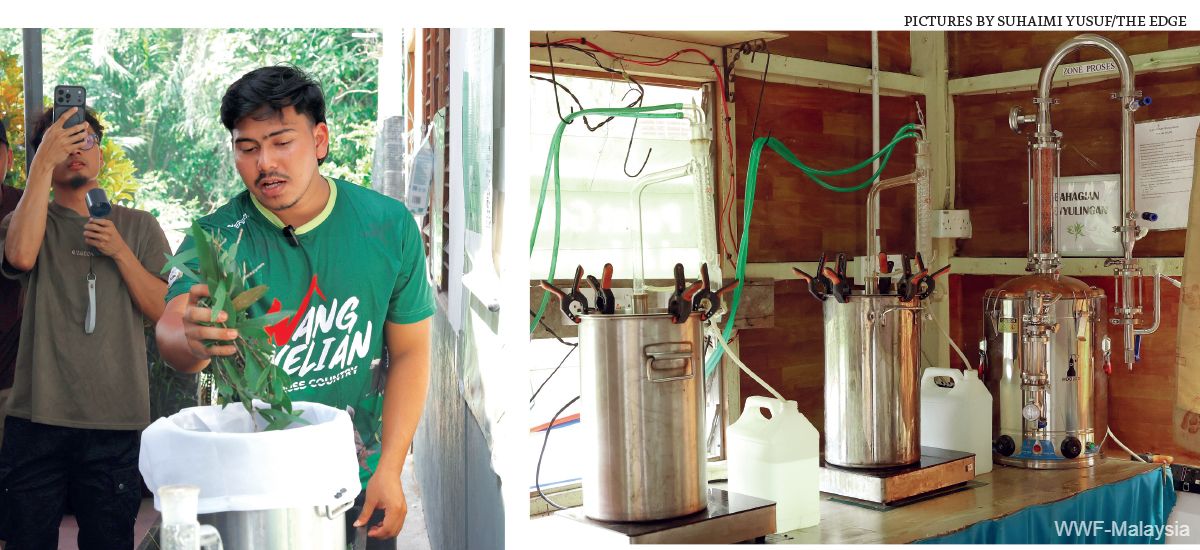
The production of gelam essential oil begins with the collection of gelam leaves from forest areas, followed by a distillation process to extract the essential oil.
Gelam leaves can be harvested throughout the year, but production depends on leaf availability and weather conditions. During the rainy season, leaf collection becomes more difficult because of wet ground conditions and limited access to forest areas.
In one harvesting session, one person can typically collect about 20kg of gelam leaves. The best time to harvest the leaves is around noon and the harvesting potential is about 8.32 tonnes of leaves a year, which can yield 20.8 litres to 83.2 litres of essential oil.
The distillation process can be carried out up to three times a day, with each session using 4kg of leaves to produce at least 50ml of gelam essential oil.
Harvesting honey in gelam flowers
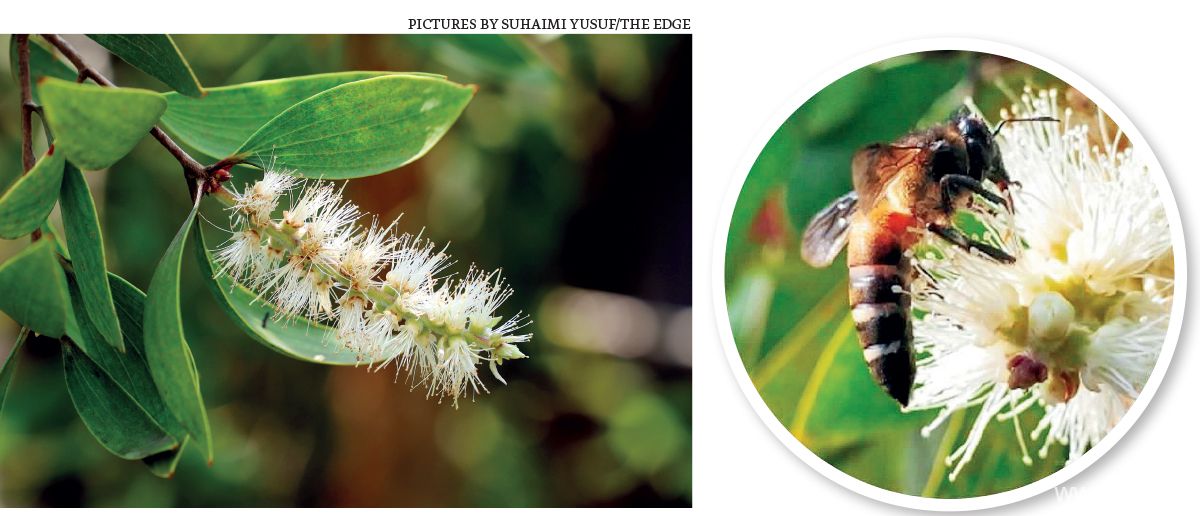
WWF-Malaysia conducted an analysis of pollen in honey to identify the main source of honey and evaluate the economic value of gelam honey in generating income for local communities.
It was found that a total of 123 insect species, including bees, wasps, flies and beetles, was recorded visiting gelam flowers. The giant honeybee (apis dorsata) and kelulut (heterotrigona itama) use gelam flowers as sources of nectar and pollen for honey production.
WWF-Malaysia, which also found that gelam pollen was among the most frequently detected types in honey samples, emphasises the importance of conserving gelam forests to support healthy bee colonies, sustain honey production and provide local communities with income through honey sales.
According to WWF-Malaysia’s findings, producers of kelulut honey can earn RM3,000 to RM4,000 a month during the gelam flowering season, while producers of giant honeybee honey can earn RM3,000 to RM5,000 a month.
The market price of gelam honey, it says, can be as high as RM350 per kg, depending on the type of honey. WWF-Malaysia estimates that gelam honey production can generate seasonal income of RM15,000 to RM30,000 for local communities.
Save by subscribing to us for your print and/or digital copy.
P/S: The Edge is also available on Apple's App Store and Android's Google Play.