

This article first appeared in The Edge Malaysia Weekly on November 16, 2026 - November 22, 2026
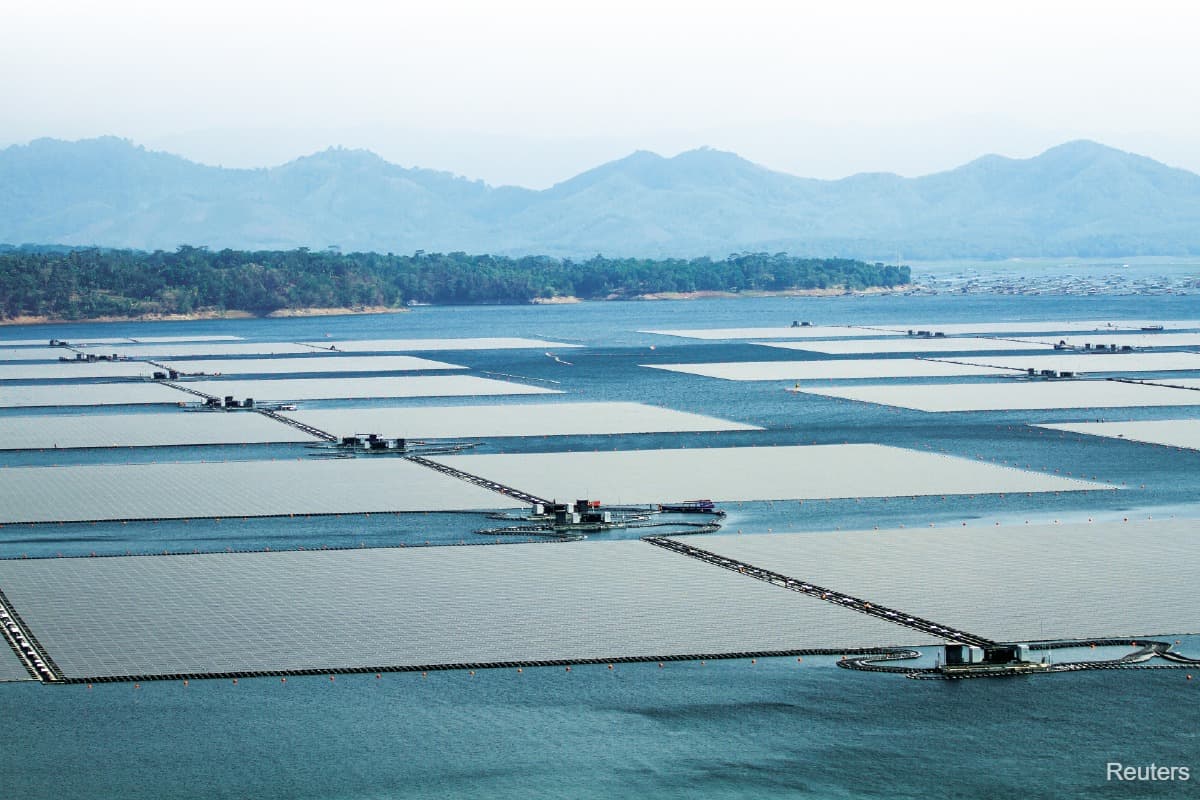
Solar panels have become part of our everyday landscape. They line factory and shophouse roofs, sit beside paddy fields in kampungs and stretch across ageing oil palm estates and other agricultural land. Increasingly, they are also moving onto water, mounted on floating platforms in hydroelectric dam reservoirs and old tin mining ponds.
Known as floating photovoltaic (FPV) systems, they offer a way to expand solar capacity without clearing land. National utility Tenaga Nasional Bhd (KL:TENAGA) is looking to develop up to 2,500mw of hybrid hydro floating solar (HHFS) at its hydroelectric dam reservoirs under the National Energy Transition Roadmap (NETR).
But moving solar panels onto water trades one set of environmental problems for another.
The risks — particularly disruptions to the aquatic ecosystem — lie beneath the panels, which cover the water beneath them, cutting the sunlight that aquatic plants and algae need. This has knock-on effects on fish and, in drinking water reservoirs, potentially on water treatment.
Solar energy plays a central role in Malaysia’s transition to renewable power sources. The government is looking to expand the current solar photovoltaic capacity significantly under the NETR to 58% of installed capacity by 2050.
Other renewable energy (RE) sources such as bioenergy, hydropower and hydrogen are expected to make up 17% of the country’s total primary energy supply.
The push towards cleaner energy has gained urgency amid rising oil prices fuelled by geopolitical turmoil, particularly the US war on Iran, and extreme weather this year. As Malaysia seeks to reduce its reliance on fossil fuels, solar is expected to play a significant role in its RE mix, supported by the government’s long-term transition targets.
“The target was 31% renewable energy by 2025, and we have achieved that. The next target is 40% by 2035. The 31% achieved last year was about 13GW ... [The 2035 target] is about 18GW. By 2050, the target is 70%,” says Professor Jeyaraj Selvaraj, executive director of Universiti Malaya Power Energy Dedicated Advanced Centre (UMPEDAC).
The use of water bodies for solar installations conserves land, preserves natural habitats on land and reduces water evaporation, Tenaga tells ESG in an email interview.
Unlike traditional thermal power plants, floating solar farms do not have water or air discharges that could negatively impact water or air quality. This minimises pollution and has minimal disruption to aquatic ecosystems, it says.
Tenaga’s 105.12kWp (kilowatt peak) mini floating solar PV system on a 175ha ash pond at Stesen Janakuasa Sultan Azlan Shah (SJSAS) in Manjung, Perak, was the subject of an internal ecological study by its wholly owned research arm, TNB Research Sdn Bhd.
According to a 2024 statement by Tenaga, since 2019, the FPV has generated more than 600mwh of energy. The 288 solar PV modules installed have 105.12kWp of capacity, equivalent to a reduction of 390 tonnes of carbon dioxide during the first four years of operation, or CO2 uptake by 15,624 trees. The electricity generated from this system can meet the needs of 30 houses.
An ash pond is a man-made basin at a coal-fired power plant where ash left over from burning coal is stored, usually mixed with water.
“Every component of the floating solar system was carefully chosen and designed. Even the floaters or pontoons were made of certified food-grade high-density polyethene to minimise the impact on water quality. The project has shown no adverse impact on wildlife living in the surrounding area,” said Datuk Seri Baharin Din, then Tenaga president and CEO, in the 2024 press statement.
However, this project is located on a coal ash pond rather than a reservoir. As such, its findings may not necessarily be true of FPV projects at HHFS, where the environmental conditions and ecosystems may differ.
“Environmental assessment begins well before construction. An Environmental Impact Assessment (EIA) evaluates the project’s potential environmental impacts, while a separate Social Impact Assessment (SIA), where required, evaluates potential social impacts on surrounding communities,” Tenaga says in the email.
It conducts baseline studies during project planning to establish reference conditions before development, allowing environmental changes to be measured objectively throughout construction and operations, it says.
“For HHFS projects, monitoring may include water quality, plankton communities, aquatic biodiversity, fish populations and other ecological indicators under an Environmental Management Plan approved by the Department of Environment. Monitoring continues throughout the project life cycle to verify environmental performance and support adaptive management where necessary,” it adds.
Environmental risks
Tenaga did however, flag the environmental risks of FPVs in its March 6, 2025 ESG Stories blog post, “The Hybrid Hydro Floating Solar Project Leading Malaysia’s Renewable Energy Future”.
In the post, the utility pointed out that reduced sunlight penetration beneath solar panels can affect photosynthesis in aquatic plants and algae, potentially reducing algae, which is vital to the aquatic food chain.
Moreover, lower light conditions may encourage certain algae species to proliferate, with excessive growth affecting water quality and disrupting aquatic ecosystems.
As large algal blooms die and decompose, microorganisms consume oxygen in the water, potentially creating low-oxygen conditions that can stress or kill fish and other aquatic organisms. Some types of cyanobacteria, commonly known as blue-green algae, can also produce toxins harmful to aquatic life, wildlife and humans.
Large algal blooms can cause unpleasant odours, tastes and discolouration, while dense surface growth can further limit the sunlight reaching submerged aquatic plants. They can also cause fluctuations in the water’s pH and oxygen levels between day and night.
In reservoirs used as drinking water sources, these effects can complicate treatment and potentially increase costs.

Field research remains limited, but early findings point to measurable change. A 2022 study of Singapore’s Tengeh Reservoir, published in the journal Limnology, found dissolved oxygen was lower beneath a 1ha floating solar test bed than in open water. Modelling of an array covering 30% of the reservoir projected oxygen beneath the panels falling by about half near the bottom, although water quality away from the panels was unaffected. A 2025 study of three US water bodies found oxygen levels up to 1.2mg/L (milligrams per litre) lower under panels.
But UMPEDAC’s Jeyaraj believes FPV installations are unlikely to affect drinking water supplied to the public pipeline, as water from the lake or reservoir would undergo treatment as usual.
His observation relates to the safety of treated water, not the health of the reservoir itself. Treatment before distribution does not address any effects on aquatic life, biodiversity, fisheries or recreation.
“I think more suitable sites [to build floating solar] would be hydroelectric reservoirs, water supply reservoirs and former mining ponds. Areas that should be avoided include mangrove ecosystems and natural lakes with high biodiversity. Malaysia has many lakes with rich biodiversity, as well as areas that are important for fisheries and recreation. These are the locations that should be avoided when installing floating solar,” he says.
The opportunities
Malaysia’s water bodies cover about 300,000 acres, says Datuk Lai Keng Onn, executive deputy chairman and group managing director of Kinergy Advancement Bhd (KL:KINERGY) (KAB).
“This area could potentially support between 35gw and 70gw of solar capacity. Suitable sites include reservoirs, abandoned mining lakes and ponds, as well as some natural water bodies,” he says.
KAB, a sustainable energy and mechanical and electrical (M&E) engineering solutions provider, is currently working with Perak state agency Perbadanan Kemajuan Negeri Perak (PKNPk) on the development of 29 potential RE projects in the state, targeting a combined generation capacity of more than 1,800mw. KAB declined to say how much of the 1,800mw is floating.
Under the agreement, KAB’s wholly owned subsidiary, KAB Energy Holdings Sdn Bhd, will collaborate with PKNPk to identify, evaluate and develop RE projects across Perak.
The projects will tap hydropower, floating solar and ground-mounted solar opportunities. Lai says the floating solar projects being explored will focus on man-made lakes and abandoned mining reservoirs.
Other industry players are also looking to leverage existing water infrastructure for floating solar development.
In 2023, TNB Power Generation Sdn Bhd (TNB Genco), a power producer and wholly owned subsidiary of Tenaga, was tasked with spearheading the 2,500mw HHFS programme at its hydro reservoirs, one of NETR’s flagship catalyst initiatives.
In June and August 2023, Terengganu Incorporated Sdn Bhd, an investment holding company wholly owned by the Terengganu state government, signed a memorandum of understanding with TNB Genco to study feasibility of developing a FPV plant at Tasik Kenyir.
Tenaga says FPVs can make productive use of existing hydroelectric reservoirs while reducing the additional land required for solar installations. They can also leverage existing transmission and grid infrastructure and provide greater operational flexibility by complementing hydropower generation.
It points out, however, that FPVs do not eliminate land use entirely, as supporting infrastructure such as substations, switchyards and grid connections is still required.

The cost of keeping solar afloat
Other than environmental considerations, the viability of FPV projects also depends on whether they can be developed at a competitive cost.
Unlike conventional solar farms and rooftop systems, which can be installed on existing land or building structures, floating solar requires additional planning and infrastructure to accommodate the challenges of operating on water, says KAB’s Lai.
The panels themselves are no different from those used on land; the extra cost lies in what keeps them afloat, he adds.
“The pattern is the same, whether you are using back-contact or bifacial solar panels, and the glass is also the same. But, overall, floating solar is much more expensive because of the floaters, which come in different designs and qualities, as they have to withstand the conditions of the water body,” he explains.
“For traditional rooftop solar, you use a steel mounting structure or aluminium frame that is fixed to the roof, and you simply install the solar panels on top. The same applies to ground-mounted solar. But floating solar is different because the floaters are constantly exposed to the water, including its acidity and bacteria, which can affect their durability.”
When developing floating solar projects, the materials used and the water quality must be carefully assessed. The anchoring system must also be designed according to the conditions of the water body, especially its depth.
Lai says most floating solar installations remain stationary because they are secured by anchoring systems. The deeper the water and the further the anchors need to be embedded, the higher the installation costs.
According to a 2023 study by the US Department of Energy’s National Laboratory of the Rockies, formerly the National Renewable Energy Laboratory (NREL), titled “Overview of NREL’s research on Floating Solar Photovoltaic, including technical potential assessments”, the capital cost of FPV systems is estimated to be 25% higher than that of ground-mounted solar PV systems. This is largely due to higher structural costs associated with the floats and anchoring or mooring systems.
The levelised cost of electricity for FPV is also estimated to be 20% higher than that of ground-mounted PV, taking into account its higher installation costs, greater energy production and lower operations and maintenance costs.
The higher upfront costs could make floating solar less competitive than conventional ground-mounted solar projects, especially when developers compete on tariffs in Large Scale Solar (LSS) tenders. Without targeted policy support, industry players are more likely to prioritise projects with lower development costs, notes Lai.
Demand for renewable electricity, however, is insatiable, given the inflow of semiconductor manufacturing, advanced manufacturing and energy-intensive industries such as data centres into the country.
This is why relying on just one type of RE will not be enough to meet their electricity needs, says clean energy company Solarvest Holdings Bhd’s (KL:SLVEST) CEO of business and asset management, Jack Tan.
“The Corporate Renewable Energy Supply Scheme (CRESS) provides an important framework to procure RE off-site, including ground-mounted and floating solar projects, through third-party grid access,” says Tan.
CRESS is a programme that allows RE developers to sell electricity directly to industrial customers. Under the scheme, customers pay RE developers for electricity, a portion of which goes to grid owner Tenaga in the form of a system access charge for access to the national grid.
Expansion of FPVs is also constrained by the availability of suitable water bodies and the approvals required to develop them, says Tan.

“Many reservoirs, lakes and dams fall under state government jurisdiction, while some are reserved for drinking water supply. This requires approvals from the relevant authorities and is subject to EIA, making project developments more complex,” he adds.
In November 2025, Solarvest secured a RM320 million engineering, procurement, construction and commissioning (EPCC) contract for a 99.99MWac (megawatt alternating current) floating solar farm in Kampar, Perak, under the LSS5 programme. Awarded by Wawasan Demi Sdn Bhd, a 63%-owned subsidiary of AIZO Group Bhd, the project is scheduled to begin commercial operations on Oct 30, 2027. Once completed, it is expected to generate about 205,709mwh of clean electricity annually and offset about 159,219 tonnes of CO2 emissions.
“To encourage floating solar, the government needs to introduce policies specifically designed to support its development,” says KAB’s Lai.
“For example, an LSS tender could be dedicated exclusively to floating solar projects. The government could also identify suitable water bodies in states such as Perak and Terengganu, taking into account the availability of water surface areas and proximity to existing infrastructure, including main intake substations to support the projects.”
Floating solar projects around the world
Floating solar projects are gaining traction globally. South Korea, for instance, has a planned 2.1gw floating solar development at Saemangeum on its west coast. The project has faced delays, partly due to grid connection issues, but its first 1.2gw phase was put back on track in February this year, with the government targeting early completion by 2029.
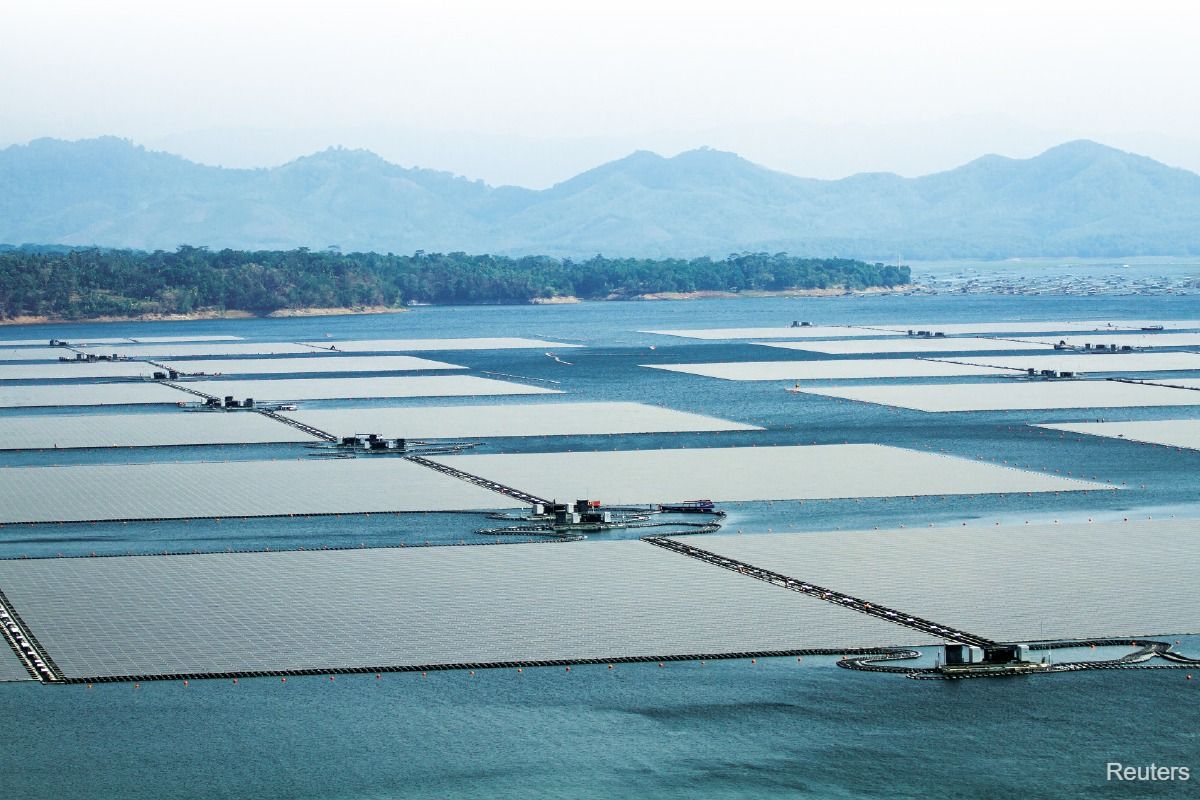
Meanwhile, in Indonesia, the Cirata floating solar plant in West Java is Southeast Asia’s largest. Developed by Abu Dhabi’s Masdar and state utility PLN, the 192mwp (megawatt peak) plant was inaugurated in November 2023 and covers 250ha of the Cirata Reservoir. Its roughly 340,000 panels cost about US$100 million and can power about 50,000 homes, cutting about 214,000 tonnes of CO2 emissions a year. The partners agreed in April 2025 to add up to 500mw capacity after Indonesia raised the share of a reservoir’s surface that floating solar can cover from 5% to 20%. The expansion was still at the pre-feasibility stage as at January this year.
Closer to home, Singapore operates the Sembcorp Tengeh Floating Solar Farm at Tengeh Reservoir. Spanning 45ha, or equivalent to about 45 football fields, the 60mwp facility comprises 122,000 solar panels. It generates enough electricity to power Singapore’s five water treatment plants.
In India, the 600mw Omkareshwar Floating Solar Park is being developed on the Narmada River in Madhya Pradesh. By February 2025, 278mw of capacity had been commissioned, with the remaining capacity still under development. The development forms part of Madhya Pradesh’s wider renewable energy ambitions, with the state targeting an additional 22,000mw of renewable energy capacity by financial year 2030.
See also 'A look at floating solar projects' infographic here.
Save by subscribing to us for your print and/or digital copy.
P/S: The Edge is also available on Apple's App Store and Android's Google Play.