


This article first appeared in City & Country, The Edge Malaysia Weekly on November 9, 2026 - November 15, 2026
Once treated as a regulatory requirement or a voluntary marketing badge, environmental, social and governance (ESG) is now deeply embedded in core operations, capital allocation and asset management decisions in the Malaysian Real Estate Investment Trust (M-REIT) sector.
In an industry panel discussion titled “Balancing climate resilience efforts and returns: Can M-REITs have both?” held in conjunction with the launch of Knight Frank Malaysia’s Climate Resilience in Action report held on Oct 27 in Kuala Lumpur, the panellists agreed that ESG has moved beyond compliance to become integral to business strategy and operations.
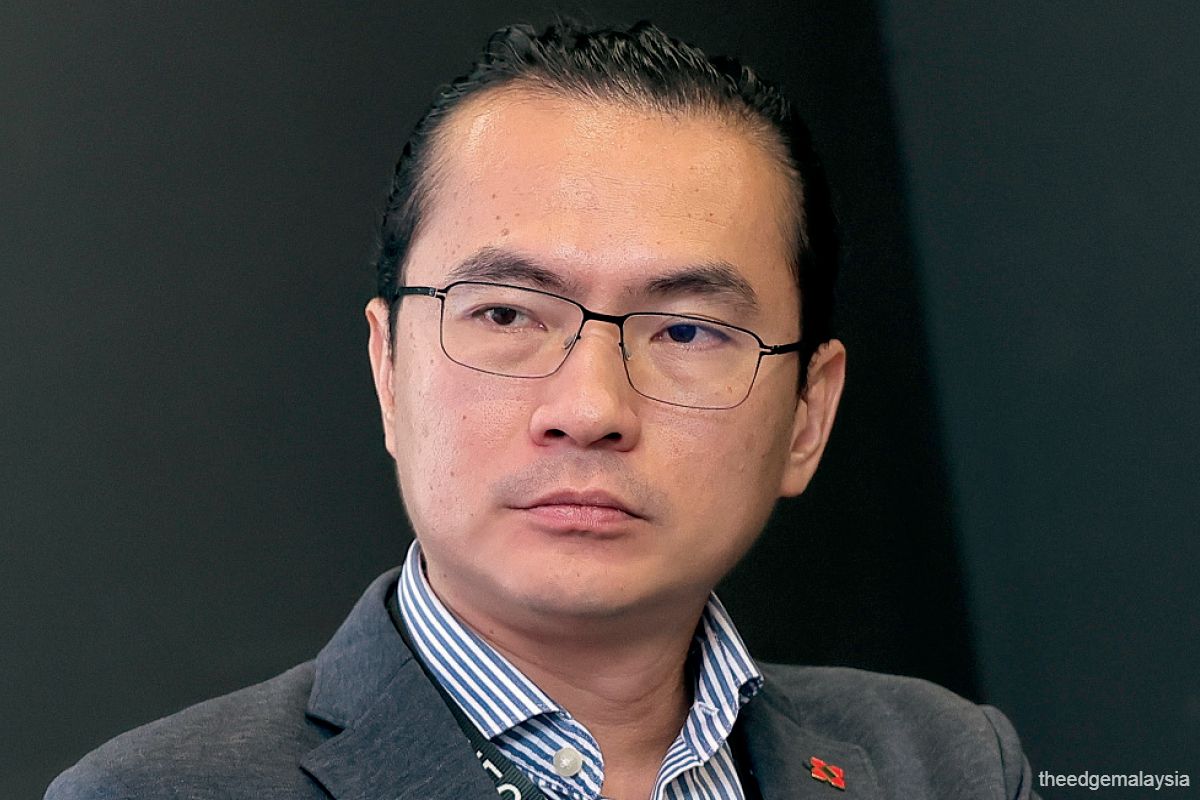
The panellists were Malaysian REIT Managers Association (MRMA) chairman and Sunway REIT Management Sdn Bhd CEO Derek Teh, MRMA honorary secretary and Alpha REIT Managers Sdn Bhd chairman Datuk Stewart LaBrooy, AmREIT Managers Sdn Bhd CEO Chong Hong Chuon and Knight Frank Malaysia executive director for valuation and advisory Justin Chee. The session was moderated by Knight Frank Apac ESG director Jackie Cheung.
“In today’s market, our financiers, unitholders and tenants are increasingly asking the questions: How relevant will our assets be, and how are we able to sustain the returns of our assets? Good asset management will need to incorporate ESG to preserve the resilience of our incomes and continue to create long-term value for unitholders,” said Sunway REIT’s Teh.
According to Knight Frank Malaysia’s latest report, 94% of the 18 M-REIT respondents identified ESG as a priority at the board level, with 100% having incorporated ESG objectives into their asset management plans. However, operationalising these commitments remains complex as industry leaders navigate the trade-off between short-term distribution per unit (DPU) expectations and green capital expenditure (capex) requirements.
The report also highlighted that 83% of the respondents expected ESG factors to directly shape future property valuations, while environmental performance is transitioning into a quantifiable input in cash flow modelling.

Knight Frank’s Chee explained that ESG value drivers within property appraisals fall into three broad categories: physical value drivers, risk drivers and cash flow drivers.
“Value drivers are basically physical attributes of the asset — for example, green certification or sustainable design features. The second category is risk drivers: things that we can’t control but we can manage, such as climate risk and social impact. The third category is cash-flow drivers, which directly impact our valuation workings through rentals, occupancy rates, operating expenses (opex) and capex,” he said.
Chee pointed out that non-certified assets face higher structural operational risks, whereas green buildings maintain better fundamentals. “Older buildings would incur higher opex than green buildings with solar features. The cash-flow drivers also directly affect the risk premium we adopt within the discount rate and the exit cap rate.”
Addressing local regulatory adoption, he noted that global valuation standards are accelerating this transition, where Royal Institution of Chartered Surveyors professional standards have moved ESG considerations from optional guidelines to mandatory assessments.
“In a lot of valuation works that we do, we are already adopting ESG considerations in our valuation workings. However, we do not want a situation where there is a mission creep for valuers to become ESG experts providing separate technical reports. If corporate players want detailed strategic ESG advice, that should be made with relevant consultants,” Chee said.

Balancing green capex againstshort-term DPU demands
The main challenge faced by M-REIT managers in embedding ESG into their operation is navigating the tension between upfront green capex and the distribution expectations of unitholders.
For context, under Malaysian tax regulations, listed REITs must distribute at least 90% of their taxable income annually to maintain tax transparency, leaving limited retained earnings to fund major building retrofits.
“At AmREIT, we prioritise ESG initiatives that not only meet stakeholder expectations but also improve operational efficiency, especially on energy cost savings,” Chong said. “With expensive energy costs, many ESG initiatives, especially the upgrading of M&E (mechanical and electrical) systems, bring a positive financial impact. Initiatives that were difficult to justify financially in the past now make much more financial sense.”
He stressed that sustainability initiatives must deliver economic value. “Some ESG initiatives may not come with an immediate return, but surely they help enhance long-term sustainability. As a REIT manager, we should continue to allocate capital to implement those ESG practices that make clear business sense.”
However, upgrading older portfolios remains a significant structural hurdle for listed entities. Alpha REIT’s LaBrooy highlighted the legacy nature of Malaysian assets.

“Don’t forget that many assets in Malaysian REIT portfolios today are legacy assets built 20 years ago or longer, and they weren’t built with ESG in mind. The challenge all of us collectively face is how to upgrade our buildings to make them relevant in today’s market. Regulation is now the floor, not the ceiling,” he noted.
He also cautioned against neglecting structural upgrades, as green buildings have limited room to grow in value, while the “grey” buildings are seeing falling revenues and valuations.
“Older grey buildings without green certifications run into cash crunches with bank loans, and it becomes a race to the bottom if you’re not careful. So, upgrading these older buildings is an essential part of keeping our business viable,” he said.
LaBrooy also contrasted public market constraints with private market structures, urging regulatory innovation.
“For private REITs, it’s a different story. Private equity investments allow more flexibility. I have been encouraging the Securities Commission Malaysia and Bursa Malaysia to look at private REITs as a distinct asset class. Some REITs trade well below net asset value, unable to raise capital or afford ESG initiatives. Going private allows them to reset asset values, reconsolidate and re-emerge later — similar to what PNB (Permodalan Nasional Bhd) did, or what is happening commonly in Japan,” LaBrooy noted.
Disconnect in sustainable-linked financing incentives
Green financing and sustainability-linked loans serve as key instruments to finance building decarbonisation. Knight Frank Malaysia’s survey indicates, however, that only 28% of M-REIT respondents currently use sustainable finance instruments.
LaBrooy questioned the current pricing structures offered by financial institutions, saying they do little to encourage mass market adoption. “A five- to 10-basis-point discount does not cover the heavy reporting burden. Regulators and banks must provide stronger incentives to make green financing worthwhile. The reporting burden is significant, KPI structures are rigid and performance risk is real because if you don’t meet your KPI, you lose your incentive.”
He outlined specific terms required from lenders to unlock capital flows. “Pricing discounts of 20 to 50 basis points (bps) would be nice, alongside simpler, more relevant KPIs aligned with actual data capabilities. Lenders should also offer longer tenures of five to seven years rather than three years and provide technical guidance on KPI setting.”
Citing a practical case study, Chong recounted his experience with project-specific green loans.
“We identified a project to upgrade a water-cooled package air-conditioning system to a high-efficiency chiller. We invested RM10 million to RM12 million, generating RM1 million in annual savings. We approached the bank for green financing, but ended up with terms that were not more favourable than normal commercial terms. Banks must give higher savings to entice market players to take on more green financing,” he said.
Conversely, Sunway REIT (KL:SUNREIT) successfully transitioned its entire credit profile to sustainable structures.
“I’m pleased to share that Sunway REIT’s debt financing is now 100% sustainability-linked. We set up simple and practical KPIs: annual solar and renewable energy generation, and building energy intensity reduction for key assets. These KPIs have a direct linkage to lower utility bills; so, we are incentivised to reduce operating costs while reducing our carbon footprint,” said Teh.
Tenant engagement gaps and divergent priorities
As Scope 3 emissions from tenant space account for more than 50% of total building energy consumption, achieving net-zero targets requires active tenant participation.
Teh said Sunway REIT launched the Green Lease Partnership Program on a voluntary basis to create awareness and get tenant buy-in in 2022. Over four years, the REIT slowly incorporated green lease terms into tenancy renewals and new leases.
“Data transparency from the landlord is key. Tenants are more activated if their personal stake is involved and they see operating savings aligned with their own ESG goals. PLCs (public listed companies) and MNCs (multinational companies) support this journey much better because of compliance requirements, but engaging smaller tenant groups remains an ongoing shared responsibility,” he explained.
Chong agreed that tenant responsiveness varies by segment.
“Offices and green certifications are main considerations for corporate tenants prepared to pay a premium. However, for cost-conscious, price-sensitive tenants, we have not seen a prominent emphasis on building ESG credentials over baseline rental rates and accessibility,” he said.
Meanwhile, regulatory standards are shifting rapidly from voluntary commitments to statutory compliance. The panellists cited the Energy Efficiency and Conservation Act (EECA) as a major regulatory driver requiring large commercial properties to conduct energy audits and lower consumption metrics.
In addition to energy-efficiency mandates, LaBrooy warned that carbon pricing represents an imminent financial exposure for building owners.
“The one thing we don’t talk about enough yet is carbon tax. Carbon tax is going to be a drain on income. It’s coming, and it’s not going to be cheap. All organisations must get their Scopes 1, 2 and 3 emissions sorted out quickly. Know what your carbon footprint is and manage it before government pricing mechanisms take effect,” he said.
Beyond regulatory risks, extreme weather events continue to disrupt physical asset operations. Survey findings revealed that 61% of M-REIT respondents have experienced operational challenges from climate events over the past five years.
To maintain income stability over the next three to five years, panel experts offered clear strategic recommendations for M-REIT operators.
Chee emphasised maintaining clarity in asset appraisals. “Valuers will continue to embed ESG into risk premiums, cap rates and cash flows. However, REIT managers should work alongside specialised ESG consultants to provide the underlying technical audits necessary for valuations.”
Chong advised REIT operators to focus capital allocation on operational efficiencies.
“REIT managers should continue to integrate ESG into asset management and acquisition strategies. We must locate capital to implement ESG initiatives that demonstrate clear business sense and enhance long-term asset value,” he said.
LaBrooy outlined five operational priorities for the sector. “First, operationalise ESG by moving from commitment to execution. Second, invest in climate resistance through asset risk assessments. Third, expand green lease adoption with tenants. Fourth, improve ESG data sharing by creating centralised industry databases through MRMA. And fifth, actively engage with regulators on carbon tax design and EECA compliance.”
Teh summarised the strategic focus into three core pillars — measurability, bankability, and return of investment (ROI) and resilience.
“ESG must be measurable — we need to translate environmental data directly into financial numbers and cash flows. Second, projects must maintain bankability and strong ROI, given that REITs distribute over 90% of income. And third, we must build resilience across acquisition, asset management and insurance strategies to deliver sustainable long-term returns to unitholders,” he said.
Save by subscribing to us for your print and/or digital copy.
P/S: The Edge is also available on Apple's App Store and Android's Google Play.