


KUALA LUMPUR (Nov 17): Shares of data centre-related infrastructure players MN Holdings Bhd (KL:MNHLDG) and Critical Holdings Bhd (KL:CHB) plunged nearly 20% on Tuesday, triggering an automatic suspension in intraday short selling (IDSS), amid concerns over tighter US export controls on advanced artificial intelligence (AI) chips.
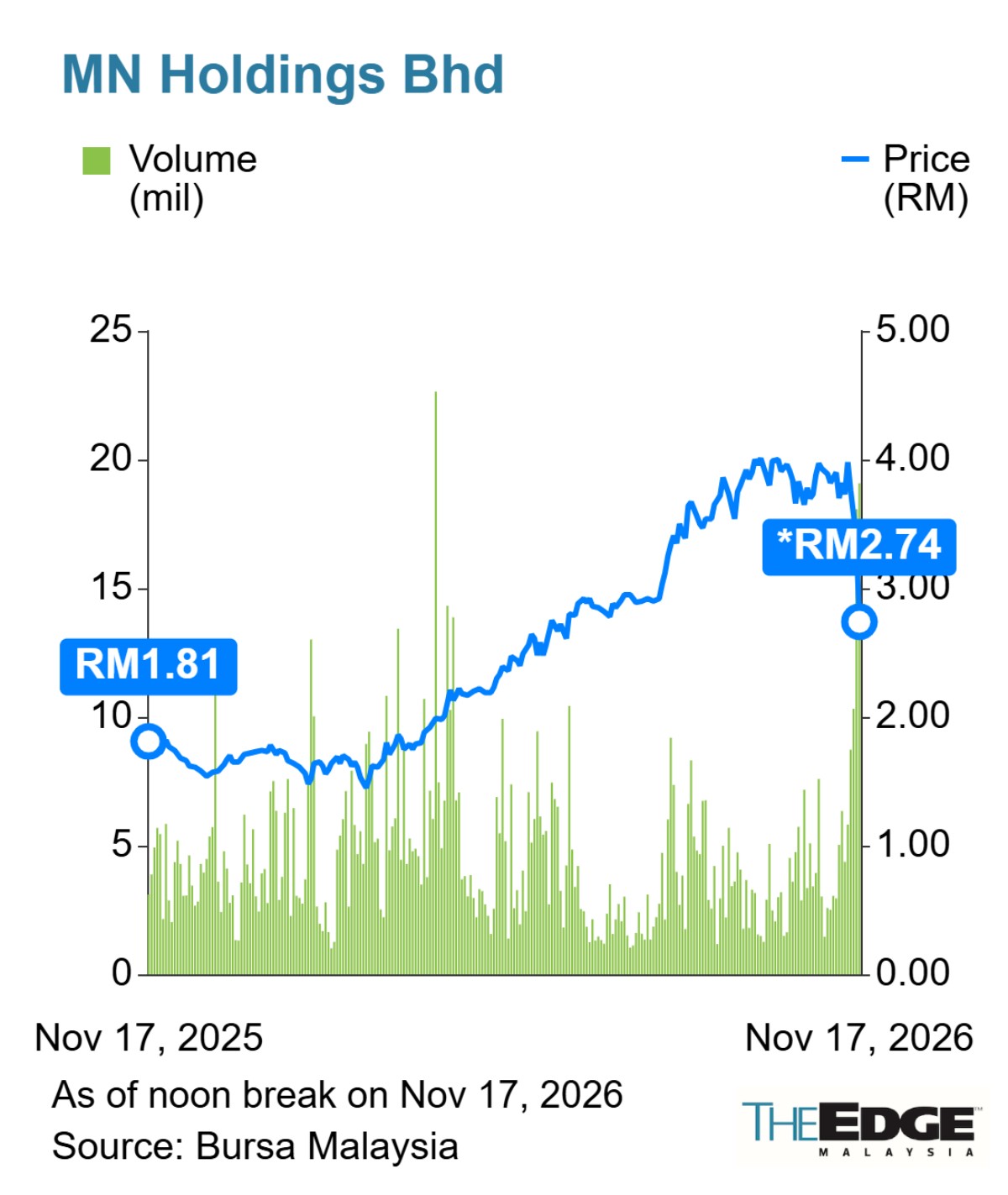
MN Holdings fell as much as 65 sen or 19.35% to RM2.71, its lowest since July 14. The stock pared its losses to RM2.74 at the noon break, down 62 sen or 18.45%, with 19.08 million shares traded. At that price, the company had a market capitalisation of RM1.93 billion.
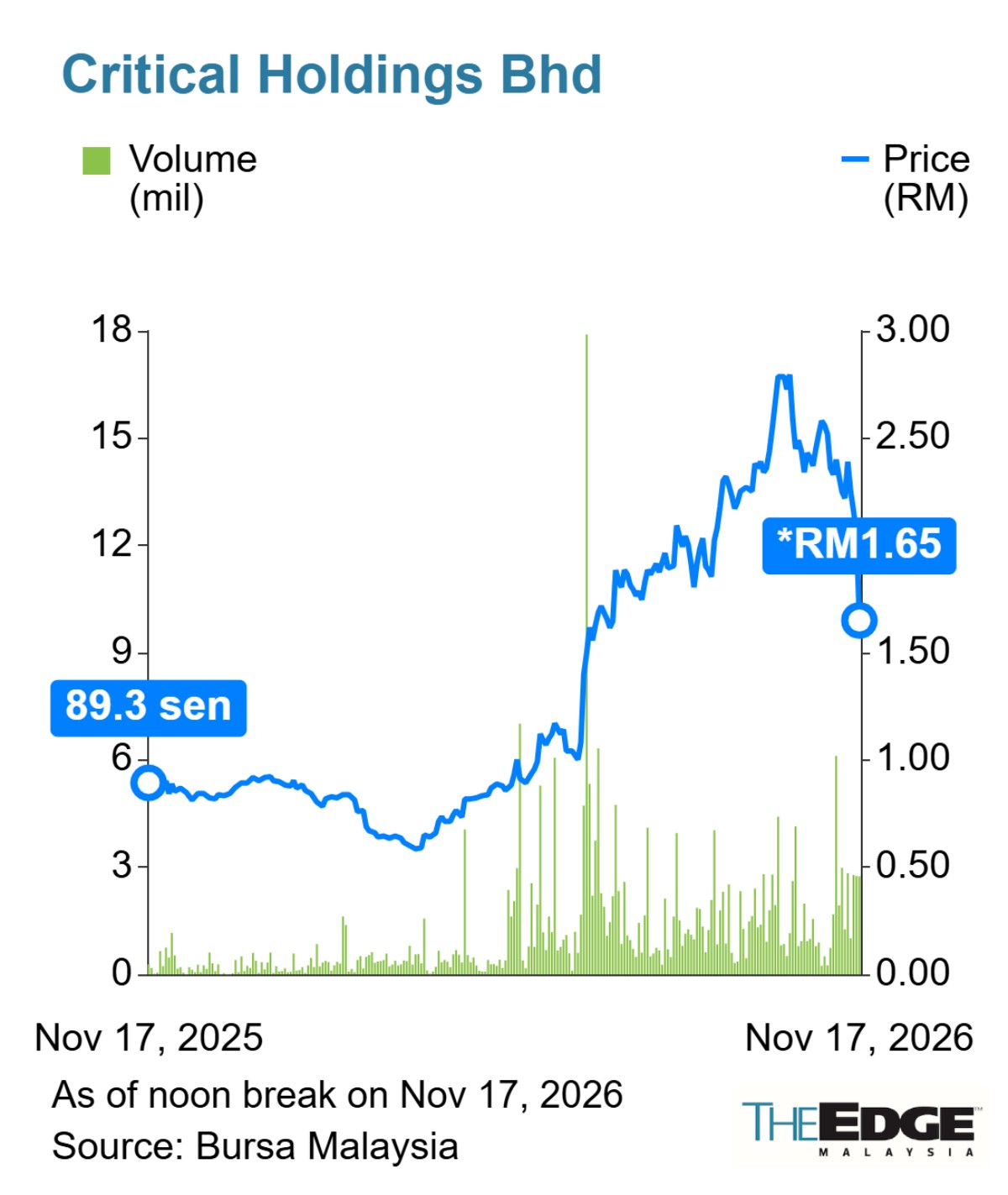
Critical Holdings dropped as much as 40 sen or 19.51% to RM1.65, with 2.74 million shares traded, valuing the company at RM674.71 million.
IDSS is automatically triggered when a stock's last traded price falls more than 15 sen or 15% below its reference price. Short selling for both counters will resume at 8.30am on Wednesday.
The sell-off followed new US export controls tightening China's access to advanced AI chips. The rules require licences for the export, re-export or transfer of advanced semiconductors to Malaysia, Singapore, Indonesia, Thailand and Brazil, raising concerns over potential disruptions to the chip supply chain.
The requirements also compel data centres, foreign foundries and chip exporters to conduct enhanced due diligence on customers, including checks on direct or indirect ownership or control by entities in US-embargoed destinations or Macau.
MN Holdings and Critical Holdings are among the engineering and infrastructure companies supporting Malaysia's growing data centre and high-voltage infrastructure market.
The broader technology sector also came under pressure, with the Bursa Malaysia Technology Index falling more than 6% on Tuesday.
An analyst said the new US requirements could delay data centre projects as operators assess the implications of the licensing rules.
"Notably, the previous AI diffusion rule had delayed data centre project awards by six to seven months.
"We expect near-term sentiment pressure across power infrastructure names, although contractors with more diversified order books and lower data centre concentration should be relatively less affected," the analyst added.