

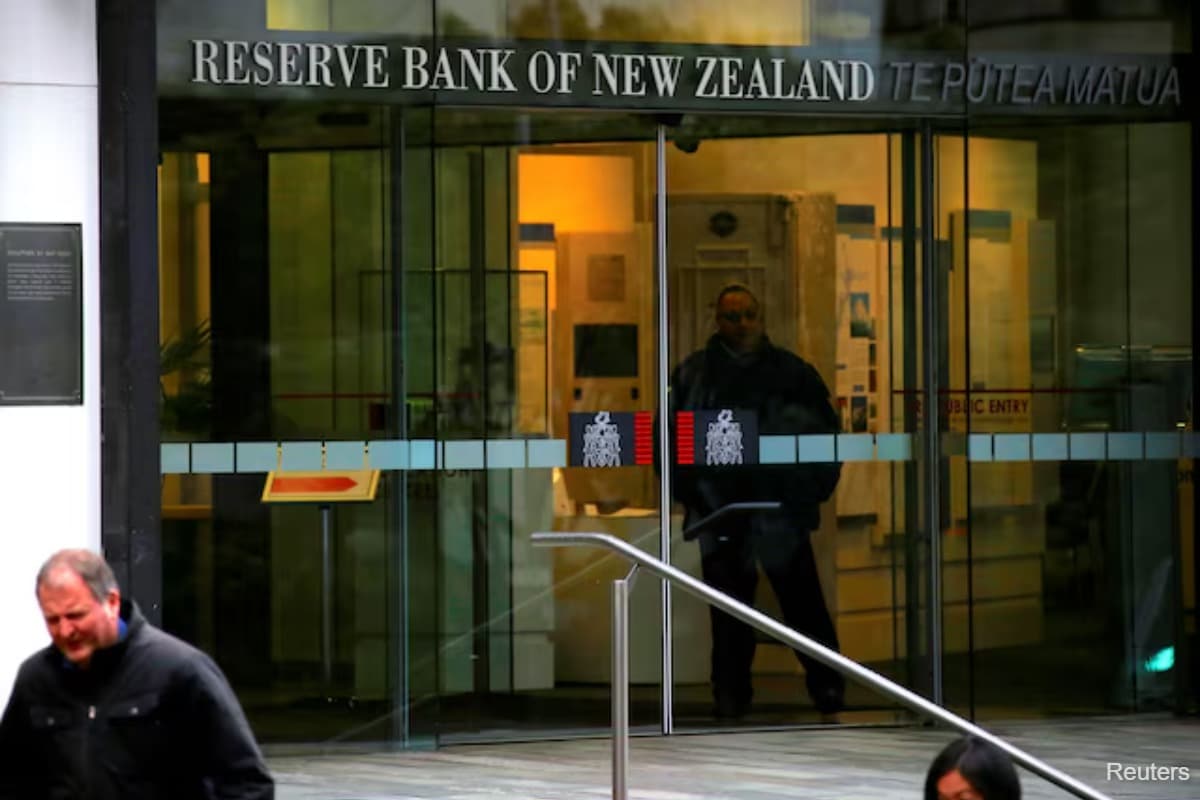
SYDNEY (Nov 17): New Zealand's central bank warned on Tuesday that global financial stability risks continue to rise, with growing vulnerabilities in the non-bank lending sector driven by increased private credit activity.
In its semi-annual Financial Stability Report, the Reserve Bank of New Zealand (RBNZ) said non-bank lenders are becoming more active in the country, particularly in commercial property and development financing.
While greater competition offers benefits for borrowers, it creates risks that are harder for the RBNZ to monitor, as much of this activity falls outside the regulated sector, it said.
"While systemic risks from non-bank lenders in New Zealand remain limited given their size, their growing role in credit provision highlights the importance of ongoing monitoring," the report said.
Banks continue to account for the majority of lending to households and businesses in New Zealand, with direct finance and non-bank lending firms representing only about 6% of overall lending, official data showed. Private credit funds and non-bank lenders are not directly regulated by the RBNZ, which also serves as the country's banking regulator.
The RBNZ highlighted how the recent failure of an Australian property developer exposed several private lenders to potential losses, with some funds restricting withdrawals amid increased redemption requests.
Last week, Australia's corporate regulator said it would launch an official probe into the A$3.4 billion (US$2.30 billion) collapse of Sydney homebuilder Bathla, putting fresh scrutiny on the fast-growing private credit sector, which has increasingly stepped in to finance developers as banks retreat from riskier lending.
The financial stability report also warned that heightened geopolitical tensions and financial market fragility had increased global risks, with Middle East tensions disrupting energy and trade flows.
However, the report said New Zealand's financial system remained resilient.
"Domestic financial stress has generally eased from its peak last year but remains uneven," RBNZ governor Anna Breman said.
Despite some narrowing of lending margins, New Zealand's banks are maintaining strong capital and liquidity positions, with recent stress tests showing banks and insurers could withstand severe financial shocks, Breman added.
Uploaded by Liza Shireen Koshy