

(Nov 16): The US Supreme Court dealt President Donald Trump a setback in his drive to cancel billions of dollars in federal grants, leaving intact a ruling that the administration was probably acting illegally by targeting research projects he said were “DEI programmes.”
With no noted dissents on Monday, the justices rejected an appeal by the administration in a clash with faculty members and researchers at the University of California.
The rebuff keeps in place a federal appeals court ruling that for now requires the National Science Foundation and National Endowment for the Humanities to continue funding US$59 million in grants. The appeals court said Trump probably violated the Constitution’s free speech clause by discriminating against the grantees because of their viewpoints.
More broadly, the high court’s sidestepping of the case leaves unanswered questions about a controversy that raged during Trump’s first months in office last year. Trump directed agencies to terminate grants that involved diversity, equity and inclusion, as well as “gender ideology” and “environmental justice.” Universities and researchers say the blitz of terminations upended cutting-edge studies in science, medicine and other areas.
“The stakes for the researchers, and for the public that benefits from their work, could not be higher,” the University of California group told the high court.
In its appeal, the Trump administration contended that the Constitution lets the government choose to fund only those projects that align with its perspective. US Solicitor General D John Sauer told the justices that the ruling by the 9th US Circuit Court of Appeals would “hamstring every future administration” if not reversed.
“The First Amendment provides the government significant flexibility when it acts as patron to subsidise speech,” argued Sauer, the administration’s top courtroom lawyer. “The government may itself promote favoured viewpoints, including by disbursing public funds to private entities.”
In rejecting the government, the 9th Circuit said the Supreme Court has distinguished between a decision not to fund a program at all and a rejection of particular applicants because of their views.
“Because the agencies’ termination of grants is aimed at the suppression of viewpoints with which the government disagrees, it likely violates the First Amendment,” the appeals court said in a 3-0 decision.
The University of California group urged the Supreme Court not to take up the case, saying the 9th Circuit applied “clearly established law.”
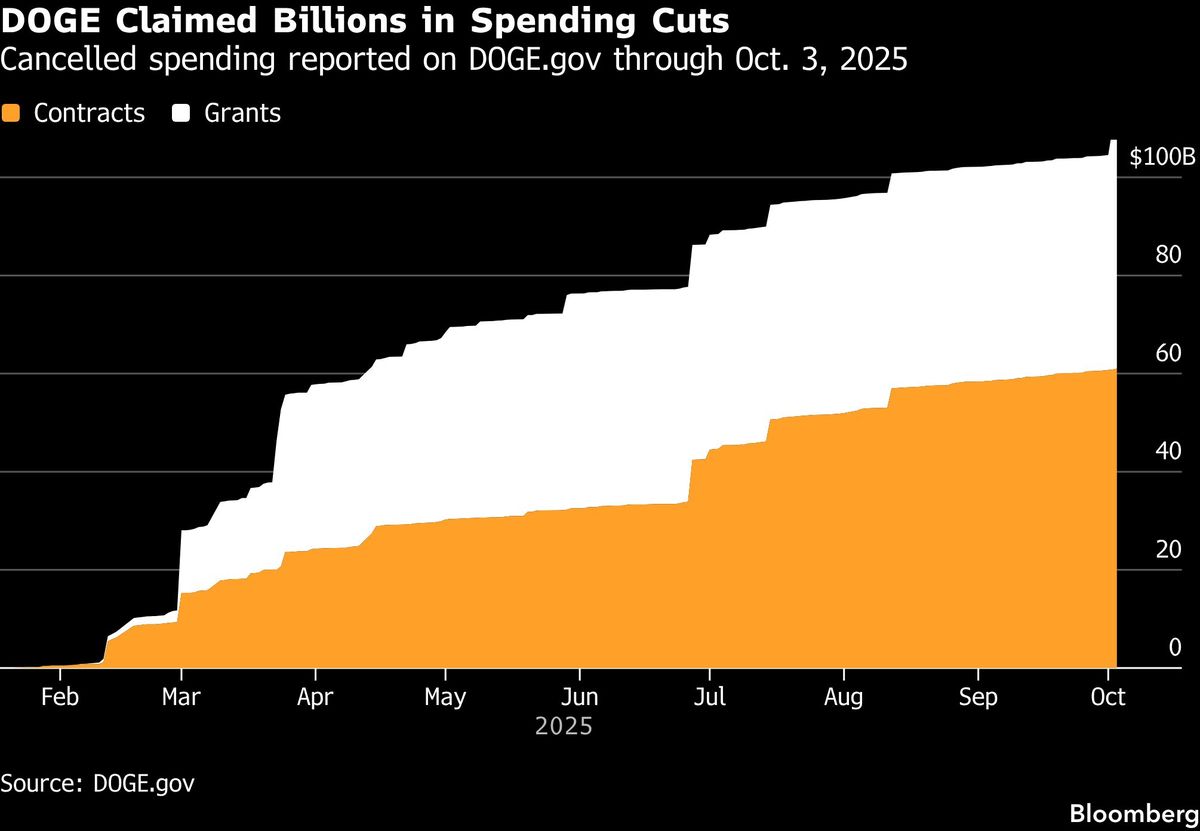
Much of the grant cancellation occurred under the direction of the Department of Government Efficiency (DOGE), the Elon Musk-led effort that tore through the federal government last year, firing workers, dismantling agencies and cancelling billions of dollars in spending. DOGE, as the office is known, claimed to have cancelled US$110 billion in grants and contracts, though the actual savings to the government might have been far less than that.
The administration drew criticism for the wholesale, and in at least some cases erratic, nature of the terminations. The New York Times reported in March that DOGE officials relied on ChatGPT to select which National Endowment for the Humanities grants to target.
In the University of California case, the researchers faulted the administration for relying on keywords, including “diversity,” to determine which grants were problematic. They say the approach scooped in projects with titles mentioning “Leaf Diversity” and “Diversity Within the Legume Rhizobia Mutualism.”
Under its normal scheduling practices, the court will hear arguments early next year and rule by June. The case is Trump v Thakur, 26-210.
Uploaded by Felyx Teoh