


This article first appeared in City & Country, The Edge Malaysia Weekly on November 16, 2026 - November 22, 2026
On April 25, 2025, Prime Minister Datuk Seri Anwar Ibrahim officially formalised Warisan KL, an ambitious initiative to transform the historic heart of Kuala Lumpur into a vibrant creative and cultural district.
The conversation to revitalise the city’s core had started years earlier. A National Heritage Fund, under Khazanah Nasional Bhd, was established when the revised Budget 2023 was tabled in February 2023, with an estimated RM600 million channelled to the fund to restore and rejuvenate the Bangunan Sultan Abdul Samad (BSAS) Complex and Carcosa Seri Negara. Beyond the two landmarks, other key heritage assets have been selected to be restored under the Warisan KL initiative.
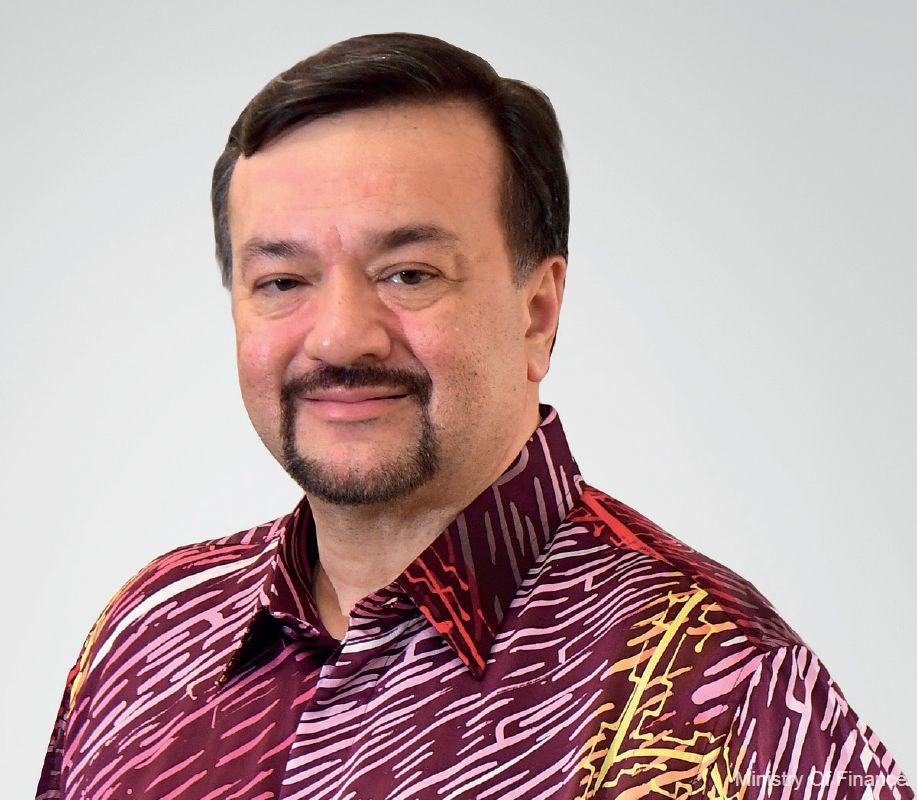
In an email interview with City & Country, Minister of Finance II Datuk Seri Amir Hamzah Azizan says the Warisan KL initiative was born out of a simple but important question: How do we ensure Kuala Lumpur continues to modernise without losing its identity?
His answer is that the initiative stretches beyond conservation and looks at how it can leverage heritage assets across the nation’s capital to become an engine of economic growth, a platform for social inclusion and still remain a symbol of national identity. Ultimately, its success will hinge on its ability to create job opportunities, attract investment, strengthen identity and improve quality of life.
“By 2035, Warisan KL is expected to generate RM7.9 billion in economic value and attract more than 9.1 million visitors. At the same time, it aims to create more vibrant public spaces, stronger local businesses, better community participation and a deeper appreciation of Malaysia’s shared history,” says Amir.
The initiative brings together government agencies, government-linked companies, government-linked investment companies, private sector partners and communities to restore, reactivate and sustain some of Kuala Lumpur’s most significant heritage assets. A steering committee, co-chaired by Amir and Minister in the Prime Minister’s Department (Federal Territories) Hannah Yeoh, oversees the project.
At the heart of this initiative is the Warisan KL Secretariat. It convenes government agencies, cultural institutions, landmark custodians and private partners, coordinates programmes, keeps projects on track and identifies opportunities to enhance the public realm. It also engages stakeholders on accessibility, connectivity, visitor experience and place management, and helps turn these concerns into tangible improvements across Kuala Lumpur’s historic core.
There are 10 key heritage assets that come under the purview of Warisan KL: Carcosa Seri Negara, the Kuala Lumpur Old Railway Station, Masjid Negara, Dayabumi Complex, the BSAS Complex and Dataran Merdeka, Masjid Jamek Sultan Abdul Samad, Medan Pasar, Pasar Seni, Petaling Street, and the Stadium Merdeka and Merdeka 118 Precinct.
Amir says the assets were selected for their historical and national significance, their ability to catalyse urban regeneration, their potential for public accessibility and community benefit, and their long-term sustainability in terms of supporting economic activity.
Another important criterion is their function as part of an integrated network.
“Warisan KL is designed as an integrated heritage network rather than isolated projects. The selected sites collectively represent different dimensions of Kuala Lumpur’s history, culture, architecture and community life, and these sites are walkable from one point to the other,” he says.
“Restoring buildings is only the starting point. The real objective is to revitalise entire precincts and ecosystems around them.
“For example, when a site such as Stadium Merdeka, Central Market, Masjid Jamek, Sultan Abdul Samad or the Kuala Lumpur Old Railway Station is revitalised, we are not simply repairing the structure. We are creating a space that attracts visitors, supports SMEs, provides opportunities for artisans and entrepreneurs, encourages cultural activities and improves public spaces. Events at the Merdeka precinct, heritage activations and cultural festivals have shown the potential for heritage-led economic development.”
Once selected, each asset undergoes reactivation through programming, cultural activities, commercial uses and public engagement. It is then given a sustainable long-term operating model so that it endures.
The initiative is not dependent on public funding. Rather, it leverages partnerships among stakeholders to create a “blended funding approach”.
Amir says the revitalised assets are designed to generate economic activity, allowing the assets to support their long-term maintenance and operations.
The initiative has already shown tangible results. Khazanah Nasional Bhd completed a 10-month restoration of Seri Negara, turned it into a gallery and reopened it in December last year. The sovereign wealth fund is also in charge of restoring the six buildings of the BSAS Complex. It reopened two of them — Bangunan Sultan Abdul Samad and Pejabat Pos Besar Lama — in February and May this year respectively.
A pedestrian bridge linking Seri Negara and Carcosa to the Perdana Botanical Gardens is being built, with its opening expected at year end. Meanwhile, the Carcosa building is planned as an eco-sanctuary hotel. However, it will take time for the plan to materialise as Khazanah is making careful considerations to ensure the project turns out successfully.
Other partners are also making headway. City & Country speaks to several of the stakeholders involved in this public-private initiative that have got the engine running.
Stadium Merdeka and Merdeka 118 Precinct
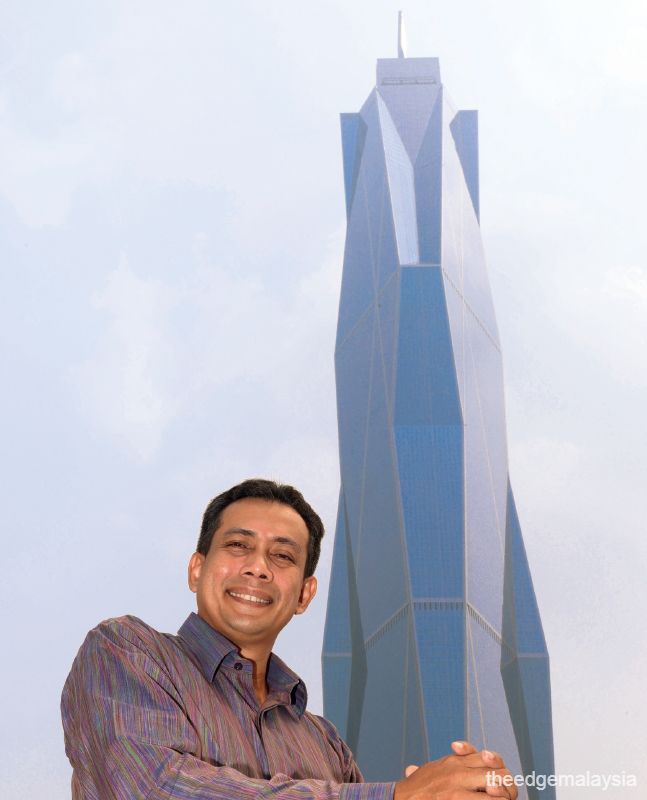
The Merdeka 118 Precinct is considered one of the most significant landmarks in Kuala Lumpur, being the ground on which the birth of the nation was proclaimed. The area is starkly different today than it was in 1957. Yet, its history remains through the preservation of Stadium Merdeka, completed and reopened in 2024, ensuring no Malaysian forgets his or her roots. Beyond the stadium is the country’s tallest building — Menara Merdeka Maybank. Both landmarks sit within the 40-acre Merdeka 118 Precinct.
“Precincts like these are iconic. It is steeped in history. It has been there since 1957. It was where the nation was born,” says PNB Merdeka Ventures Sdn Bhd (PMVSB) CEO Datuk Izwan Hasli Mohd Ibrahim.
“We love being part of Warisan KL, and we are an active participant. It is not just preserving our heritage, but also providing economic benefits. It is not just a place where people come once.
“Warisan KL has a lot more things in store for the people. It is not too big of a precinct. It is walkable and interconnected. It is preserving our heritage and culture. This is really good.”
On the progress of the restoration, Izwan says this is an important year for the precinct as several components are opening. “We are opening four main attractions. We just opened the Merdeka Textile Museum, the 118 Viewing Deck, the shopping mall and a glass walk on Level 116 of the tower.”
He notes that Warisan KL is positioning the precinct as a tourist destination and it is being developed in a few phases. PMVSB has already completed Masjid Al-Sultan Abdullah, Merdeka Boulevard at 118, the restoration of Stadium Merdeka, Look at 118, Muzium Tekstil Merdeka and the 118 Mall. The residential component and the restoration of Stadium Negara are still on the drawing board, he adds
The more important story to tell, however, occurs beyond the boundaries of the precinct on how it interacts with the community around it. “We use Stadium Merdeka a lot. It is our philosophy of having people come in, experience and feel our Stadium Merdeka. So we engage a lot with the community,” he says.
When there is no event, the stadium is open to the public free of charge. Izwan recalls a football match in particular.
“We played a match in July with the residents [from Perumahan Awam Sri Selangor]. There was an uncle who played with us, and he came to me and said, ‘Terima kasih, tuan’. I was baffled by that. Then he told me that when he was growing up, he always visited Stadium Merdeka, but he never thought that he would be able to play on the field.”
The goodwill extends to the neighbourhood’s economy as well. “The spillover effect is also the regeneration of this entire area. It has become different. There are now great coffee spots and restaurants,” he says.
“People talk about regeneration, but it can be negative as well. In a positive way, we have seen the community and the precinct thrive because we are also building connections and improving the ecosystem.”
Behind that is a community grant programme that began six to seven years ago, which is aimed at developing entrepreneurship among the arts community.
“We worked with Think City to provide a platform for the [community under the] People’s Housing Programme (PPR) to sell their food. Whenever we have bazaars, they set up their stalls in the precinct,” says Izwan.
“We empowered them to market their products. We have seen signs of economic empowerment and we want to see more of that as we go along. It took a while to build the trust and momentum.”
Warisan KL helps prolong that community vision, he points out. Not only is it preserving history, but also adding economic value and inviting visitors to explore the precinct and surrounding community with the help of the “interconnected walkable distance” between landmarks.
Medan Pasar
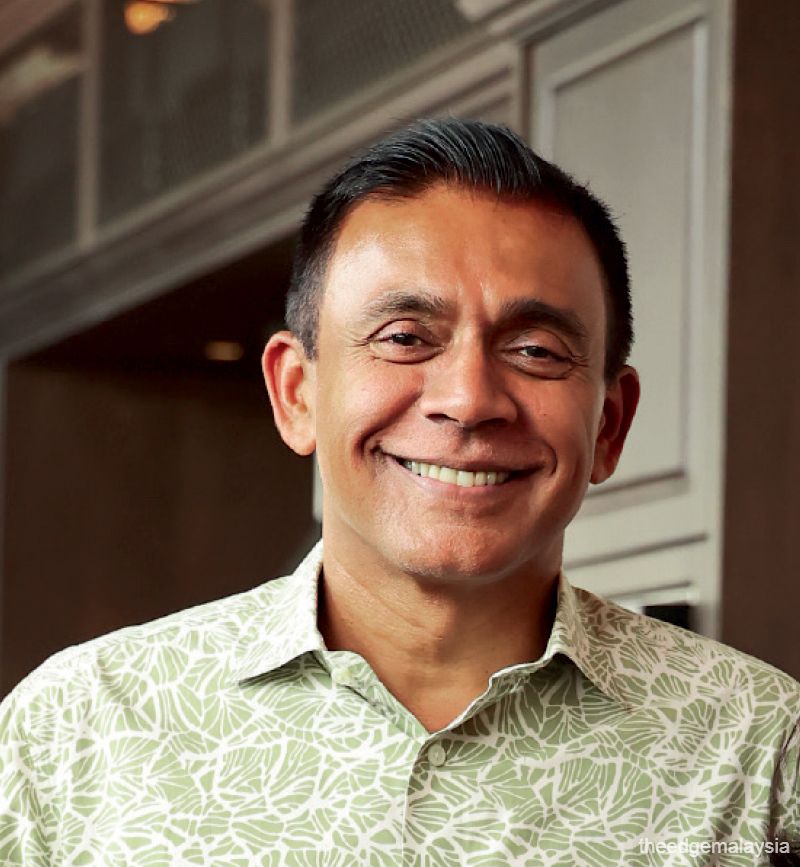
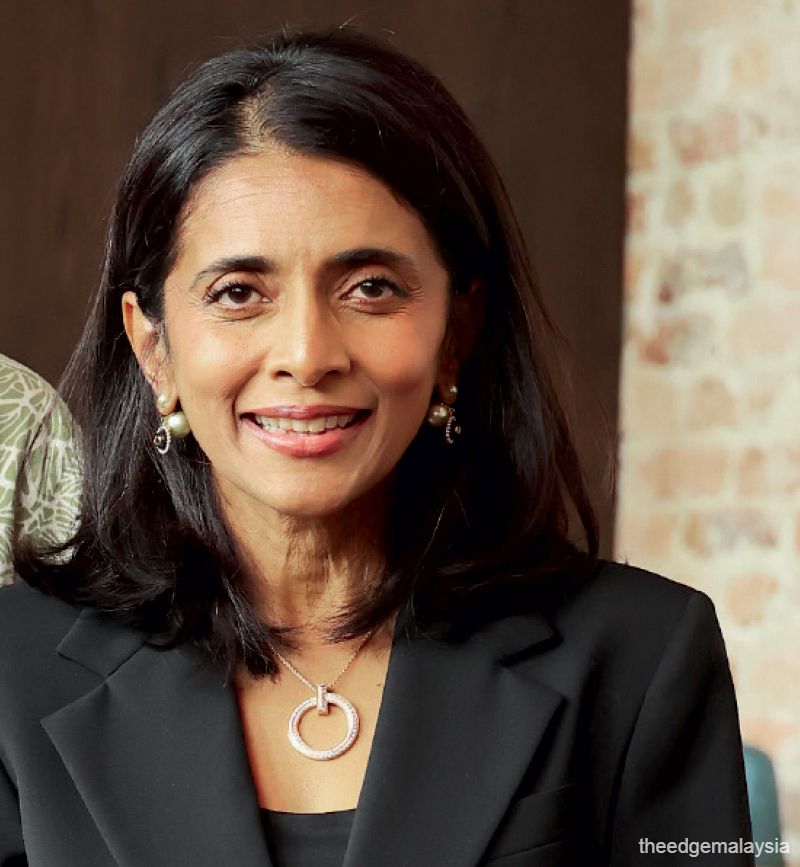
In the shadow of the BSAS Complex, a cluster of once-forgotten shophouses in Medan Pasar is being given a new lease of life by Creador Foundation, the philanthropic arm of private equity firm Creador Sdn Bhd. The foundation was set up by Creador co-founder and CEO Brahmal Vasudevan and Creador co-founder Shanthi Kandiah, a practising lawyer.
Shanthi says the buildings were in a sorry state when they arrived. “Derelict, abandoned and no operations. The only operators of businesses here were two banks which were moving out and some Nepali businesses.”
She says the area is historically significant because of the role it played in the growth of Kuala Lumpur, having evolved from a settlement for miners and traders to a trading hub and, eventually, a banking hub.
The area saw a hollowing out when the government started developing places such as the KLCC precinct and Putrajaya, which led to many businesses and services relocating to other parts of the city. The buildings were neglected and the area was no longer vibrant.
“In this process of hollowing out over time, the buildings became more derelict and that was the start of the decline of the financial and legal hub of Kuala Lumpur,” says Shanthi.
The Creador Foundation co-founders took an interest in the area after the recent pandemic. “We were cycling in the city after Covid and stopped at a kopitiam nearby. I was reminiscing about a kopitiam where, as a young lawyer, we would come here after court. I was then informed that it had shut down for many years because it was hard to run the business,” Shanthi recalls.
“That’s when I had this romantic idea of reviving a kopitiam in that building. However, it became apparent to us that it wasn’t going to work because a kopitiam operator wouldn’t be interested in it, because it really didn’t have the kind of critical mass in Malaysia who would come to this area.”
Brahmal had a slightly different vision for the area. He says restoring a single building would never feel complete with a derelict neighbourhood around it.
“We basically asked an agent to talk to all the owners and very quickly acquired almost 10 properties. All of them were empty and derelict. The owners wanted to sell because they weren’t prepared to invest,” he says.
Despite that, there were several owners who did not want to sell and were intrigued by their plans. In those cases, the foundation rented the building and spent its own money on the renovations.
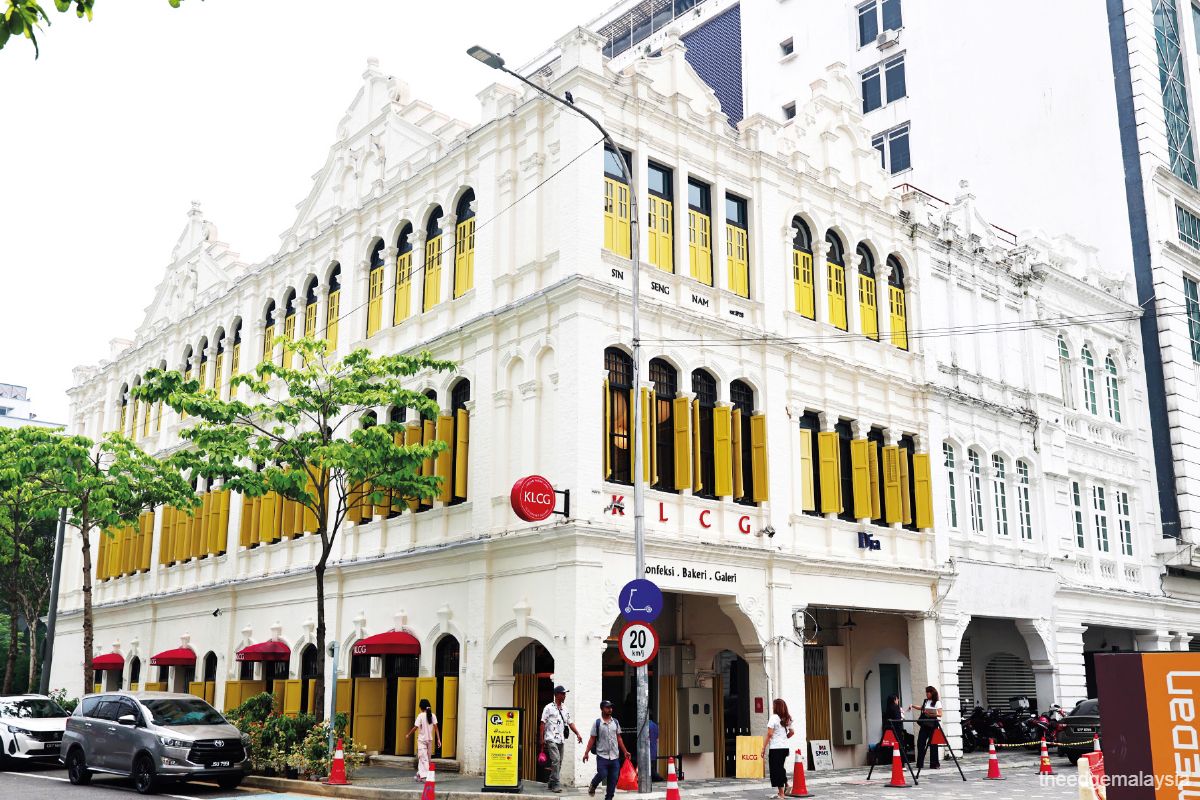
The first acquisition — the site where KLCG Bakery is located — was made in May 2023. The restoration was completed in May 2025.
Brahmal says more than 10 properties around the Medan Pasar area have been acquired. He expects to complete the revitalisation of the area over the next three years. His plans include building a performing arts venue with two auditoriums, developing build-to-rent serviced apartments. Muara Arts Gallery was opened on Nov 1.
“The whole dynamic is to have offices, residences, co-working spaces, restaurants, museums and so on. It’s a whole connected ecosystem … the key is to rejuvenate,” says Brahmal.
“We are in this heritage triangle right next to BSAS and the idea is three things: restore, activate with new concepts and bring Malaysians and tourists back. So, the whole idea is to position this as an arts and culture hub.”
Meanwhile, the square which houses the clock tower is undergoing a facelift. Architecture and landscape design consultancy Pentago Group of Companies has been appointed, by Creador Foundation as part of its corporate social responsibility programme, to green the space. This is in line with Kuala Lumpur City Hall’s (DBKL) greening activities.
Dayabumi Complex
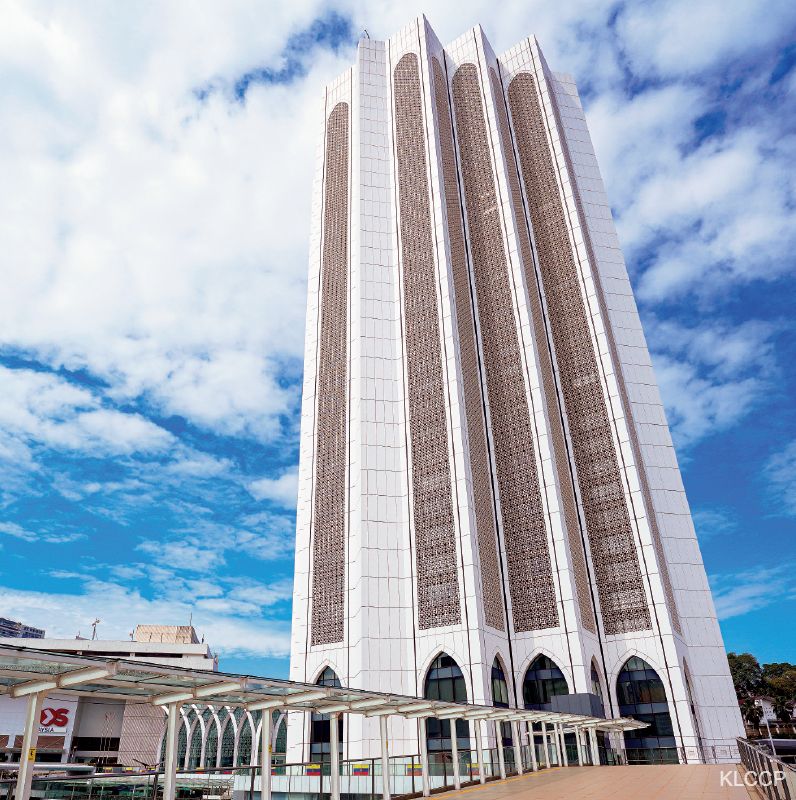
On the other side of the city is Dayabumi Complex, owned by KLCC Property Holdings Bhd (KLCCP), whose story began in the 1980s. Previously a railway depot, the entire complex consists of the 35-storey Dayabumi tower and the General Post Office (the headquarters of Pos Malaysia). It used to have a commercial component called City Point shopping complex, but it was demolished in 2015 to make way for a new tower. Details of the new tower were unavailable at press time.
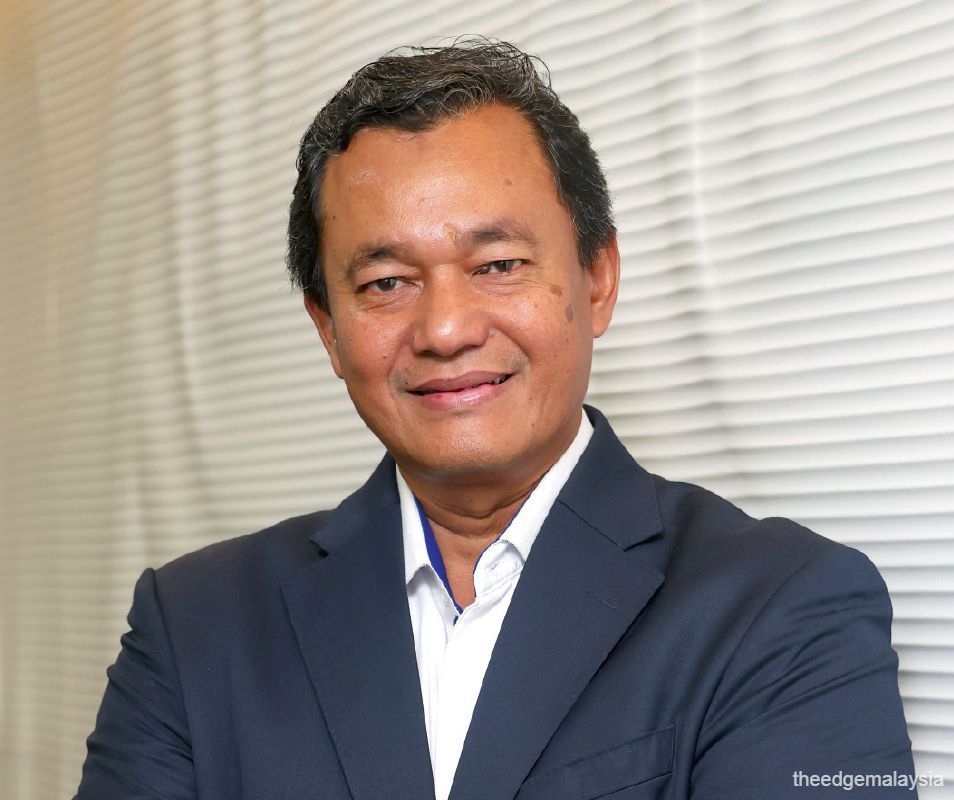
“What’s unique about Dayabumi is that it sits within the context of the heritage area within Kuala Lumpur, comprising BSAS, the railway station, Masjid Negara and Central Market,” says KLCCP CEO Datuk Mohd Salem Kailany.
As part of the initiative, KLCCP is building a new two-storey retail component called City Point to restore the vibrancy of the original podium it once held. Construction is already 50% finished. Salem expects the component to be completed by year end and opened to the public in 2Q2027. He says the retail component will offer a tenant mix ranging from F&B to fashion, as well as an event hall to accommodate community activities.
The idea is to give visitors reasons to linger, says Salem. “A coffee stop or a meal along the way keeps people in the area longer, and the heritage trail — running from Carcosa and Dataran Merdeka to Masjid Negara, Dayabumi and Petaling Street — becomes something to roam rather than rush through. It’s really about complementing the other Warisan KL offerings.”
He adds that the retail podium plays an important role in creating seamless connectivity in the city centre. “Looking at the context of Warisan KL, there seems to be a missing link between Dataran Merdeka, the railway station and Central Market. So, this new development will complement these and allow for seamless pedestrian traffic between BSAS, Dataran Merdeka and the railway station building to eventually be linked to the Central Market and Petaling Street area.”
Kuala Lumpur Railway Station
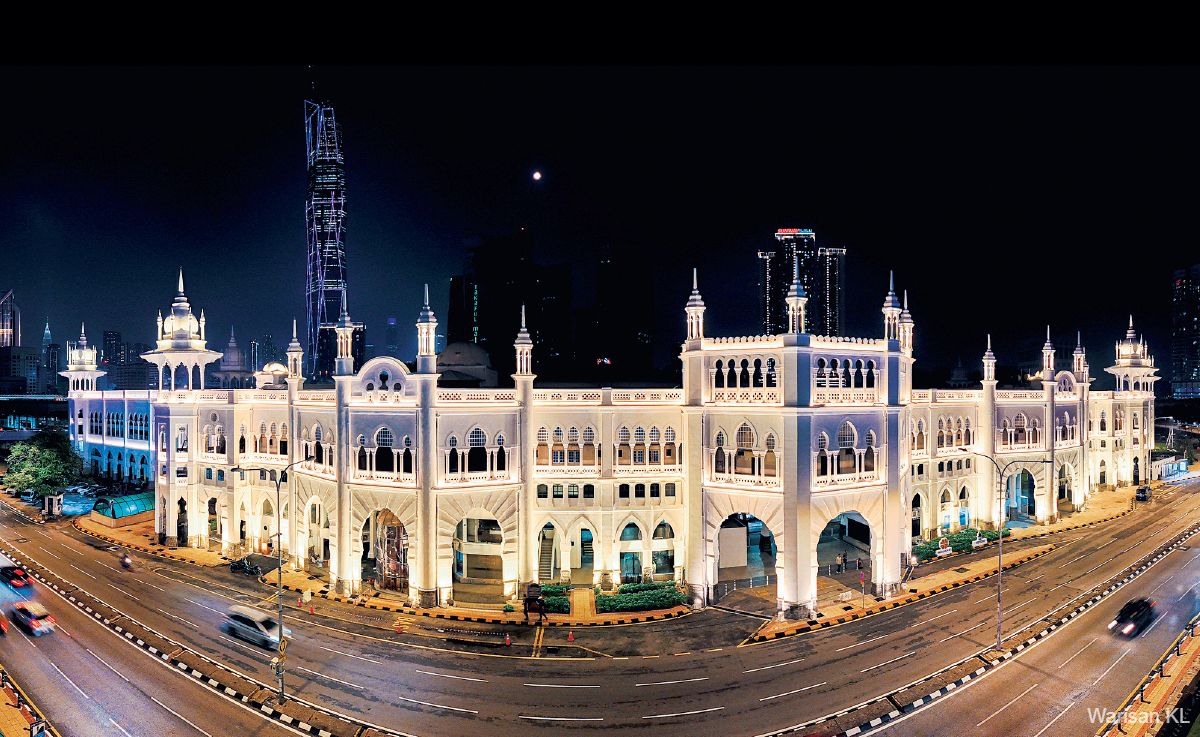
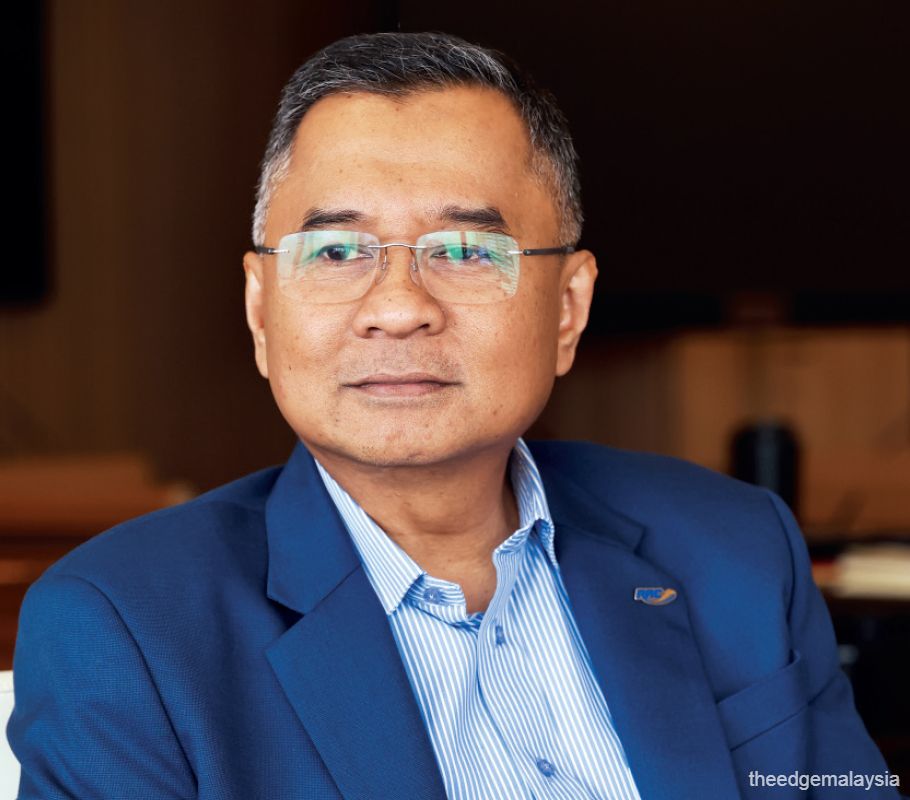
Another asset that has played a big part in nation-building, even before the nation was born, was the old Kuala Lumpur Railway Station. The station, which comes under the purview of Railway Assets Corporation (RAC), is undergoing a major facelift. RAC is a federal statutory body under the Ministry of Transport.
RAC’s CEO Datuk Azhar Ahmad tells the story of the railway station. “The station was constructed in 1907 and completed in 1910. It has been operating for more than 100 years and it went through a few phases of expansion from the 1950s to the 1970s.”
He says the conservation efforts are broken down into two phases. The first focused on the external part of the building — beautifying and refreshing it. About RM10 million was spent on the first phase and the works were completed in March this year.
RAC is now focusing on the second phase, where it is looking to conserve the internal part of the building while activating the spaces in the station. Azhar says it will take about another year to complete.
On the return on investment, he says: “Especially in heritage buildings, when you do conservation, you cannot expect any return on investment. What you’re doing is for historical value. With respect to commercial activities, it is just to activate these until we have completed the conservation. But even with the commercial activities that you’re going to create, you can’t expect any return on investment for the conservation.”


In the meantime, the station is being brought back to life through events. “We have activated the space by initiating more activities over the last six months,” says Azhar.
“We started with the Heritage Colours Festival. Then we got all local products to come in. We have done a sports running event, the Saucony event. We have done a food truck event to attract tourists. So it’s been encouraging so far. We’re going to do it every month and we’re working closely with Warisan KL to promote the new events on a monthly basis.”
He adds that there will be a gallery at the station at the end of this month, showcasing the country’s railway history.
An interesting point that Azhar highlights is that the railway station used to be the main focal point of Peninsular Malaysia’s railway network before KL Sentral was built. He hopes that by embarking on this project, it will bring more awareness of its history among the young generation.
“When we talk about heritage buildings, we also want the younger generation to have a connection to it by creating experiences in the space. That’s why we have those events. Part of it is actually to restore a significant part of history, but it is also for tourism and cultural perspective. It’s important for us to preserve the heritage building,” he says.


The approach
According to Minister of Finance II Amir, the approach used by Warisan KL to revitalise the landmarks is anchored in conserving historically significant assets; activating spaces through programming, cultural activities, commercial uses and public engagement; and providing sustainable long-term operating models for the continuity of the assets. These are exactly what the stakeholders have demonstrated at their assets.
“We do not view heritage as a static museum piece. We embrace adaptive reuse, which allows historic buildings to take on new functions while retaining their character. This approach is already evident among the heritage buildings, cultural spaces and public venues in the city centre,” he says.
He notes that there have been successful examples of heritage districts becoming major cultural and economic destinations globally, which Malaysia could learn from.
“The common lesson is that conservation succeeds when heritage remains relevant to contemporary life. Warisan KL adopts a similar philosophy while ensuring the outcome remains distinctly Malaysian,” he adds.
Furthermore, the success should extend to how it benefits the community around the landmarks, as a landmark is only meaningful when people actively engage with it.
“We are creating opportunities for people to experience heritage through cultural festivals, public exhibitions, heritage walks, traditional arts programmes, murals, educational initiatives, entrepreneurship programmes and community-led activities,” says Amir.
Ultimately, preserving the soul of a city is not just about conserving buildings. “It is about ensuring that the stories, traditions, livelihoods and relationships connected to those places continue to thrive for generations to come,” he explains.
Save by subscribing to us for your print and/or digital copy.
P/S: The Edge is also available on Apple's App Store and Android's Google Play.