

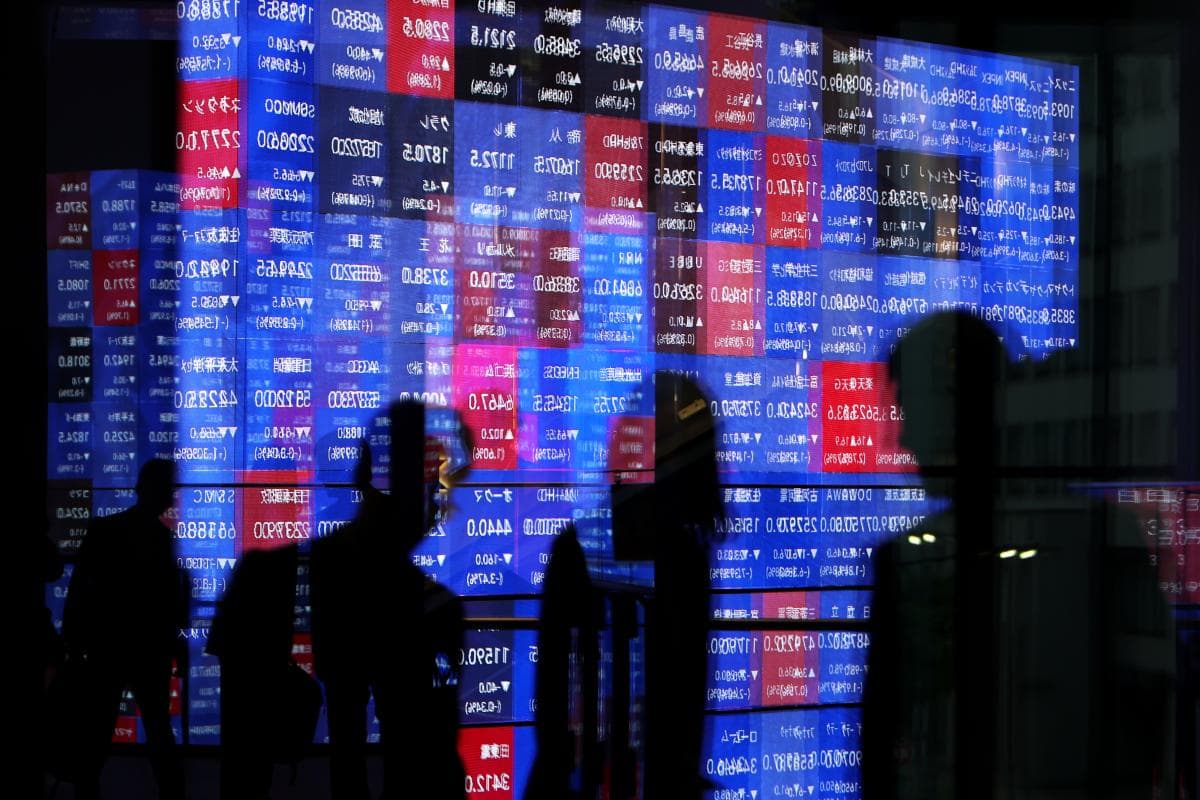
(Nov 16) : Stocks in Asia may come under renewed pressure as concerns over the artificial-intelligence trade linger, with Chinese and Japanese data due to offer clues on the health of the region’s major economies. Bitcoin steadies.
Equities in the region may track Friday’s losses on Wall Street, where the tech-heavy Nasdaq 100 dropped 1.2% and the S&P 500 fell 0.4%. Nvidia Corp., searching for a new leader after the ouster of Chief Executive Officer Jensen Huang, capped its worst week since the April 2025 tariff selloff, wiping out more than half a trillion dollars in market value.
The dollar edged lower in early Asian trading after rising to its strongest since May 2025 last week. Bitcoin edged higher after falling to a four-month low at the weekend.
Markets remain on edge after Microsoft Corp.’s outage and Nvidia’s leadership turmoil roiled the technology sector last week. The failure of US stocks to regain momentum on Friday highlighted lingering anxiety around the artificial-intelligence trade ahead of Nvidia’s results on Tuesday.
“There seems to be more questions than answers on both the tech outages as well as what will happen at Nvidia,” said Nick Twidale, chief market analyst at AT Global Markets. “We could see pressure on markets until a clearer picture emerges.”
Elsewhere in Asia, Japan’s third-quarter growth data will help shape expectations for a Bank of Japan rate hike next month, with the economy seen slowing.
In China, retail sales and industrial production data are also due, with economists expecting growth in both to have slowed in October.
“China’s October activity data is expected to once again underscore the economy’s growing divergence,” Commonwealth Bank of Australia strategists led by Joseph Capurso wrote in a note to clients. “We expect export-oriented manufacturing to hold up against a backdrop of subdued consumer spending and investment weakness.”
Meanwhile, Bitcoin steadied to around US$65,000 in early trading after sliding toward US$62,000 over the weekend, extending a weeks-long decline as the record Binance hack, political uncertainty, rising Treasury yields and a stronger dollar weighed on digital assets.
“The near-term direction will largely depend on whether institutional demand stabilizes and macro conditions provide room for risk appetite to recover,” said Ayesha Kiani, chief operating officer at Monarq Asset Management. “Until then, rallies are likely to remain fragile and volatility elevated.”
Investors got some relief early Friday with the US producer price index rising 0.3% in October over the previous month and 6.5% over the previous year, the fastest pace in four years, but slightly below expectations.
Still, inflation remains elevated enough to keep further Fed tightening firmly in play. Kansas City Fed President Jeff Schmid said price pressures are running too hot and policymakers have more work to do, citing energy costs, rising durable goods prices, the artificial-intelligence buildout and healthcare costs. The prospect of further rate hikes is helping keep the dollar near recent highs.
“The US dollar rally may look stretched in the near-term as tightening by other major central banks limits policy divergence with the Fed,” Elias Haddad, global head of markets strategy at Brown Brothers Harriman wrote in note. “But robust US growth, favorable labor market conditions and sticky underlying inflation keep US dollar bias tilted higher.”
uploaded by Isabelle Francis