

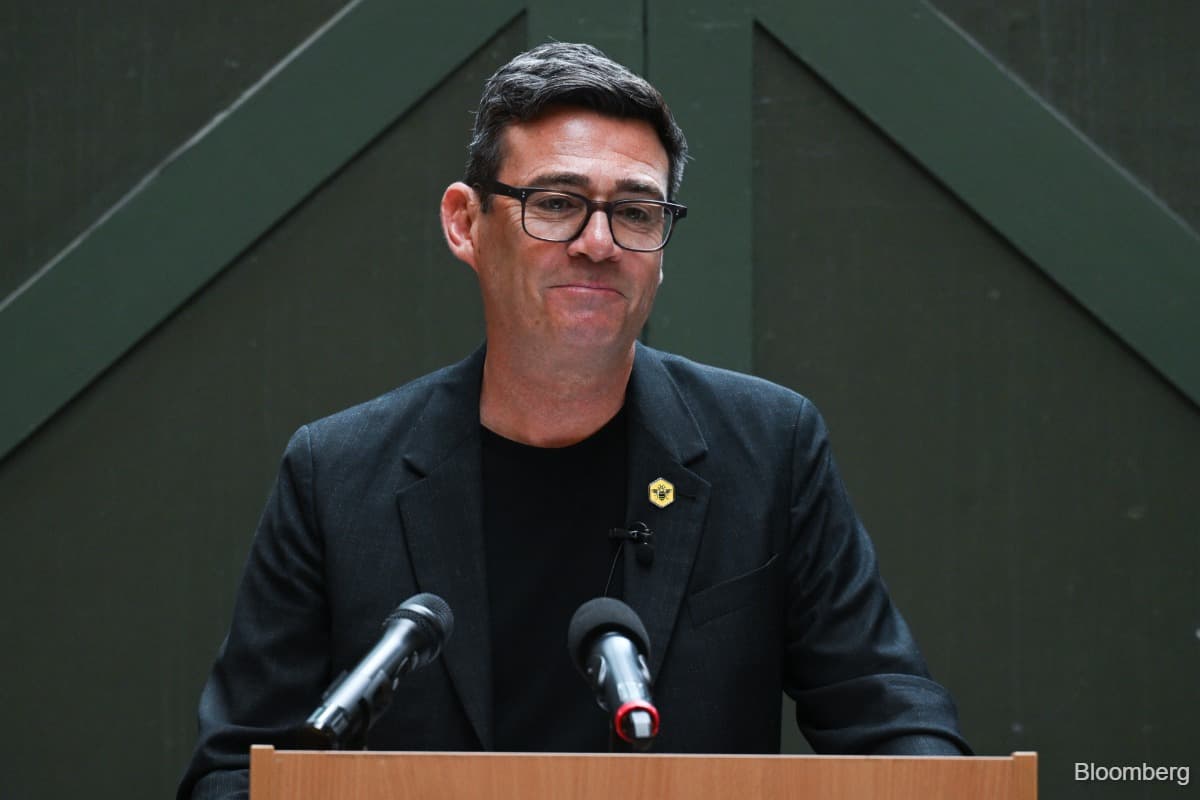
(Nov 14): Six weeks ago UK Prime Minister Andy Burnham suggested Britain “could go all the way” and rejoin the European Union (EU). This week, he downplayed his own idea: “No one’s talking about rejoining.”
The prime minister heads into a UK-EU summit in Brussels on Nov 20 trying to slow down a conversation he started about the country’s long-term relationship with Europe.
Burnham has been privately making clear to Labour colleagues that he’s not in a rush to decide what he wants his long-term EU policy to be, according to government officials familiar with the matter. Number 10 Downing Street has not even begun discussing which outcome it might favor, according to one. The prime minister is open-minded and keen not to put his thumb on the scale by backing a particular option before much wider consultation with his party, businesses, the public and the EU, they added.
Another official said Burnham’s aides want to tap the brakes on a conversation that’s at risk of getting out of control. In a sign of their caution, Number 10 is undecided on whether to go ahead with a planned speech by Burnham after the summit in which he had intended to set out different options for the future relationship, a third official said. They all spoke on condition of anonymity discussing internal policy deliberations.
Reigniting a debate about Britain’s place in Europe — a decade on from the 2016 referendum — was a decision of Burnham’s own making. In a speech at Labour’s party conference in September and in a round of ensuing media interviews, he said he wanted to begin a discussion about whether the UK should eventually rejoin the bloc, or at least move much closer by entering its single market or a customs union.
Those options all remain on the table but it’ll be some time before Burnham arrives at a preferred route, government officials said. As one put it: it would be wrong to set a direction and then rip the steering wheel off so early in the process when it remains to be seen what voters want and what the EU is prepared to negotiate. An option won’t be chosen in time for the government’s 10 year-plan, set to be laid out by Burnham in December, officials said.
Even though he stressed there would be no major change in Europe policy before the next election, due in 2029, Burnham’s intervention has drawn a mixed reaction from his own Labour Party, as well as from the City of London’s financial sector and other European capitals.
Many in Labour would love to unwind a Brexit decision they see as an historic mistake that’s badly damaged Britain’s global standing and dealt a heavy blow to economic growth. Foreign Secretary Ed Miliband, Defense Secretary Wes Streeting, Housing Secretary Angela Rayner and Energy Secretary Miatta Fahnbulleh are prominent figures backing much closer ties, government officials said.
Yet much of the party sees political risk in returning to free movement of people with the continent and aligning with its rules. Chancellor of the Exchequer John Healey, Burnham’s de facto deputy Louise Haigh, Home Secretary Shabana Mahmood, Business Secretary Jonathan Reynolds, Health Secretary Yvette Cooper and Culture Secretary Lisa Nandy favour a more cautious approach, the officials said.
All those ministers agree with Burnham that the conversation about Europe should be carefully managed and not pre-determined, views that were expressed at a Cabinet meeting on Tuesday, they said. It is better to have a responsible discussion and get it right, one official said.
However, another characterised the Cabinet divide as all the ministers who have ambitions to be prime minister versus those who want the party to win the next election.
Early feedback from the City of London and businesses has been a factor in tamping down the speculation. While British banks and executives largely backed the campaign to remain in the EU, some industries — particularly financial services and artificial intelligence (AI) — are now reluctant to realign with the bloc’s rules.
Bloomberg reported this week that the UK is opposed to rule-taking on either financial services or AI. A government official said that while they were keeping all options on the table, it would not be Burnham’s preference in any long-term negotiation with the EU to be a rule-taker in these two areas. That implies he would be reluctant to pursue a so-called Norway-style option which amounts to single market membership without being able to influence its rules.
In an intervention earlier this week, David Cameron, the former prime minister who called the 2016 referendum and campaigned unsuccessfully to remain in the EU, told Bloomberg that Britain should not rejoin.
“Instead of launching an argument about rejoining — which I think would be a very long and painful argument and who knows where it would end up — instead of that, focus on how do we be the best friend, best neighbour, best partner,” Cameron said in an interview on The Mishal Husain Show.
For now, Burnham’s priority is finalising a more modest deal at the Friday summit on trade rules for plant and animal products and youth mobility. Before then, on Monday he will deliver a speech on foreign policy in which he’ll repeat his desire for closer relations with Europe.
A government official allied to Burnham said his approach to EU policy would be conversation rather than negotiation, with the aim of fostering a better trade relationship. On the flip side of the argument, another official said it was naive, arguing that Burnham had opened Pandora’s Box without a plan for what he’s trying to achieve.
Uploaded by Tham Yek Lee