

KUALA LUMPUR (Nov 13): High jet fuel prices since the start of Middle East tensions are likely to stay, putting airlines in a dilemma over fare hikes.
Raise them too much and the bookings might stop, but absorbing the cost will not be sustainable in the long-run.
Association of Asia Pacific Airlines (AAPA) director general Wong Hong said fuel now accounts for about 33% of airlines' operating costs, up from 25% before conflict in the Middle East began early this year.
Spot jet fuel prices are hovering around US$180 per barrel compared with about US$80 before the crisis.
Wong believed elevated fuel prices would be the norm, making it increasingly challenging for airlines to manage their finances.

“The fear we've got is that, you know, it looks like these high prices continue to prevail. I think this presents a lot of headwinds in order to find solutions to overcome. Not so easy to navigate going forward,” he said at a press conference at AAPA's 70th Assembly of Presidents on Friday.
Wong said airlines would have to strike a balance between passing on higher costs to passengers and keeping fares competitive to avoid losing bookings.
“I would say airlines will try their best to be able to hold on to the fares that they can charge without trying to lose the passenger. But it's a tricky dilemma, isn't it? If you start pushing the fares to a certain point, you will start seeing bookings, you know, going somewhere else, or people start to reduce travel, and that's not what we want,” he said.
“It's a decision every airline has to consider carefully. They have to assess their financial position, how much of the higher costs they can absorb and whether they can sustain them going forward,” he said.
Wong's comments come as airlines face mounting pressure to protect margins and sustain growth amid elevated fuel costs. The industry also faces uncertainty over expiring fuel hedging contracts, with renewals potentially coming at higher prices.
Air travel demand still growing, says Boeing
Despite near-term economic pressures, Asia Pacific's long-term aviation outlook remains positive, supported by rising incomes, tourism and improving connectivity, said Boeing managing director of marketing for Asia-Pacific Dave Schulte.
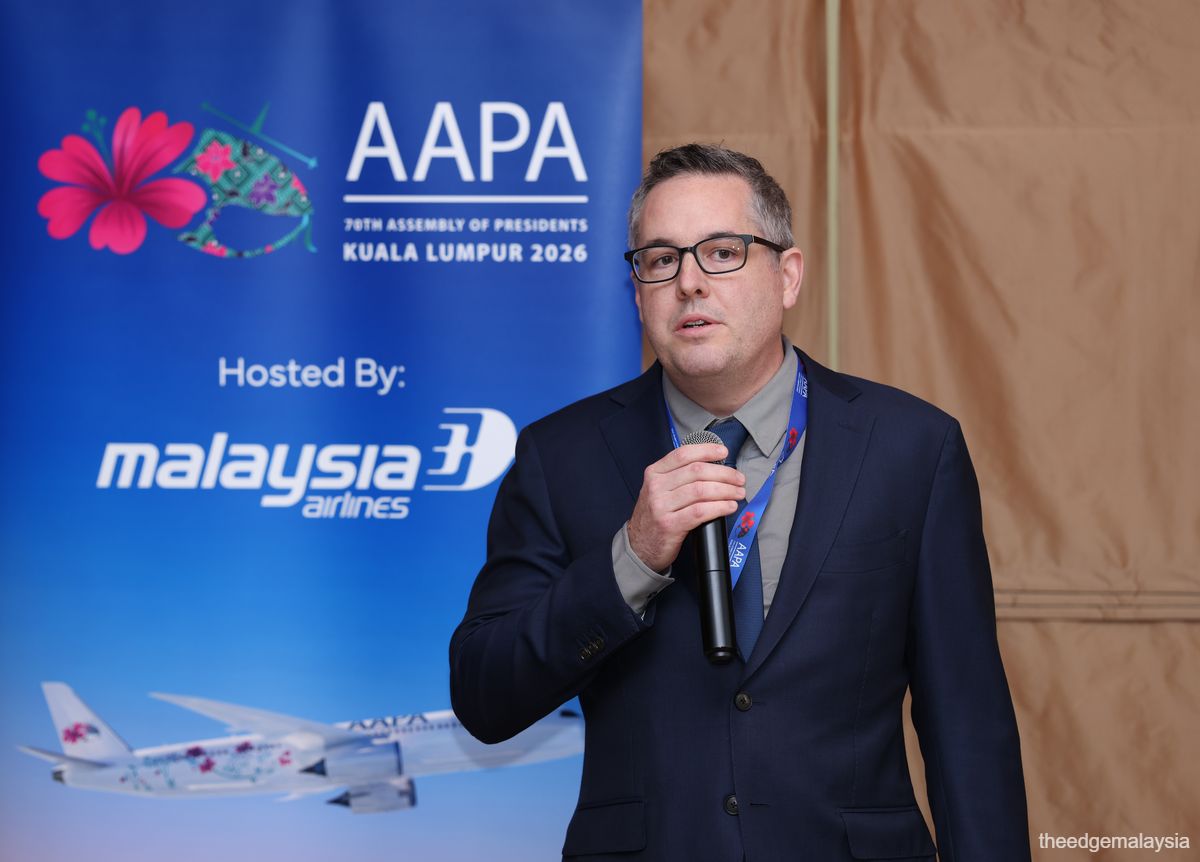
He said passenger traffic in the region is forecast to grow by 6.7% annually over the next 20 years, outpacing projected economic growth of 4.1%.
The region's aviation market expanded significantly over the past two decades. Between 2005 and 2025, the number of airport pairs served increased 2.5 times, monthly flights rose 2.6 times and available airline seats grew 2.8 times.
Schulte said Boeing projected that airlines in the region will need 4,985 new aircraft over the next 20 years, comprising 4,080 single-aisle and 880 widebody planes, and 25 freighters. The additions will support network expansion, accommodate passenger growth and replace ageing aircraft.
Asia Pacific remains the world's largest aviation market, accounting for about 30% of global passenger traffic.
In the first nine months of 2026, passenger demand among Asia-Pacific airlines grew by 1.9%, while average load factors reached a record 83%, according to AAPA.