

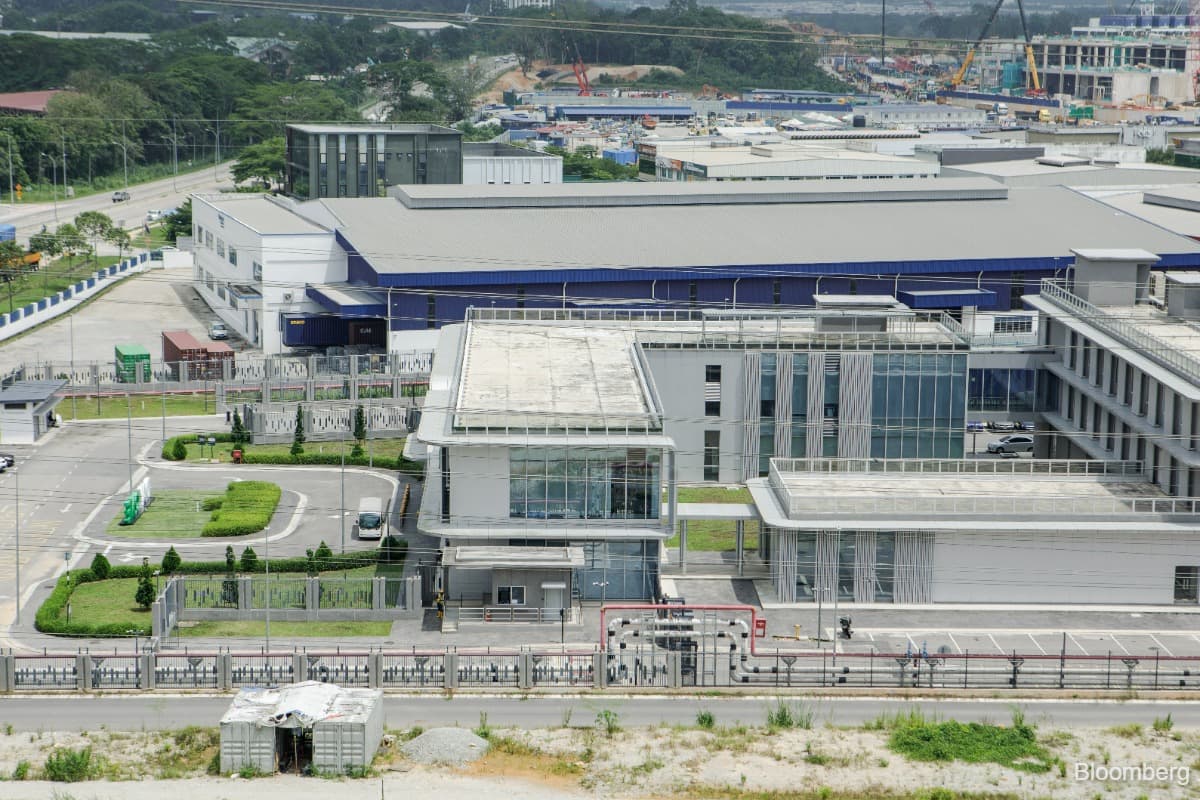
(Nov 13): Southeast Asia risks facing tighter US regulations on the export and use of high-powered chips, threatening to stall the region’s AI-fuelled economic boom.
The fallout from Nvidia Corp chief Jensen Huang’s affair with an alleged Chinese spy working at a firm with ties to Singapore and Malaysia has increased scrutiny of the shipment and use of US-restricted chips in Southeast Asia.
Some in the Trump administration fear that places such as Singapore, Malaysia and Thailand have been weak points in global efforts to keep the most advanced tech from China — either as transit points for the diversion of the chips or as hosts to data centres with restricted chips that are used remotely by Chinese firms.
While Huang’s exit removes one of the most high-profile proponents against stringent restrictions in Washington, the scale of the expected tightening is still unclear.
Legislation that may pass by the end of the year could include firmer restrictions on the sale of high-end chips to foreign countries. As well, the US Commerce Department is looking at imposing new export rules and licensing requirements to Malaysia, Thailand, Indonesia and Singapore, according to the Wall Street Journal.
Governments are already seeking to assuage the security concerns. Singapore charged a fifth person on Friday in relation to an AI server fraud case, while Malaysia is investigating whether AI chips brought into the country have been subsequently shipped overseas.
“This would put a dampener on the demand for AI compute in existing and future data centres in Southeast Asia,” said Malaysia’s former deputy trade minister Ong Kian Ming, adding that new laws further restricting access and use would be hard to mitigate and manage for governments in the region.
“Malaysia would take the brunt of the likely drop in demand but this may also have spillover effects to Thailand and Indonesia,” he said. “Singapore also may not be spared if this limits the ability of some of the AI players” registered in the city-state.
Data centres have emerged as an unexpected growth driver for Southeast Asia this year, alongside the boost from semiconductor and related AI exports, offsetting the drag from higher oil prices and interest rates.
Chinese demand for computing capacity in Southeast Asia could be reduced, introducing greater risk to the data centre investment pipeline, according to Brian Lee, an analyst for Maybank Securities Pte Ltd.
Malaysia and Thailand have been hotspots for data centre investments, while Indonesia’s data centre market is in earlier stages of development, Lee said.
“Data centre investment demand is nonetheless also driven by domestic cloud demand, digital services and the broader digital economy, which may not require the advanced Blackwell class Nvidia GPUs under proposed export controls,” he added.
Thai Prime Minister Anutin Charnvirakul was likewise sanguine, saying Friday that US and Chinese firms alike have reaffirmed their commitment to invest in the country. Senior Indonesian minister Airlangga Hartarto said his country has been in talks with Washington about a US-led effort to secure global AI and semiconductor supply chains.
Strategic appeal
Southeast Asia’s appeal is hinged on its attractive power, land and regulatory environment for hyperscalers, according to a September report by Goldman Sachs Group Inc.
“Another driver is export-control arbitrage, as Chinese players can use Asean as a platform for deploying US chips in model training for non-China markets,” it said.
It’s unclear exactly how much of Southeast Asia’s computing resources have been tapped by Chinese firms, as buyers of Nvidia chips have been reluctant to disclose the identities of their clients. But within the industry the demand is seen as a major driver of the region’s data centre boom.
Goldman forecasts Southeast Asia’s data centre capacity would grow fourfold in the next five years, with the Malaysian state of Johor to be the largest hub in Asean by 2030. It estimates Malaysia should see an average growth boost of 30 basis points from 2026 to 2028, while Thailand gets an additional 20 basis points.
Cameron Systermans, who heads Asia multi-asset for consultancy Marsh, said the region may see “more selectivity, rather than a broad retreat” in light of the Nvidia fallout.
The fundamental drivers of the region’s data centre build out remain strong, as AI adoption and cloud use expand rapidly, he said. Southeast Asia is a strategic location for investors seeking to diversify supply chains and build digital capacity closer to fast-growing markets.
“The most attractive markets and projects will be those that can combine growth potential with reliable infrastructure, transparent investment structures, and a stable regulatory environment,” he said. “Capital will become more discerning.”
Uploaded by Chng Shear Lane