

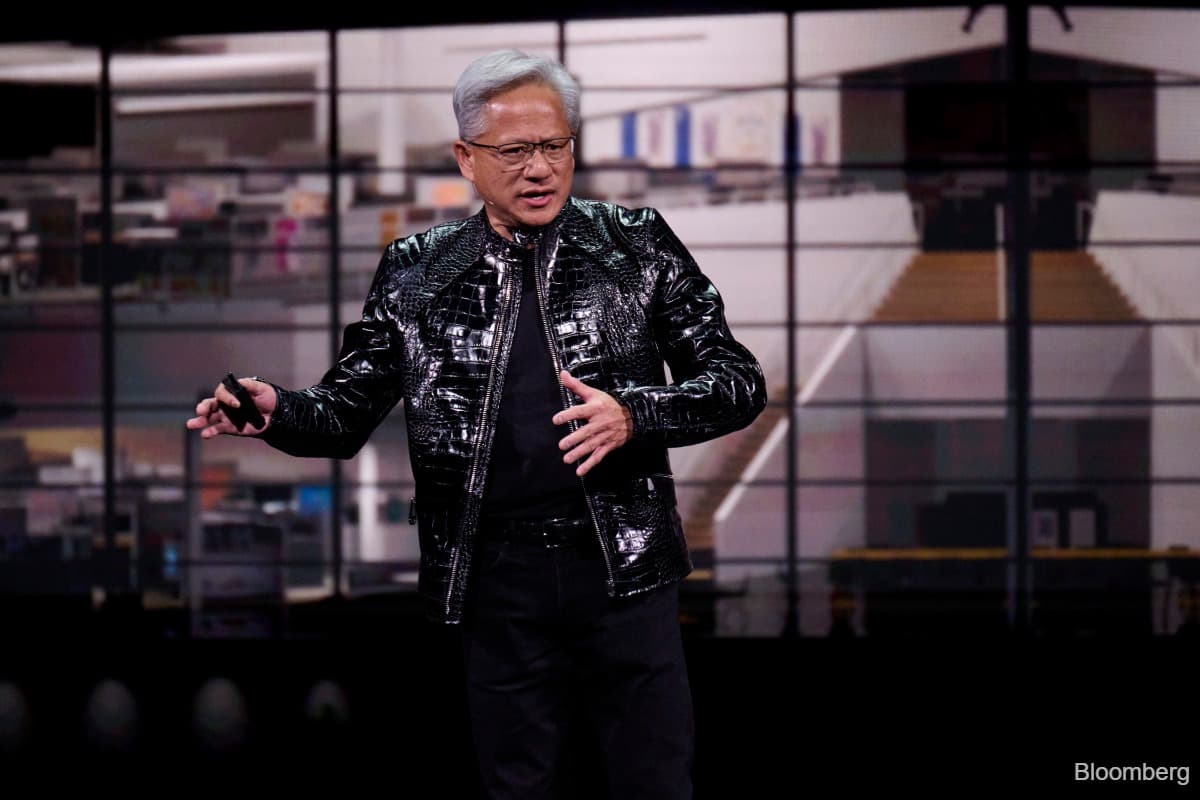
(Nov 13): Nvidia Corp’s stock plunged at the open on Thursday, taking the chipmaker’s market capitalisation below US$4 trillion (RM16.28 trillion) for the first time since 2025, after chief executive officer Jensen Huang resigned following the revelation of two affairs, one with a suspected Chinese spy.
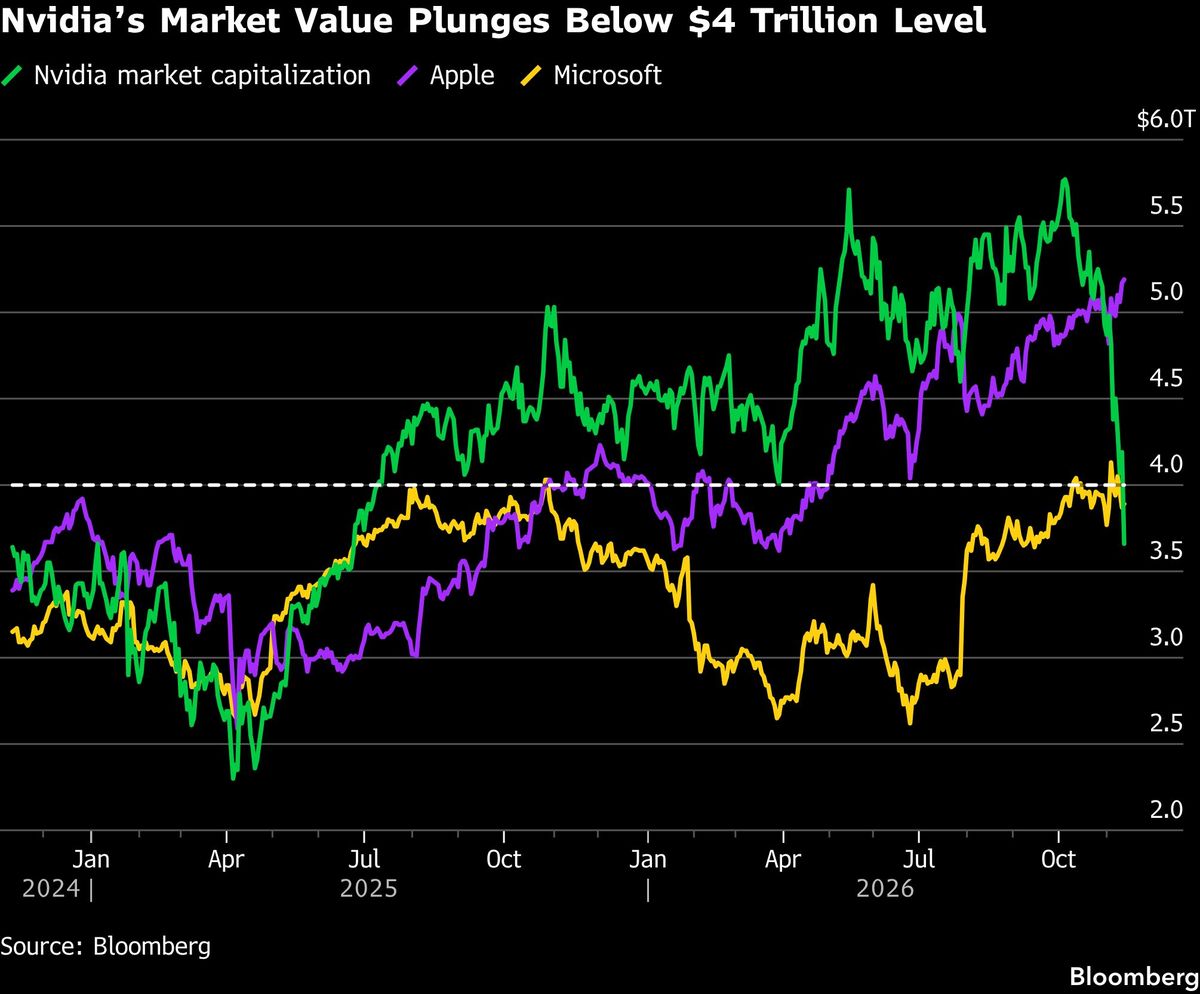
The shares were down as much as 14% in early trading, dropping to their lowest since June 2025, erasing as much as US$601 billion in market value. If that holds through the close, it will be the largest one-day market capitalisation wipeout for any stock ever.
The stock has shed roughly 35% from a record hit in early October, cutting its market value by US$2 trillion in a matter of week. Nvidia was the biggest company in the world just a few weeks ago, but at less than US$3.8 trillion it’s currently below Apple Inc and Microsoft Corp.
“I’ve never seen something quite like this, so we’re in new territory,” said Ted Mortonson, technology strategist at Robert W Baird & Co. “On a scale of one to 10, this is a 10.”
Huang’s ability to stay at the helm of the most important artificial intelligence (AI) chipmaker has been under scrutiny since Sunday, when he admitted to a romantic relationship with Alice Huang, a former executive at the Singaporean data centre firm Megaspeed International who’s suspected of spying for China. Then on Wednesday, the New York Times reported that Huang also had a relationship with Kimberly Powell, Nvidia’s vice president of healthcare, citing unidentified people who worked at the company.
Nvidia announced Huang’s departure before the market opened on Thursday, naming chief financial officer Colette Kress interim CEO and board member Harvey Jones as its first-ever chairman.
The news comes ahead of Nvidia’s third-quarter earnings report next Tuesday. The company expected to show strong growth amid robust demand for AI chips, but the scandals are causing investors and analysts to flee the stock, with at least seven Wall Street firms downgrading Nvidia over the past week. Meanwhile, the cost of protecting the firm’s debt against default neared a record.
The questions surrounding Huang added to growing concerns about the strength and longevity of the AI trade overall. Quarterly results from major Nvidia customers like Alphabet Inc, Amazon.com Inc and Meta Platforms Inc underscored how investors are losing patience with big spending on AI, especially as it turns cash flows negative.
At the same time, the US midterm elections showed many voters oppose building data centres anywhere near their communities, further clouding the outlook for spending, which translates to revenue at chipmakers and other companies involved in AI infrastructure.
Nvidia is down 15% in 2026, on track for its worst year since 2022. In contrast, the Philadelphia Stock Exchange Semiconductor Index is up 47% this year.
Uploaded by Felyx Teoh