

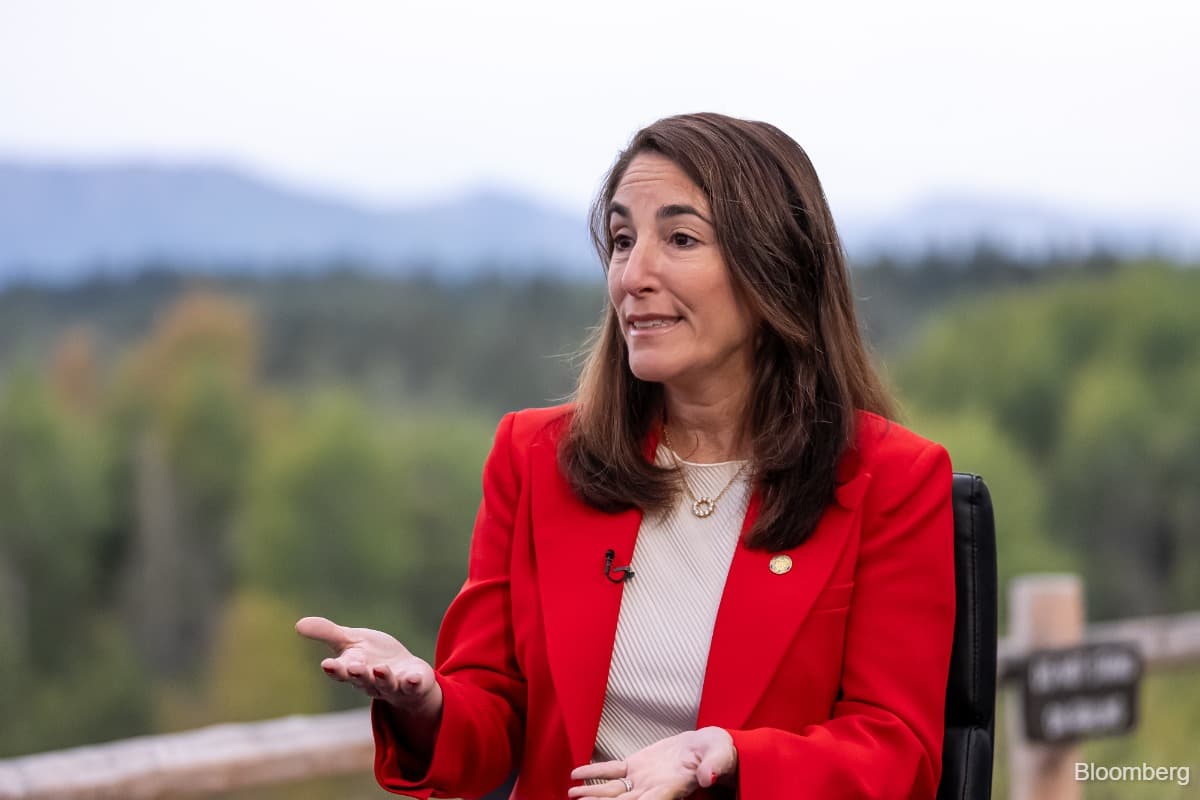
(Nov 12): Federal Reserve Bank of Cleveland president Beth Hammack reiterated her view that higher interest rates are needed to combat inflation amid demand pressures driven by investments into artificial intelligence (AI).
“My expectations are that we need to move to a restrictive stance of policy to help bring inflation back down to that 2% objective, which is critically important,” Hammack said on Thursday during an event in Columbus, Ohio. “If we don’t, I worry that an inflationary mindset could start taking hold.”
Hammack said the central bank is well equipped to face demand pressures from the build-out of data centres. “When I look at that balance, what I’m seeing is inflation that’s been sticky. It’s been more persistent than I would like it to be,” she said.
Underlying inflation, excluding food and energy prices, rose more than expected in October. Hammack said that report showed progress on inflation had “really stalled”.
“The most recent data that I’ve seen show inflation is moving in the wrong direction. We’re moving away from that 2% goal, rather than back down towards it,” she said.
Hammack was one of the two officials who dissented against the majority’s decision to hold interest rates steady at a 3.75-4% range last month. Instead, she preferred for a quarter-point increase.
Smaller increments
The Cleveland Fed chief has been arguing for more frequent and smaller adjustments to the Fed’s benchmark target range.
“My view is that if we go steadily in smaller increments, more frequent, smaller rises, it’s easier for businesses and households to manage around that,” said Hammack. “It’s less disruptive to the overall economy than moving in sharper, more aggressive movements.”
Policymakers have different views on the appropriate pace for rate increases. Other officials have favoured a gradual approach for adjustments while governor Christopher Waller warned this week that the Fed may need to consider a half-point increase in December.
Hammack said officials could consider more aggressive movements if they fall behind the curve, but she doesn’t see the need for that now.
“I don’t think we’re behind the curve today, but if we get behind the curve, then that might be something that we need to consider,” she said. “I’ll certainly have an open mind walking into that December meeting.”
Uploaded by Felyx Teoh