

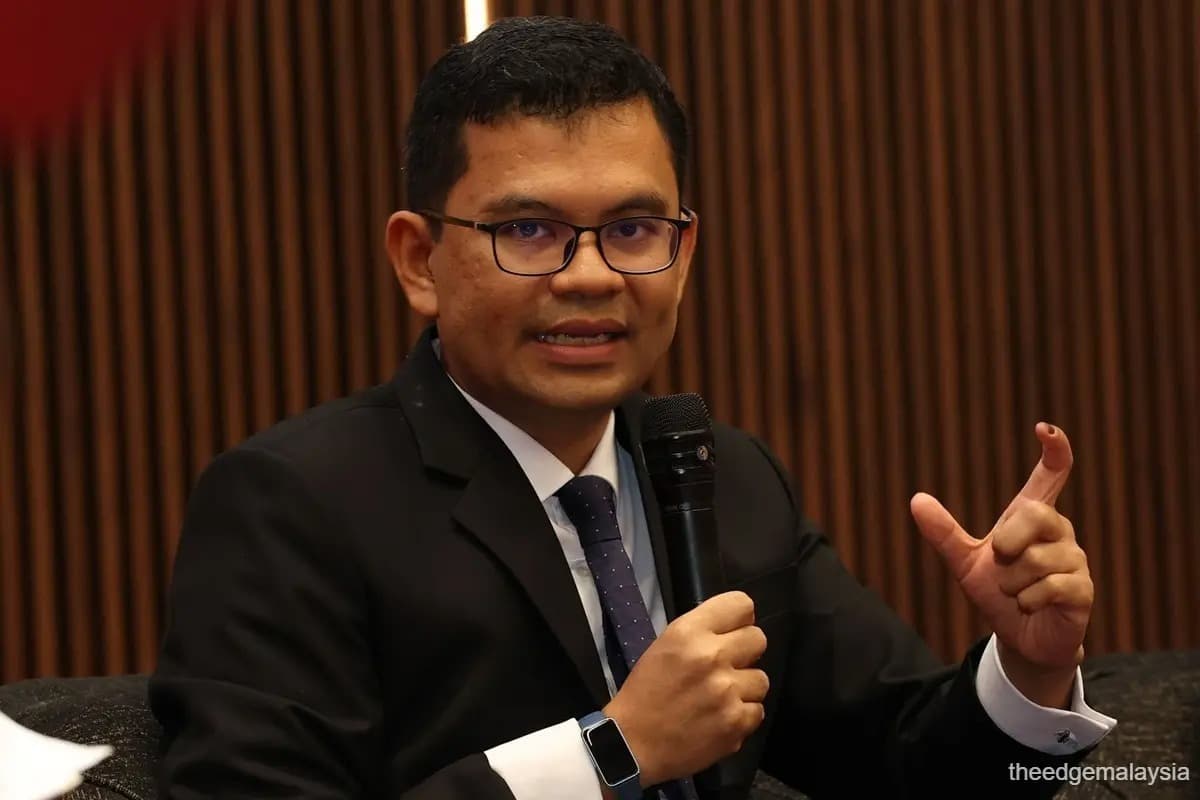
KUALA LUMPUR (Nov 12): The government is expected to launch a roadmap for the development of Malaysia's carbon capture, utilisation and storage (CCUS) industry by the end of November, Economy Minister Akmal Nasrullah Mohd Nasir said on Thursday.
The roadmap will outline the phased development of the country's CCUS industry through 2050, supporting Malaysia's energy transition, low-carbon economic development and ambition to achieve net-zero carbon emissions by the same year, he told the Dewan Rakyat during the oral question-and-answer session.
Akmal said the ministry is also conducting studies to identify carbon dioxide (CO2) emission clusters and assess suitable business models to support a competitive CCUS industry.
A separate study examining strategic recommendations and development opportunities for the CCUS industry along the east coast is expected to be completed in the fourth quarter of 2027.
The study will assess the potential for developing CCUS industrial clusters in the region and the socioeconomic benefits that could be generated across the value chain, including spillover benefits for Terengganu, he said.
As of September 2026, the Malaysia CCUS Agency had issued two offshore assessment permits to companies under Petroliam Nasional Bhd (PETRONAS) to evaluate potential CO2 storage sites off the east coast of Peninsular Malaysia, Akmal said.
PETRONAS has also conducted preliminary assessments for a carbon capture and storage (CCS) hub in Kerteh, Terengganu, identifying the offshore Lawit field as a potential strategic CO2 storage site.
However, the field is still capable of producing gas beyond 2035. Plans for the Kerteh CCS hub, including its storage capacity, will therefore be developed in phases, depending on technical and commercial readiness, he said.
Separately, the government is undertaking a pilot project to capture CO2 from the iron and steel industry in Kemaman, Terengganu, to establish a cost baseline and provide industry players with a reference for assessing CCUS technology as a means of reducing carbon emissions.
The project is intended to encourage wider participation among heavy industries in decarbonisation initiatives, he added.
Akmal said the ministry would continue engaging stakeholders, including state governments, to ensure that CCUS development plans take into account local needs and potential.
The findings of the studies and feedback from stakeholders would be considered before any development plans are finalised, he said.
For more Parliament stories, click here.