

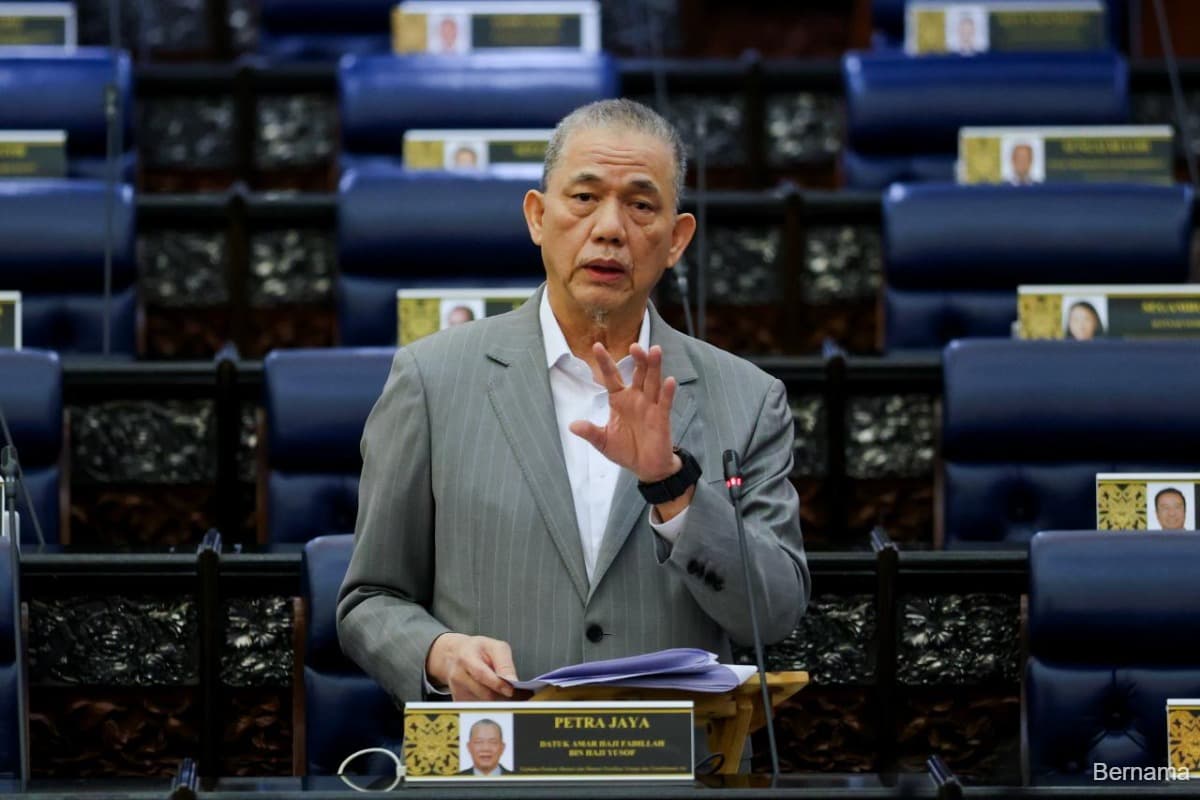
KUALA LUMPUR (Nov 11): The expansion of electricity bill protection to cover households consuming up to 800kWh a month is expected to cost RM248 million over four months, Deputy Prime Minister Datuk Seri Fadillah Yusof said.
Of the total, RM180 million is for the Automatic Fuel Adjustment (AFA) component, with the government and Tenaga Nasional Bhd (KL:TENAGA) sharing the cost for September.
Tenaga will bear the full cost from October to December, Fadillah said. The utility giant will also fully absorb RM36 million in retail charges for the four-month period.
The government, meanwhile, will bear the RM32 million cost of the sales and service tax exemption, said Fadillah, who is also the energy transition and water transformation minister, in a written parliamentary reply on Wednesday.
He was responding to Lim Guan Eng (PH-Bagan), who sought details on the cost-sharing arrangement for electricity bill protection and whether the government would consider raising the monthly consumption threshold to 1,000kWh amid higher electricity usage during hot and hazy weather.
In September, Prime Minister Datuk Seri Anwar Ibrahim announced an expansion of electricity bill protection, exempting households consuming up to 800kWh a month from surcharges under the AFA mechanism, as part of efforts to ease the rising cost of living.
The exemption is effective from September to December.
Fadillah said the government welcomed the proposal to raise the monthly electricity bill protection threshold for domestic consumers to 1,000kWh.
However, he said the proposal would require a comprehensive assessment of its financial implications, funding sources, the number of consumers who would benefit and its effectiveness in helping households affected by higher electricity consumption.
Separately, the ministry, together with the Energy Commission, Tenaga and Single Buyer, is reviewing improvements to the AFA mechanism for implementation in 2027.
The review will take into account electricity consumption patterns across different consumer categories, changes in fuel and power generation costs, as well as the impact on domestic and non-domestic electricity bills.
It will also examine a fairer and more targeted cost allocation approach based on the "causer-pays" principle, under which additional electricity generation costs are distributed according to consumer categories.
Fadillah said the review would also consider consumer affordability, the competitiveness of the industrial sector and the financial sustainability of the electricity supply industry.
"Any decision on further expanding electricity bill protection will be made after the comprehensive review is completed," he said.
For more Parliament stories, click here.