

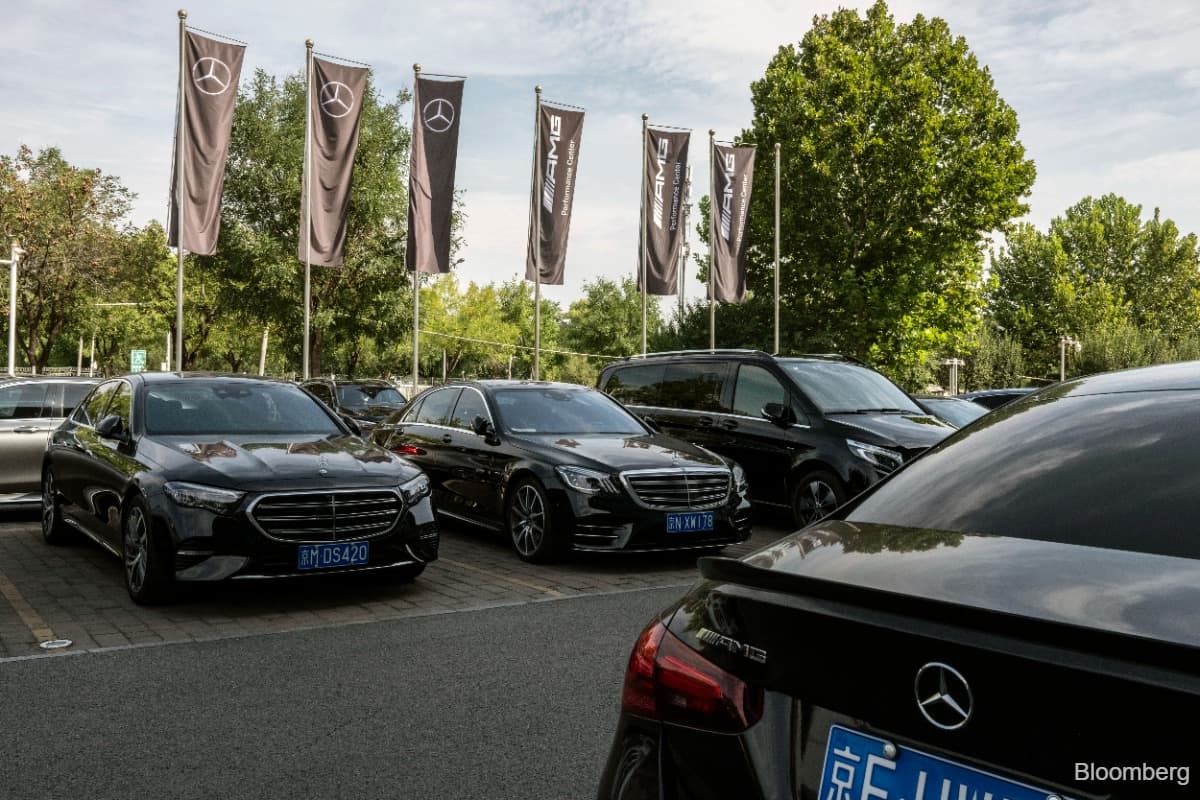
(Nov 11): Mercedes-Benz Group AG’s struggles with shrinking demand in China mean it’s being forced into a complete overhaul of its business in the world’s biggest auto market, according to chief executive officer Ola Källenius.
A previously successful hybrid model under which Mercedes split production between regional sites before assembling the finished vehicle in China for the local market no longer works, Källenius said on Wednesday at a Sueddeutsche Zeitung newspaper forum in Berlin.
Alongside a broader push to cut costs and lift productivity, the German manufacturer is now pursuing a “100% China for China” strategy, with the new electric Mercedes E-Class set to be the first model produced there in the second half of next year, he added.
Mercedes is in the midst of one of its biggest product and cost overhauls in years as the Stuttgart-based automaker tries to restore profitability. The company has been focusing on selling fewer but more expensive cars, relying on higher-end models to support margins.
In China, once a major source of profit, that strategy has come under increasing pressure. Mercedes sales in the country slumped 31% in the third quarter due to weaker luxury demand and stiffer competition from more sophisticated local rivals.
“We, and anyone else who wants to be a global player, will have to adapt the entire business system, because a competitive fight is taking place in China among more than 100 brands,” Källenius said.
China remains central to Mercedes’ turnaround plans and it would be a mistake to try to pull back from the Asian nation, even as consumers there remain “very, very cautious”, Källenius said.
“The auto industry is perhaps the most interconnected in the world,” he told SZ forum delegates. “It would be completely illusory to think you can break that apart so we have to cooperate intelligently.”
Mercedes’ reset is creating tensions in Germany, where it says production is no longer competitive compared to sites it operates in Eastern Europe and the US.
Management has pushed for longer working hours without additional pay and other savings, warning that further measures may be needed if current efforts fall short.
Mercedes has indicated the additional savings could be equivalent to the cost of closing two plants, though it stressed the comparison was illustrative and no specific sites have been identified for shuttering.
Källenius said if you created a cost index with Germany at 100, the US would be at around 80 and Mercedes needs to bring its domestic cost burden down to that level.
“We can’t hide anymore,” he said, warning that ongoing talks with labour officials on extending working hours must produce tangible results. “If we are not ready to take a significant leap, then we will have clearly less industrial activity in this country in 10 years time.”
Uploaded by Tham Yek Lee