

This article first appeared in The Edge Malaysia Weekly on November 9, 2026 - November 15, 2026
LEE Meng Chuan is cut from a rarer cloth. The eldest of three from a family of modest means, he would spend much of his childhood selling ikan bilis at his family’s pasar malam stall in Melaka on weekends and after school. “On a three-day weekend I would get maybe 10 hours of sleep” he recalls in an interview with The Edge.
As the only son, Lee felt responsible for his two younger sisters. His ambition was straightforward: to improve his family’s financial circumstances. The experience instilled in him an entrepreneurial streak that would eventually lead him to co-found what is now Malaysia’s largest retail pharmacy group.
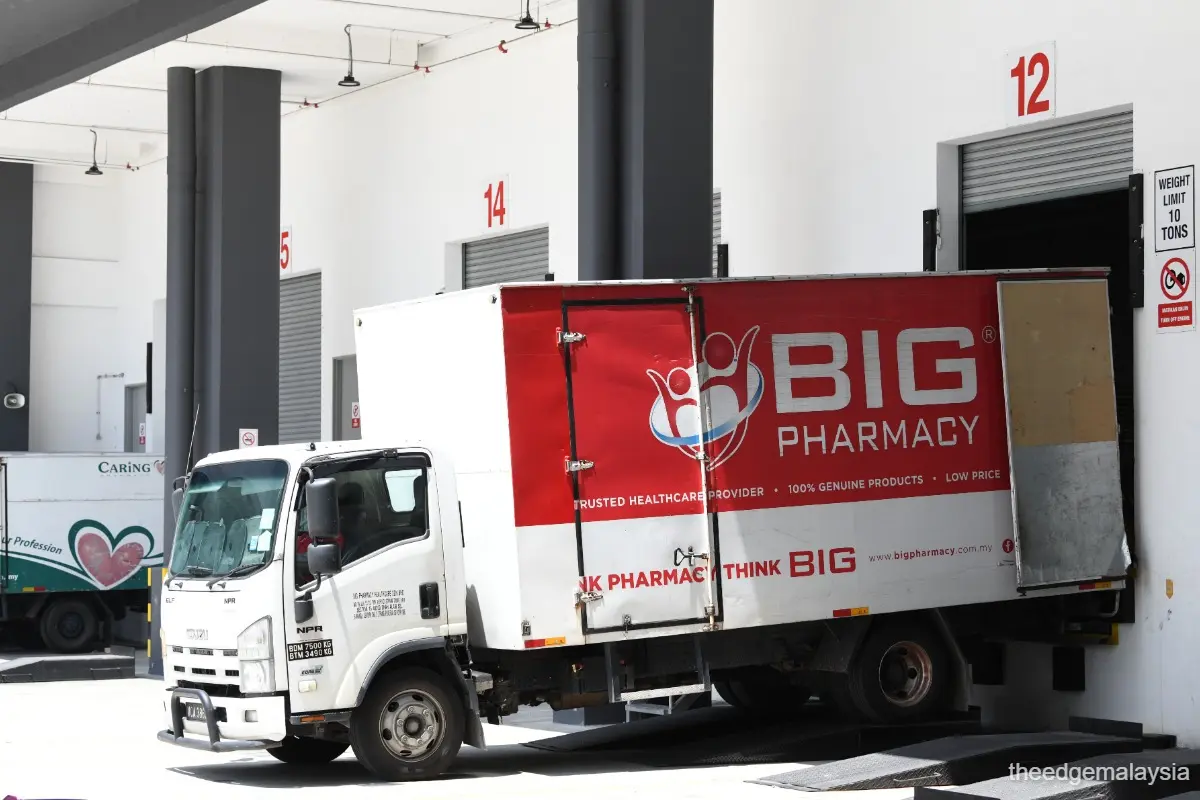
Big Caring Group Bhd (KL:BCG), which operates BIG Pharmacy, CARiNG Pharmacy and several other brands, accounted for an estimated 24.2% of Malaysia’s retail pharmacy market by revenue in 2025, according to Frost & Sullivan.
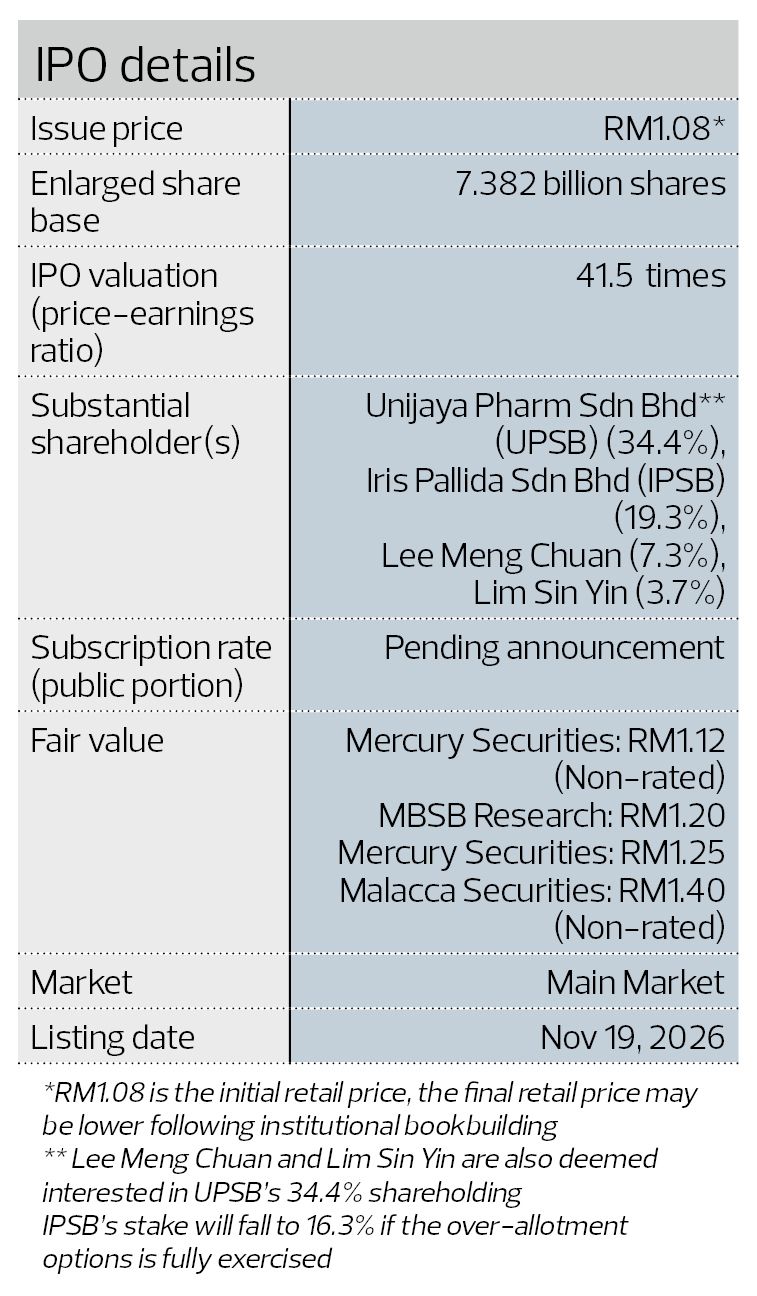
The group is slated for a listing on Bursa Malaysia’s Main Market on Nov 19. At a retail offer price of RM1.08 per share, it would have a market capitalisation of about RM8 billion.
Its IPO, expected to generate up to RM2.03 billion in gross proceeds before any over-allotment, would be among Malaysia’s largest this year. But behind its rapid expansion is a business built through acquisitions, increasingly integrated across pharmaceutical manufacturing, distribution, retailing and healthcare services.
For Lee, 45, the listing marks another stage in a journey that began with a single pharmacy two decades ago.
From humble beginnings to pharmacy giant
Lee began his pharmacist career at Hospital Selayang, where he met Lim Sin Yin, his future wife and Big Caring’s co-founder and executive director.
Recognising that he knew little about running a business, he subsequently joined an American company as a medical sales representative.
“I can go here and there, engage with people, and observe how people do business,” he explains when asked why he took the position.
An opportunity arose in 2006 to take over a pharmacy in Damansara Uptown, Petaling Jaya. The couple worked tirelessly and within a year, they had opened a second outlet in Selayang. Family members eventually joined the growing business.
By 2017, the group had 12 pharmacies. The turning point would come that year, when private equity (PE) firm Creador approached Lee about an investment in a Johor pharmacy chain.
Creador had entered Malaysia’s retail pharmacy business in 2015 through RedCap Pharmacy, subsequently setting aside RM100 million to expand the chain. For Lee, it was an opportunity to expand outside the Klang Valley.
Following due diligence, Big Pharmacy merged with RedCap in 2018, adding 22 outlets in what Lee describes as a share swap that brought Creador in as a major shareholder. Its stake was 35% in 2023 and 33.7% before the IPO. The partnership also changed how Lee approached expansion.
He had little knowledge of running a large-scale business.
“Like a dry sponge, Creador had given me a very good MBA course,” Lee recalls, adding that he learnt a great deal from the PE firm. Mergers and acquisitions subsequently became an important growth engine.
Big’s appetite following that was voracious. It acquired MY Pharmacy Group in 2020, adding 17 outlets in Johor. The purchase of a 51% stake in Mercury Wellness in 2022 added 15 outlets on the East Coast while the acquisition of a 70% stake in Ting Pharmacy in 2023 added 16 outlets in East Malaysia.
The transformative deal, however, was the acquisition of Caring Pharmacy group for about RM888.3 million in December 2023. This brought another 256 outlets into the group and combined two of Malaysia’s largest pharmacy brands under one roof.
Caring had itself been listed on Bursa in November 2013 before being privatised and delisted in May 2020 following a takeover by 7-Eleven Malaysia Holdings Bhd (KL:SEM).
Big Caring retained the identities of Caring, Georgetown and Wellings rather than consolidating the network under a single name.
The group has since expanded to 668 outlets as at September 2026.
Organic expansion has also been substantial. According to the group’s corporate presentation, it added a net 91 outlets organically in FY2022 and another 65 in FY2023, demonstrating that acquisitions were not its only avenue for growth.
Beyond retailing
For Lee, scale alone was insufficient to distinguish Big Caring from other pharmacy operators.
In 2014, when his business was considerably smaller, he began exploring own-brand supplements as a way to compete with larger chains. He noted that Malaysian consumers often associated products made in Australia, Switzerland or Japan with superior quality.
His response was to develop Malaysian-made products using ingredients sourced from established international manufacturers. Rather than compete principally on price, he wanted to position Big Caring’s own-brand products on quality. “You can’t compare a BMW pricing with a cheaper car,” he says.
The group initially outsourced manufacturing to Yanling, a Malaysian manufacturer of pharmaceutical and nutraceutical products.
Lee eventually decided that owning manufacturing capacity would provide greater control over product quality and capture an additional layer of profit.
In FY2024, Big Caring acquired a 60% stake in Yanling Holdings for RM63 million through Yanling Assets, a vehicle 90% owned by the group. The remaining 10% is held by Brego Life Sciences Sdn Bhd, whose directors and major shareholders include Lee’s mother, Tey Swee Teng.
“Whatever one bottle of our own brand [product] we sell, we are not just making a pure-play retail margin,” Lee says, pointing to manufacturing, distribution and retail as separate sources of earnings.
Yanling also manufactures products for external customers. Lee says he wants the business to continue serving both the group and outside clients rather than becoming an exclusively captive manufacturer. In FY2026, about 41.4% of Yanling’s revenue came from manufacturing Big Caring’s own-brand products, with the remaining 58.6% generated from external customers. Lee says he intends to maintain a roughly equal split between the two customer groups as Yanling expands.
In FY2026, only 85 stock-keeping units (SKUs) sold through the group’s retail segment were manufactured in-house by Yanling, contributing about 3.1% of group revenue, against a portfolio of more than 1,000 own-brand SKUs.
Big Caring subsequently acquired an 89.3% stake in pharmaceutical distributor Medispec for RM249.4 million in 2025, expanding its activities to importing, marketing and distributing medicines and healthcare products to hospitals, clinics and other pharmacies.
It also acquired a 57.1% stake in physiotherapy operator Your Physio for RM32.8 million, creating opportunities to refer customers between pharmacies and physiotherapy centres.
Expanding margins
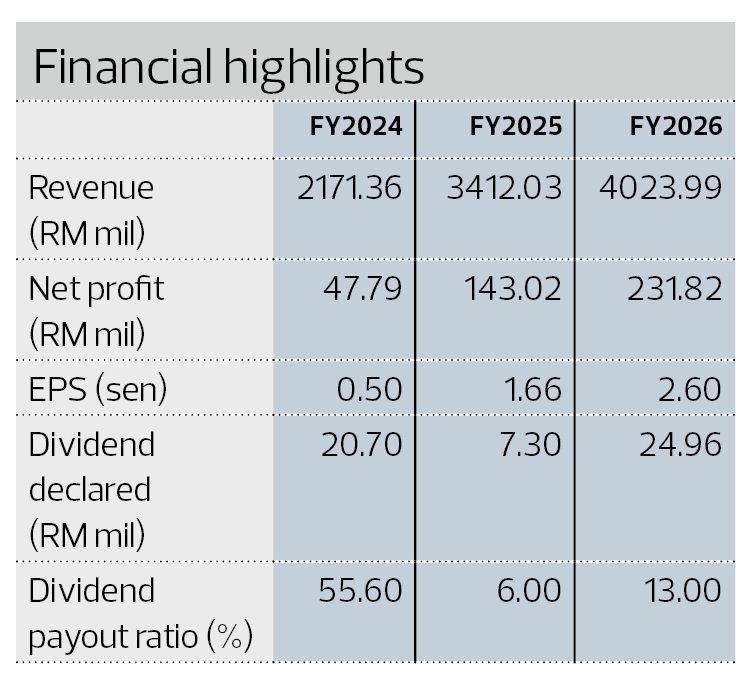
Revenue has more than tripled since FY2023, to RM4.0 billion, a compound annual growth rate (CAGR) of 53.6%, while net profit attributable to owners rose more than fivefold to RM191.6 million or at a CAGR of about 73% by The Edge’s calculation. In FY2026, revenue rose 17.9% while profit attributable to owners increased by a much stronger 56.7%.
The company attributes the rise in retail gross profit to supplier rebates. In written replies to The Edge, Big Caring says retail gross profit outgrew sales mainly because of higher rebates earned on larger purchase volumes. The accounting also changed: from July 2025, product rebates are booked against cost of sales whereas the Big chain previously booked them as other income, which on its own boosts gross margins. Total income margin, calculated as gross profit plus other operating income divided by revenue rose to 33.7% in FY2026 from 28.8%, a gain of almost five percentage points.
Zuellig Pharma and DKSH, together with their respective group companies, accounted for 57.3% of Big Caring’s total purchases in FY2026. The prospectus says the group does not normally sign fixed-term supply agreements, buys on purchase orders, and that its margins depend on those relationships. The company has not said whether the rebate rate itself rose or whether it simply bought more.
Medispec’s margin improvement was aided by currency movements. Medispec lifted its gross margin to 51.7% from 46.3% in its first full year, which the company attributed to lower purchasing costs resulting from a favourable US dollar exchange rate. The currency tailwind could reverse.
Own-brand products have also become more significant. Their retail revenue grew from RM316 million in FY2025 to about RM486 million in FY2026, an increase of about 54%.
However, the extent to which procurement efficiencies, product mix and acquired businesses individually contributed to the margin improvement remains unclear. In written replies to The Edge, Big Caring did not quantify the remaining procurement synergies from the Caring acquisition.
Diverging SSSG
Same-store sales growth (SSSG) slowed to 7.3% in FY2026 from 9.6%, just above the lower end of management’s 7% to 9% target for the next three years. The split is wide. Big outlets’ SSSG accelerated to 9.9% while Caring outlets slowed to 4.9% from 10.3%, which the company attributes to a higher base effect. Average sales per Caring store per day slipped to RM18,536 from RM18,640. Caring’s average monthly number of transactions still increased from 1.76 million to 1.81 million, while average transaction value rose from RM78 to RM82.
But expansion also raises the possibility of outlets competing for the same customers. Lee says data drives these decisions, and evaluates potential locations through its business development and retail teams, with new outlets expected to become Ebitda-positive within a year.
Lee says only 10% to 15% of customers overlap between his two big brands. The prospectus records some pruning that followed the Caring deal: a one-off rationalisation of overlapping catchments and weak stores, with 24 outlets closed in FY2024, 13 of them Caring, and six Big. Six more outlets were closed in FY2026. The plan now is 40 to 50 new stores a year. The company says it opened 58 outlets and closed six in FY2026, and had 668 outlets at the end of September.
Nevertheless, 93.3% of the group’s outlets were Ebitda-positive in FY2026.
Despite the increase in Ebitda, net cash from operating activities fell from RM350.9 million in FY2025 to RM338.4 million in FY2026.
Inventory holding days increased from 85.8 to 104.5 days while the cash conversion cycle lengthened from 19.6 to 31.3 days.
Management attributed the higher inventory to larger purchases to support retail sales and to the full-year consolidation of Medispec, which holds more stock for inventory management and to qualify for tenders.
The group’s distribution infrastructure is filling up. The Bukit Raja distribution centre was operating at 80.2% utilisation as at September 2026 and management expects it to approach full capacity within five years.
A new distribution centre is planned, although the total investment has yet to be determined.
Where the IPO money goes
At the RM1.08 retail price, the RM2.03 billion IPO raises RM637.8 million while RM1.4 billion goes to selling shareholders, among them Creador’s vehicle Iris Pallida Sdn Bhd (IPSB), the founding family’s holding company Uptown Paradise Sdn Bhd (UPSB) and 11 individuals.
IPSB, ultimately owned by a Creador-managed fund, is the biggest seller by far. It stands to raise about RM932.8 million at the RM1.08 retail price, roughly two-thirds of the RM1.4 billion, and will still hold 19.3% of the enlarged company (16.3% if the over-allotment option is fully exercised). By The Edge’s data, that is more than what Creador raised from any of its earlier Bursa listings since 2020: RM791.5 million from CTOS Digital Bhd (KL:CTOS) in 2021, RM485.1 million from Eco-Shop Marketing Bhd (KL:ECOSHOP) in 2025 and RM220.9 million from MR D.I.Y. Group (M) Bhd (KL:MRDIY) in 2020.
The company’s own proceeds will go mainly towards repaying bank debt. Of the company’s RM637.8 million, RM570.7 million (89.5%) repays bank borrowings, RM30 million goes towards land for a new distribution centre and RM37.1 million covers listing costs. The company puts expected interest savings at RM26.3 million a year and says gearing, which includes lease liabilities, is expected to fall to 0.9 times from 2.8 times as at end-August.
The borrowing burden reflects the group’s acquisition strategy. Its purchase of Caring was partly financed by a syndicated term loan while debt was also used to fund the Medispec and Your Physio acquisitions.
The group has further payments in prospect. In October, Big Caring agreed to acquire Singapore-based wholesaler and retailer Yeap Medical Supplies for an estimated consideration of RM51 million for an initial 76% stake, funded through internal funds and bank borrowings.
The agreement provides for two further 10% tranches. Separately, the prospectus says minority shareholders hold options to sell shares to the group: in Yanling (40%, priced at 15 times adjusted profit, exercisable between November 2026 and January 2027, and not exercised as at Sept 30) and in Mercury Wellness (exercisable after listing, also priced at 15 times adjusted profit).
The company said funding for the later tranches and the options will be decided at the time, from internal funds and/or bank borrowings. It said the prospectus gives no total cash requirement over two years and that its board has confirmed sufficient working capital for 12 months from the prospectus date after taking these potential payments into account.
What’s next?
Lee sees further opportunities beyond Malaysia, although he is cautious about expanding through physical pharmacies alone due to high capital expenditure requirements.
Instead, he believes Big Caring can establish a presence internationally through its own-brand products, contract manufacturing for others and its digital health platform.
At home, Lee says demand from corporate clients and insurers is increasingly focused on healthcare cost efficiency and preventive services. MyHA, Big Caring’s digital health platform, serves corporate customers through services, including teleconsultations and prescription fulfillment.
But physical pharmacies remain important. He says more than half of certain corporate customers prefer collecting their medicines at a pharmacy rather than having them delivered, reflecting the role of pharmacists in providing advice and maintaining customer relationships.
Lim attributes the strong customer relationships to the Big Caring Academy, which uses mock role-playing and other exercises to strengthen relationships. Pharmacist excellence awards are given out yearly, an award not tied to sales. Salary incentives are important but real inspiration arises from the non-financial gain: when a customer comes back to thank the pharmacist for the attention and care they provided.
Queried on online competition, Lee says he is not worried. He points to the group’s integration across distribution, own brands and manufacturing, and to strict product registration rules: registering a supplement takes one to two years, he says, and a pharmaceutical about three.
Lee acknowledges that pharmacists have sales targets for own-brand products but says targets also apply to third-party brands. He maintains that inappropriate recommendations would attract disciplinary action, not praise.
Lee’s original ambition to change his family’s financial circumstances, has been achieved. But his next target now extends beyond being Malaysia’s largest pharmacy retailer.
Whether Big Caring can translate its scale into sustained profitability, stronger cash generation and a broader healthcare business will be the next test of the model Lee and his wife spent 20 years building.
Save by subscribing to us for your print and/or digital copy.
P/S: The Edge is also available on Apple's App Store and Android's Google Play.