

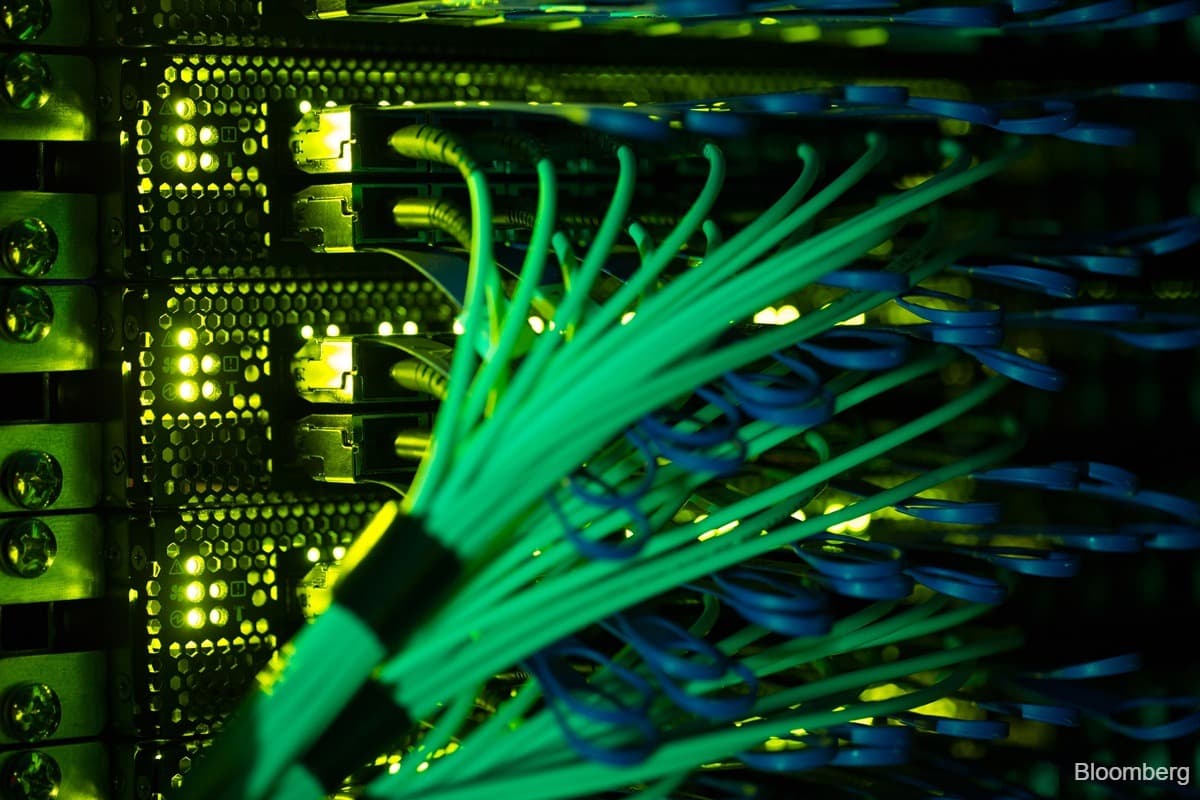
Data-centre developers are increasingly turning to so-called behind-the-meter power generation to bypass years-long waits for grid connections and get their facilities running sooner. Those systems typically rely on natural gas, potentially reversing years of progress in cutting emissions from electricity generation.
A report published Wednesday by BNEF examines proposed policy efforts in the US, Europe and Asia to accelerate grid connections and limit the environmental impact of data-centre growth.
“Powering data centers via the grid today would result in lower CO2 emissions than using on-site gas in the US and Europe,” the report’s authors wrote. “Keeping data centres connected to the grid in developed markets is therefore a core pillar of keeping them green.”
BNEF’s report comes as the annual UN Climate Change Conference, COP31, gets underway in Antalya, Türkiye. The environmental footprint of data-centre expansion is expected to feature in discussions among world leaders, government officials and financial industry executives seeking ways to accelerate the transition to cleaner energy.
Bankers have already said AI will be part of “every conversation” at the summit. Even so, the scale of AI’s climate impact remains difficult to quantify. Data-centre electricity demand is likely to quadruple by 2035, reaching about 7% of global power consumption, according to BNEF estimates.
The BNEF report, commissioned by Bloomberg Philanthropies, assessed seven different policy types aimed at speeding up data centres’ grid connections. Four showed strong evidence of accelerating those connections, while only two were found to have a direct impact on increasing the supply of clean energy for data centres.
“The bottom line here is it depends on what each power market needs,” said Musfika Mishi, a BNEF analyst and co-author of the report.
For example, at PJM Interconnection, the largest US grid operator, there is a huge deficit in supply, so the company is “prioritising policies that get data centres connected to the grid faster, but also bring supply to the grid,” she said.
Not every policy analysed in the report is explicitly designed to make data-centre power supplies cleaner, Mishi said. But in developed markets, connecting to the grid is generally better for the climate than relying on on-site generation, she said.
The report also acknowledges that most policies to speed up grid connections are too new to assess how much they actually shorten wait times or reduce emissions. Still, the policies proposed represent an important step towards addressing the challenge of expanding data-centre capacity without driving up greenhouse gas emissions.
“You’ve got a balance between affordability, reliability and sustainability, that classic trilemma. And I think in recent years there’s been a bit more focus on affordability and reliability rather than sustainability,” said Derrick Flakoll, a BNEF analyst and co-author of the report. “I would say that in certain places like the US, where you’ve had different election results, those are going to continue to be big themes.”
BNEF also examined data-centre growth in developing markets, where the challenge is often shifting power systems towards cleaner energy while expanding the infrastructure needed to serve new demand.
In India, for example, that means adding local transmission and substation capacity fast enough to keep pace with data-centre development. In Malaysia, data-centre growth is expected to increase reliance on existing coal and gas plants in the near term.
Uploaded by Liza Shireen Koshy