

This article first appeared in Forum, The Edge Malaysia Weekly on November 9, 2026 - November 15, 2026
Andrea Kimi Antonelli, widely known in Formula One simply as Kimi, is the new king of F1.
The Mercedes-AMG Petronas driver, aged just 20 years and 68 days, was crowned the youngest-ever world champion on Nov 1 at the Mexico Grand Prix, after finishing third and collecting enough points to make his commanding lead of 380 points in the 2026 championship unassailable. There are still four more races to go, in São Paulo, Las Vegas, Qatar and Abu Dhabi.
At Mexico City’s Hermanos Rodríguez circuit, Reuters aptly described the three podium finishers as representing F1’s recent past, present and future. They were Lewis Hamilton, now aged 40, the greatest driver of his generation with a record-equalling seven world championships; Max Verstappen, who dominated the early part of this decade with four consecutive titles from 2021 to 2024, and Kimi, who has written his name into the record books with an impressive nine wins and 16 podium finishes so far this season.
This is only Kimi’s second year in F1 and what makes his achievement even more remarkable is that he won those nine races while still a teenager, a feat never before seen in the sport’s history.
At this age, Kimi is three years younger than Sebastian Vettel, who won his first Drivers’ title in 2010, and about four years younger than Hamilton (2008), Fernando Alonso (2005) and Verstappen (2021). Older fans will also remember the great Brazilian driver Emerson Fittipaldi, who was crowned world champion in 1972 at the age of 25 years and 273 days.
After Kimi broke the record to become the youngest F1 world champion, both Hamilton and Verstappen were united in describing the achievement as “incredible”. Verstappen went on to observe that, at his age, Kimi had shown remarkable composure, avoided major mistakes and managed to outperform his experienced teammate, George Russell, as well as other established champions on the grid.
Damon Hill, the 1996 F1 world champion, told the BBC over live radio: “I don’t see anything else other than him getting better and better. He’s going to have to go through hard times as well, but no one is going to doubt his incredible talent.”
Mercedes-AMG Petronas team principal Toto Wolff had spotted Antonelli’s talent and rapid development through the team’s young driver academy. He was convinced that one day the young Italian would be ready to replace Hamilton, who had moved to Ferrari in 2025.
Kimi’s father, Marco Antonelli, told the BBC that he recalled meeting Wolff in Milan back in February 2024. Toto had reminded him of the difficult road ahead but also expressed confidence that, after a year of experience, Kimi could do very well in F1.
Marco explained that the original plan was “2025 for experience, 2026 to start to achieve results”. Now that his son has become world champion, he believes they have overachieved.
For many F1 enthusiasts, this could well be the beginning of something special. They believe Kimi’s Drivers’ title, given the right car, a consistent and powerful engine, reliability from the Mercedes-AMG Petronas team and, of course, his undoubted driving talent, could be the first of many.
For the Mercedes-AMG Petronas outfit, having secured the Drivers’ title, the next objective is to clinch the Constructors’ Championship as well. After Mexico, with 630 points, the team is 126 points ahead of second-placed Ferrari. They could wrap up the title at the São Paulo Grand Prix in Brazil on Nov 8 if they secure the necessary points advantage.
If successful, this would be their first Drivers’ and Constructors’ Championship double since 2020. With Kimi and Russell — who has won three races and recorded five podium finishes so far this year and remains a potential world champion — Mercedes-AMG Petronas could be entering another period of dominance, something the team has experienced before.
Between 2014 and 2021, Mercedes enjoyed its longest uninterrupted period of Constructors’ Championship dominance in F1 history, winning eight consecutive titles and seven Drivers’ Championships — six for Hamilton and one for Nico Rosberg.
A word of caution for their supporters, though: dominance in sport is never guaranteed.
Back home
For Malaysia, with national oil corporation Petronas as a sponsor and technical partner of Mercedes, the question is whether we should seize this window of opportunity. With a potentially long-term winning team on our side, could the country bring back an F1 race and, if done right, reap the wider economic benefits that come with it?
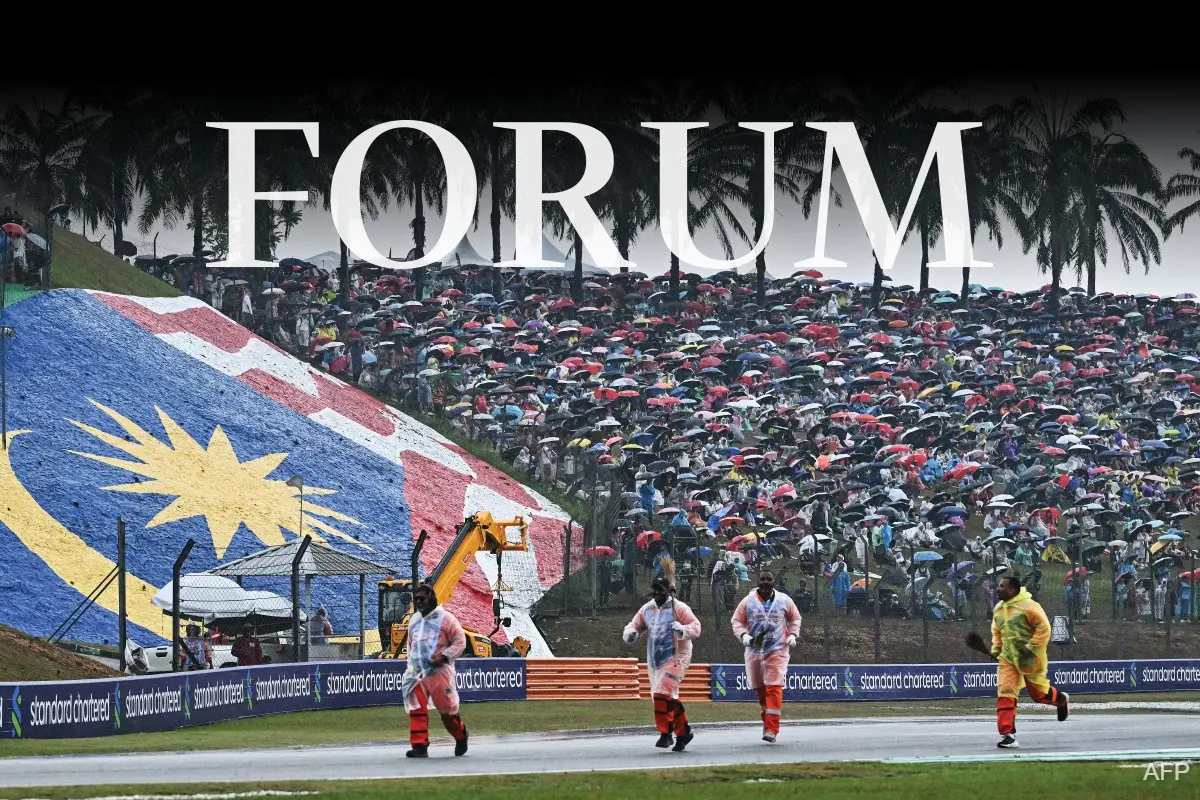
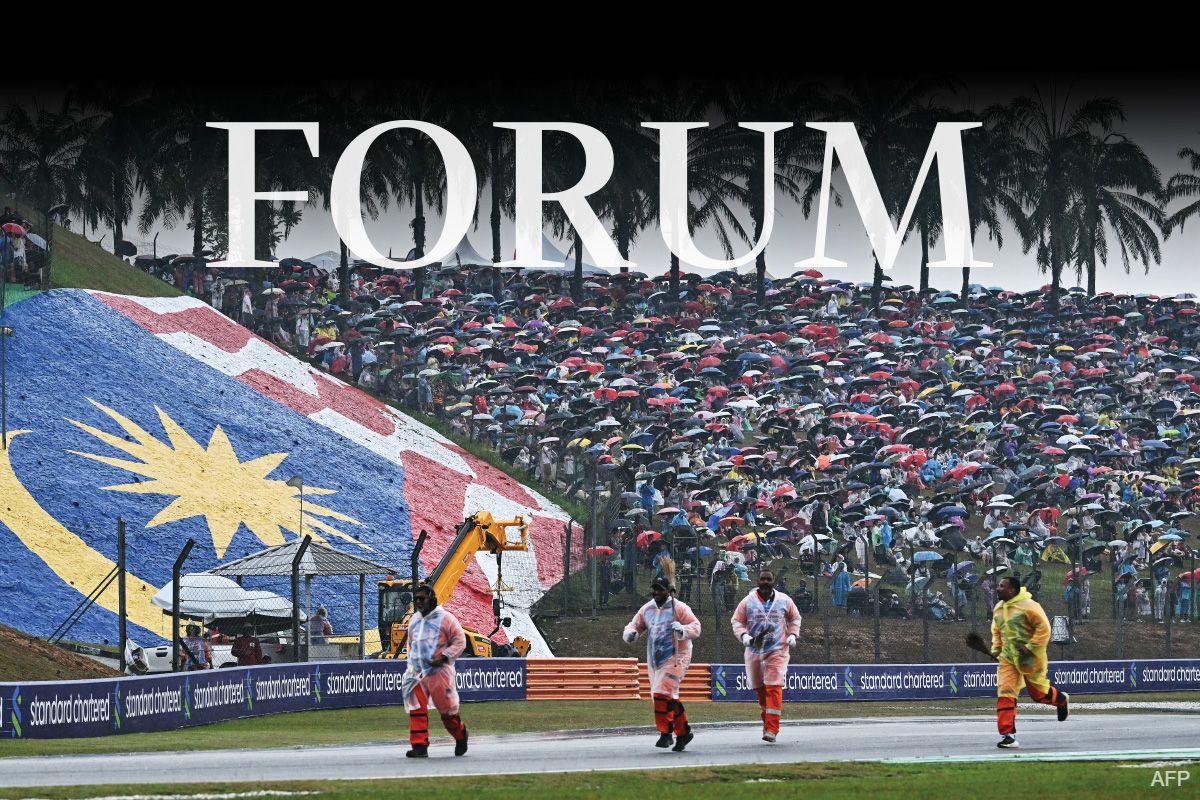
The race at Sepang International Circuit (SIC) on Oct 4, which played host to the rescheduled Bahrain Grand Prix, attracted a record crowd of 103,000 and was a success. Over the entire weekend, including the qualifying sessions, 261,000 spectators turned up at SIC.
In Sepang, a tropical downpour unleashed an absolute F1 thriller. This pure racing circuit tested the drivers and teams to the fullest, putting engines, electronics, tyres and driving skills through their paces. The result was a spectacular contest that reminded everyone why Sepang remains one of the most challenging circuits on the calendar.
Fans and drivers gave Sepang’s return the thumbs-up. F1 Lead, a Facebook group dedicated to F1 content and discussion, described it as one of the “best races in years. Sepang did everything right and reminded us why it is a circuit made for legends”.
Sepang last hosted an F1 race in 2017, bringing to an end an 18-year presence on the racing calendar. Rising hosting costs and dwindling spectator numbers were among the main reasons why SIC decided not to continue staging the race.
Now, with Kimi’s crowning as world champion, Mercedes-AMG Petronas’ likely double-championship success and the possibility of another period of dominance, the timing appears commercially opportune for Malaysia to consider bringing F1 back. Sepang would once again become the home race for the Mercedes-AMG Petronas team.
There will naturally be supporters and opponents of the idea, and that debate is unlikely to go away. But SIC, for its part, says the feasibility study on bringing F1 back, requested by the government, is expected to be presented to the Cabinet this month.
Its CEO Azhan Shafriman Hanif said the study would examine several key aspects, including hosting costs, circuit readiness, infrastructure facilities and potential economic returns.
Based on preliminary discussions with F1’s commercial rights holders, a potential slot for Malaysia to resume hosting the race could be available from 2029.
Hosting an F1 race is no small undertaking. With rights and operational costs estimated at between RM300 million and RM350 million a year, Azhan said the initiative should be treated as a national project.
Rightly so. And it has to be a long-term commitment too. F1 cannot be treated as a stand-alone sporting event that comes and goes over a single weekend. It must be part of an integrated strategy to promote Malaysia as a tourism, conference, events and motorsport destination throughout the year.
Beyond tourism and hospitality, F1 could also serve as an international branding platform, putting Malaysia in the global spotlight as a country with growing engineering, manufacturing, semiconductor, computing and artificial intelligence capabilities.
The economic spin-offs would not be confined to the major corporations or businesses directly involved in the event. A whole chain of smaller enterprises and individual businesses, from hotels and restaurants to transport operators, retailers and service providers, would also stand to benefit.
Take Petronas’ long-term involvement in F1 as a case study. When the national oil company first got involved in the sport, initially as a sponsor of Red Bull-Sauber in 1995, it was heavily criticised by some quarters for what was perceived as a financially wasteful branding exercise. But Petronas was playing a longer game.
It knew what it wanted: to use F1 not merely to promote itself as a global oil and gas player but also to showcase its technological, research and engineering capabilities.
Petronas’ involvement has always been closely linked to its role as a technology partner. In its early years with Sauber, it developed and acquired capabilities in engine technology and engineering. F1 provided a platform to gain valuable insights and advance knowledge in engine development, management systems, electronics and composite materials. The experience and expertise gained could then be applied beyond the racetrack, including in commercial automotive and industrial applications.
F1 also provided opportunities to develop expertise in retail and commercial products, particularly advanced engine oils, fuels and lubricants. These products not only support the Mercedes-AMG Petronas team on the track but also strengthen the global lubricants business of its subsidiary, Petronas Lubricants International (PLI).
Today, PLI is a major international player in the automotive and industrial lubricants sector, with a substantial presence across the Americas, Europe, Africa and Asia. Its global footprint and standing demonstrate how the benefits of a long-term motorsport partnership can extend well beyond the race circuit.
With Mercedes, now into its 16th year of sponsorship and technical partnership, Petronas has moved into the development of advanced sustainable fuels, including non-fossil and synthetic fuel technologies, which are tested and used by the team in F1 racing. Without its F1 experience and long-standing involvement in the sport, Petronas might not have found the German automotive giant as a partner.
Wolff has described the relationship as something special. What began as a marketing platform has evolved into an important technical partnership. In one interview, he said: “Through the years, it has turned into almost an integrated organisation. You wouldn’t think of the Mercedes-AMG F1 team without Petronas.”
Malaysia’s presence in F1, with Petronas at the forefront, has delivered benefits that go beyond brand visibility and international recognition. It has helped position the country and its national oil company in a highly competitive global arena where technology, engineering and innovation matter.
Bringing F1 back home, if done right, could add another dimension to that legacy, turning the race into a long-term economic, technological and international branding opportunity.
Azam Aris is an editor emeritus at The Edge
Save by subscribing to us for your print and/or digital copy.
P/S: The Edge is also available on Apple's App Store and Android's Google Play.